

New Year's Day Lunch in Marbella: The Hangover-Proof Plan
It's 11 o'clock on 1 January. The house is full, nobody went to bed before four, and the fridge holds half a tray of prawns, a lot of cava and one lemon. The supermarket down the road is shut, and so is most of Marbella. Someone, at some point, is going to ask what's for lunch.
New Year's Day on the Costa del Sol can be one of the best days of the winter: low sun, an empty seafront, a long lunch on a terrace in a jumper. It can also be a grey afternoon of crisps and leftovers. The difference is almost entirely made on the 30th of December. This is the plan, from the last shop of the year to the moment the plates go back into the kitchen.
What New Year's Day in Marbella Actually Looks Like
1 January is a national public holiday in Spain, and it's the quietest day of the year. Spanish families celebrate New Year's Eve late, with the twelve grapes at midnight (the Christmas in Marbella guide covers the whole fortnight, from Nochebuena to the Three Kings), and then the young ones go out until dawn. The next day the town sleeps late.
In practice, that means:
- The big supermarkets are closed. Mercadona, Lidl, Aldi and DIA have all stayed shut on 1 January in recent years, and the few Carrefours that open do so with reduced hours. Don't count on any of them.
- Small family restaurants often close, or open for a set menu only. Their staff worked until the early hours on the 31st too.
- The hotels and beach clubs are the exception. They put on New Year's Day lunches and brunches, and they get booked well in advance. More on that below.
- Pharmacies run a duty rota (farmacias de guardia). The current list is on the Spanish pharmacists' council website, and every pharmacy posts it on its door.
In 2027, New Year's Day falls on a Friday, so it opens a long weekend. Shops are back to normal on Saturday the 2nd, which helps, but it also means many people have guests for three or four nights rather than one. The sun rises at about 8:30 and sets around 18:15, so the usable outdoor part of the day runs roughly from noon to half past four. Plan lunch to sit right in the middle of it.
The 30th: Shop for the 1st Before the Party
Everyone shops for New Year's Eve. Hardly anyone shops for the day after, and that's the mistake. On the 31st most shops close in the afternoon, the queues in the morning are long, and the last thing anyone is thinking about at the checkout is the next day's lunch. Do the New Year's Day shop on the 30th, when it's calm, and put it somewhere the party won't eat it.
The New Year's Day Shopping List
- Water, a lot of it. Still and sparkling, plus a few bottles of Aquarius or another sports drink. Spanish bars sell it to the hungover for good reason.
- Bread that keeps. Bakeries may be closed on the 1st. Buy a couple of loaves on the 30th and freeze one, or pick up picos and regañás, the crunchy Andalusian breadsticks that last for weeks.
- Oranges and lemons. Fresh orange juice is the most Spanish breakfast there is, and in January the oranges are in season.
- Coffee and milk for twice as many people as you think. Guests multiply over New Year.
- Ice. It's the first thing to run out on the 31st and the hardest thing to find on the 1st.
- Something salty to graze on: olives, almonds, a good cheese, a piece of ham. The morning after is a snacking morning.
- A plan for the main meal. Ingredients if you're cooking, a booking if you're going out, an order if you're having it delivered. Decide on the 30th, not on the 1st at noon.
If you're in a rental villa, check the basics at the same time: the gas bottle, the dishwasher tablets and the bin collection days. The villa survival guide has the full checklist, and the bank holiday makes all of it twice as important.
The Morning: Slow, Salty and Outside
The Spanish way to finish New Year's Eve is churros con chocolate, eaten at dawn on the way home from the party or a few hours later by the ones who went to bed. If anyone in your house is up for a walk into town, the classic place is Churrería Ramón on Plaza de los Naranjos, open since 1941. Holiday hours change from year to year, so check on the 31st before promising churros to anyone. The breakfast guide has the other good churrerías in town.
Back at home, there's one more Spanish ritual worth borrowing. Every 1 January for years, Spanish TV has broadcast the Vienna Philharmonic's New Year's Concert live from 11:15 (on La 1, and RTVE Play online). Half of Spain watches it from the sofa, and at the end the audience claps along to the Radetzky March. It's the gentlest possible soundtrack for a house full of sore heads, and it runs for about two and a half hours, which takes you neatly to lunchtime.
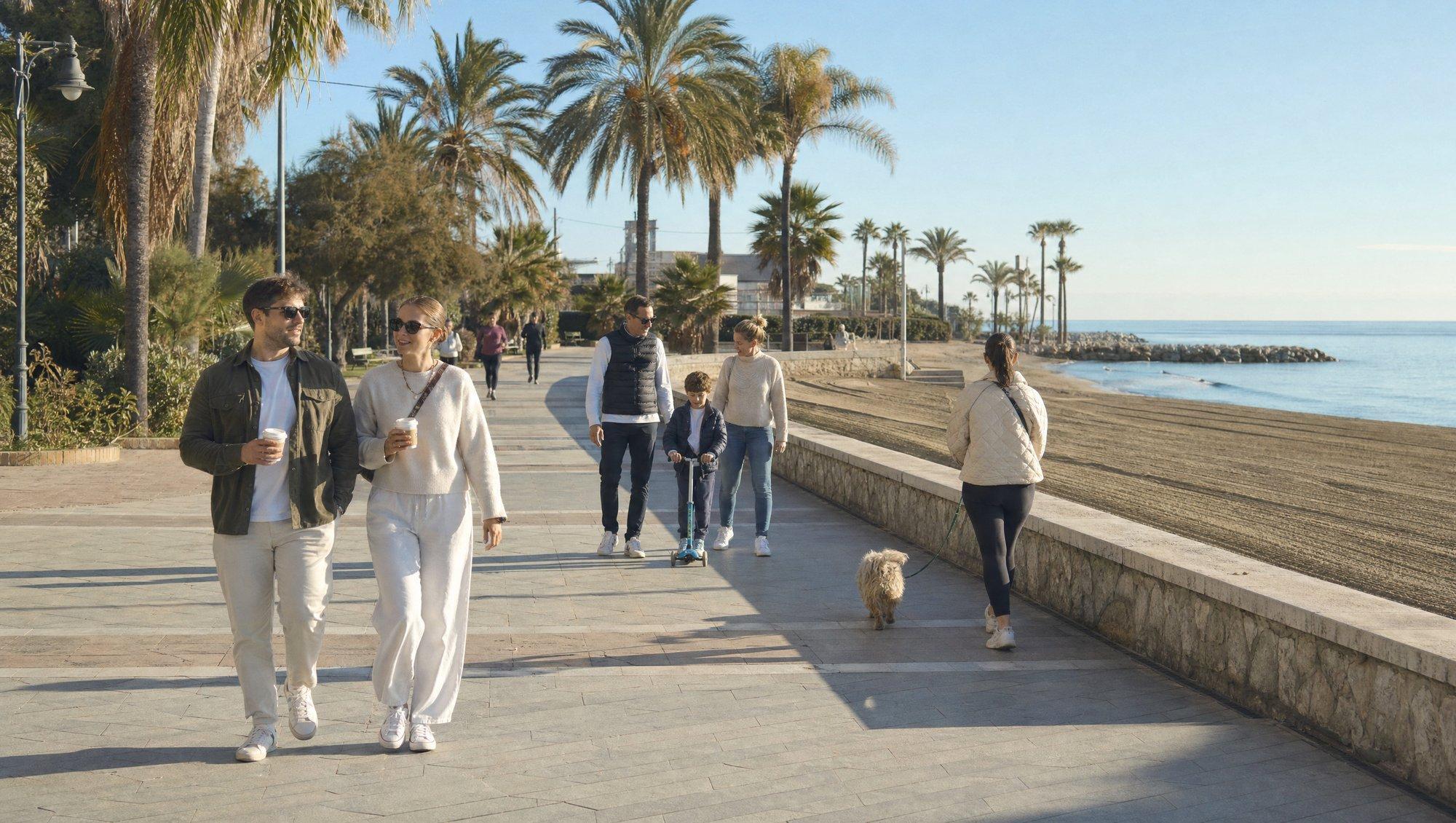
Then get everyone outside for an hour before eating. The Paseo Marítimo on New Year's morning is at its emptiest and best: flat, sunny, by the sea, with the beach raked smooth and almost nobody on it. Walk west from the centre towards Puerto Banús for as long as your group can manage, and turn back when people start talking about food. For something wilder, the boardwalk through the Dunas de Artola near Cabopino takes about the same time and feels a long way from the night before.
You'll see the odd brave soul swimming. The sea in January is around 15 or 16 degrees, so it's a quick in-and-out, best done before lunch and not after the cava.
New Year's Day Lunch Out: Book It in December
If you'd rather nobody at home has to think about lunch, eating out is perfectly possible, as long as you book early. The places that open on the 1st are mostly the hotels and beach clubs, and they publish their festive programmes in November.
The Marbella Club's festive programme this season lists New Year's Day lunches at its Beach Club and at El Patio. Puente Romano has run a New Year's Day brunch at its beach Chiringuito in past years, so check its Christmas page for this year's plans. Expect set menus at festive prices and paid booking, and the same from most of the big Golden Mile hotels.
Three things to know before you book:
- Count heads honestly. A table for twelve booked in early December rarely stays at twelve. Ask about the cancellation policy before paying.
- Check the time. Lunch in Spain starts at 14:00 at the earliest. A one o'clock sitting on the 1st is the early option, not the late one.
- Sort out the driving. Taxis are scarce on the morning of the 1st, and someone in the group will have had a big night. The getting around guide covers the options.
Local family restaurants are a gamble on the 1st. If you have a favourite, ring or message before Christmas and ask directly whether they're open and what they're serving. Don't rely on the hours on Google.
Beyond the 1st: Feeding a Long Weekend
With New Year's Day on a Friday, plenty of guests stay until Sunday or Monday, and three days of meals is a different problem from one lunch. Spread the effort out instead of loading it all onto the 1st.
On Saturday the 2nd, the shops reopen and the town wakes up. It's the morning to restock, and the Mercado Municipal in the Old Town is the place for fish, fruit and vegetables, followed by a coffee on Plaza de los Naranjos. In the evening, take everyone out for tapas in the Old Town, which saves you another dinner and gets the guests out of the house.
Sunday the 3rd is a normal Spanish Sunday, so most shops are closed again and families sit down to a long lunch at home. If anyone is staying on until the 5th, the Cabalgata de Reyes parade that evening is worth staying for, and the roscón on the 6th closes the season. Order the roscón from a bakery before New Year, because the good ones sell out.
New Year's Day Lunch at Home: A Timeline for Tired People
Most residents with a full house stay in. It's cheaper, nobody has to dress up and the sofa is right there. The only risk is that one person ends up cooking for the whole group, and on the 1st that person is usually as tired as everyone else. Here's a timeline that keeps the work to a minimum.
- 11:00 — Coffee, orange juice, toast with tomato and olive oil. Concert on. No decisions yet.
- 12:00 — The walk. Whoever stays behind clears the night before: glasses into the dishwasher, bottles out, terrace swept.
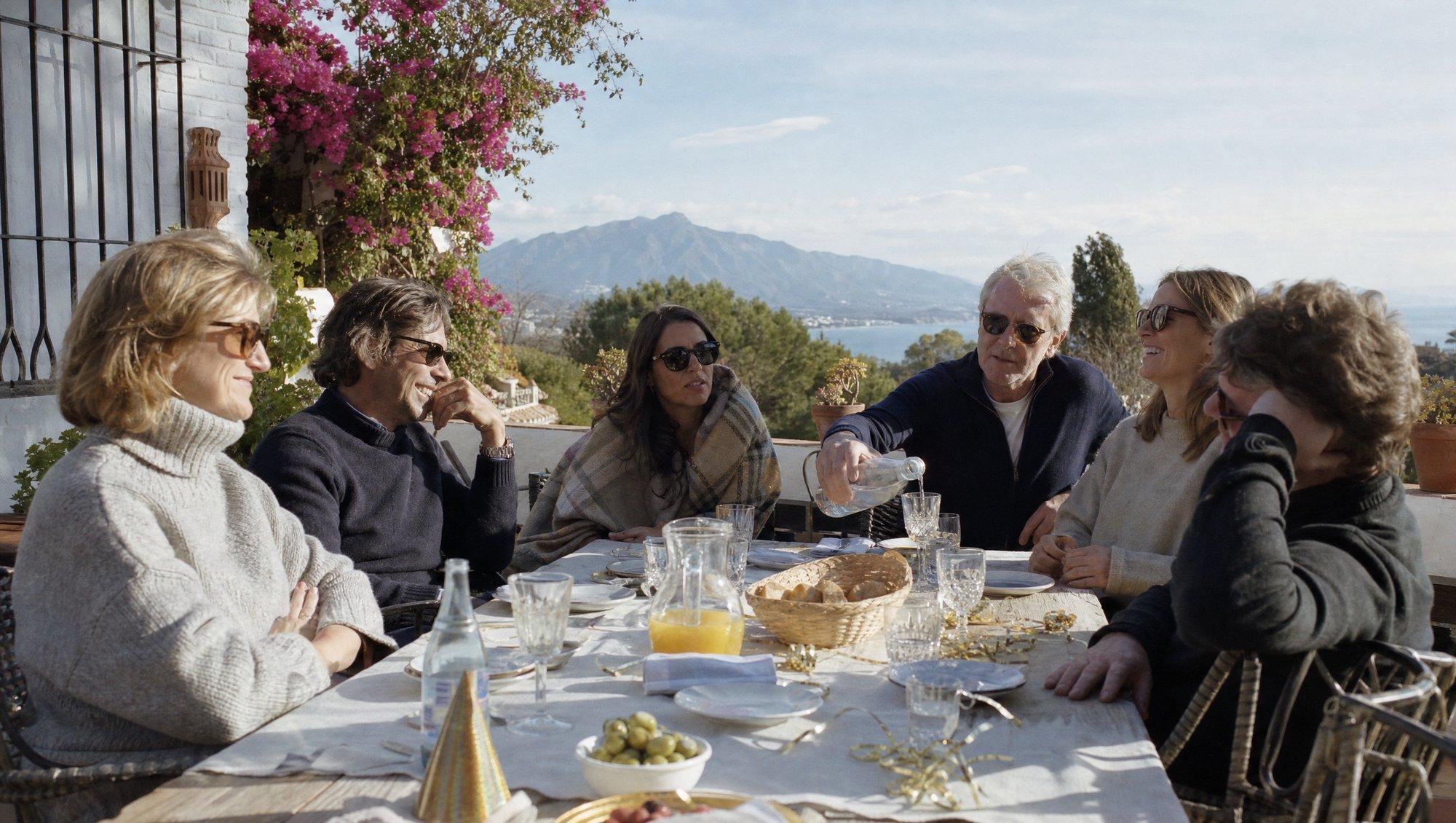
- 13:30 — Lay the table outside, in the sun. In January, a south-facing terrace at this time of day can be properly warm, while the same terrace in the shade is cold. Blankets on the backs of the chairs.
- 14:00 — Something to graze on: olives, cheese, ham, bread. Water on the table before any wine.
- 14:30 — The main dish lands on the table. One hot dish, served in the middle, everyone helping themselves.
- 16:00 onwards — Coffee, leftover turrón, a long sobremesa. Move inside when the sun drops behind the hills.
If the weather turns, the whole plan moves indoors without changing a thing. January in Marbella averages highs in the mid-teens with plenty of sun, but it does rain some days, and the rainy day guide has ideas for the afternoon.
What Goes on a Hangover-Proof Table
Nobody has found a cure for the morning after, and this guide won't pretend otherwise. But there's a clear pattern in what people actually want to eat on the 1st, and it isn't a five-course menu.
- One hot, generous dish. Something with rice, potatoes or bread, salty and warm, that people can come back to for seconds. A tray of starters followed by a main followed by dessert is too much effort for everyone.
- Nothing fiddly. Last night was the night for peeling prawns and opening oysters. Today is a fork-only day.
- Water before wine. Put the jugs out first. A glass of cava with lunch is traditional, but a light white or a tinto de verano (red wine with lemon soda) goes down more gently.
- Something for the children that isn't a leftover canapé. They were up past midnight too and they'll be hungry long before 14:30.
- A clear end. Coffee and the Christmas sweets tray, then nothing more to clear except the plates.
That description fits a Spanish dish almost perfectly. A paella is one pan, cooked once, served from the middle of the table. It's rice, it's salty and warm, there's nothing to peel if you choose the right recipe, and everyone helps themselves. It's also what a lot of Spanish families eat for a big Sunday or holiday lunch anyway, as the Sunday lunch guide explains. The problem is that a proper paella for ten is a two-hour job over a big flame, and on New Year's Day nobody has two hours in them.
The New Year's Day Paella Nobody Has to Cook
That's where the local secret comes in. Instead of cooking it, plenty of residents have the whole pan brought to the door.
Si Catering's Paella Delivery is run by Chef Paco Siles, a third-generation paella cook from a family of restaurateurs going back to 1972. Each paella is cooked from scratch for the order and arrives hot in the traditional paellera, about 15 to 20 minutes before you plan to eat, ready to go straight onto the table. There's no reheating, no plating and no pan to scrub: the paellera is collected later that evening or the next day, whichever suits you. All you provide is plates and forks.
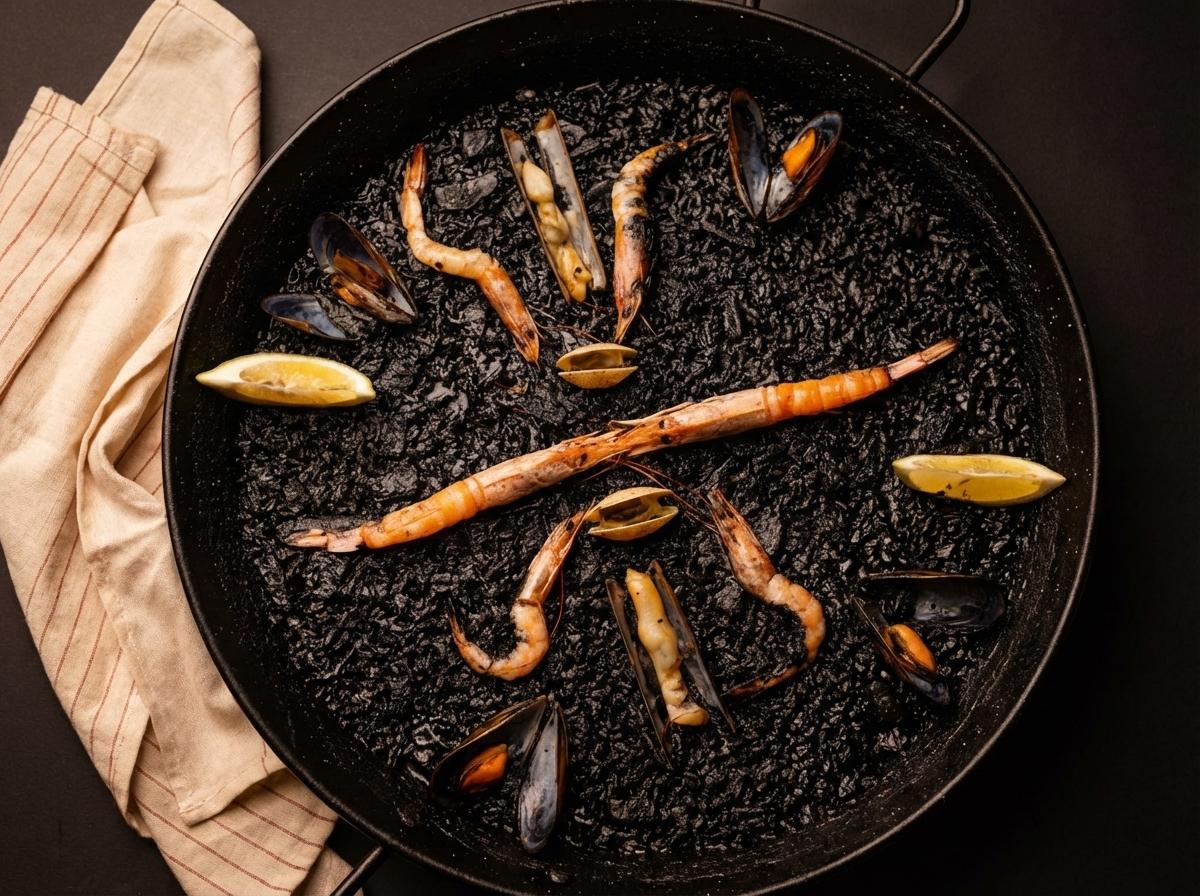
There are five recipes, priced per person: Vegetariana €18, Valenciana with chicken €20, Mariscos (seafood) or Negra (black rice with cuttlefish ink) €24, and the Royale with lobster €38, for when the new year deserves a proper celebration. The minimum is six people per recipe, with up to two recipes per order and no upper limit, so from twelve guests the children can have the Valenciana while the adults share the seafood. For a fork-only day, the Valenciana and the Vegetariana are the easiest to eat, with nothing to peel.
Two optional kits cover the grazing part of the timeline, each for four to six people: tortilla, aïoli, salad and bread for €40, or jamón ibérico, manchego, gildas, picos, fried almonds and tortilla for €55. There's a 2-litre jug of house sangria for €45 and a wine and beer pack for €50. Drinks arrive without ice, which is why ice is on the list for the 30th.
For a sense of the total, twelve people sharing six Valenciana and six Mariscos (€264), with two traditional starter kits (€80), comes to €344, or under €29 a head. That's lunch, with the washing up left to the paella cook.
Delivery covers Marbella and around 30 km of coast, including Puerto Banús, Nueva Andalucía, San Pedro, Benahavís, Mijas and Estepona. It's free within 15 km. Further out, €30 covers the delivery and the pan collection, and it's waived on orders over €250, so the table above would qualify. Between Christmas and Reyes, dates are limited and not every holiday is a delivery day. If you're planning around the 1st, send a message in December to check the date before you build the weekend around it.
Quick Reference — 30 December to 2 January
| When | What happens | What to do |
|---|---|---|
| Early Dec | Hotels publish festive menus | Book lunch out, or order in |
| 30 Dec | Last calm shopping day | Shop for the 1st |
| 31 Dec | Nochevieja, shops close in the afternoon | Grapes at midnight |
| 1 Jan, 11:15 | Vienna New Year's Concert on La 1 | Coffee, orange juice, sofa |
| 1 Jan, 12:00 | Empty, sunny seafront | Paseo Marítimo walk |
| 1 Jan, 14:30 | Lunch in the sun | One hot dish in the middle |
| 1 Jan, ~18:15 | Sunset | Move inside |
| 2 Jan | Shops open again (Saturday in 2027) | Restock for the long weekend |