

The Art of Sobremesa: How to Eat Like a Spaniard
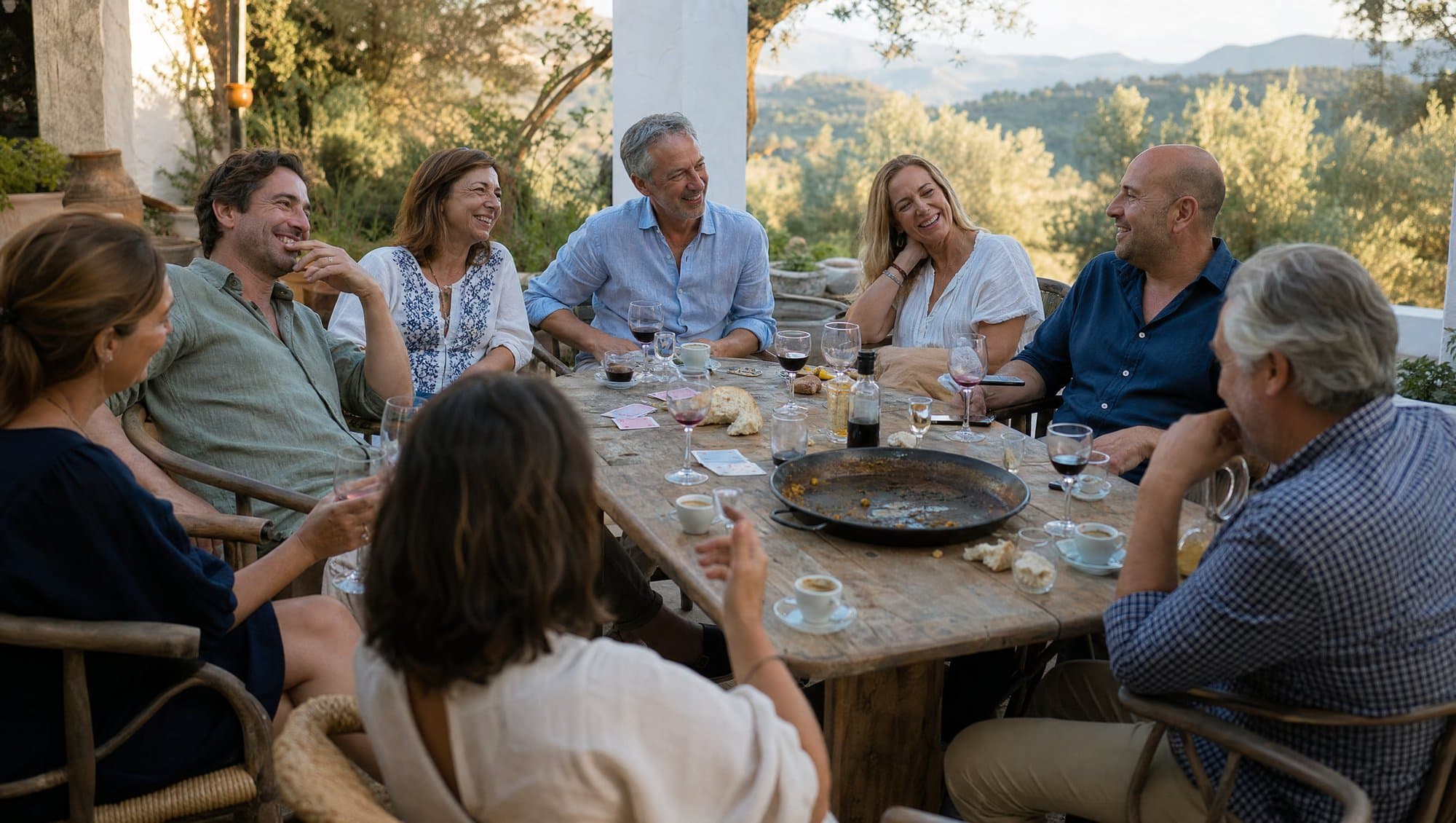
The plates have been cleared. The paella pan is scraped down to the last crispy grains. Someone orders coffee, someone else asks for a small glass of something sweet, and nobody — absolutely nobody — looks at their watch. It's half past four, and in Spain, lunch is only halfway done.
That second half has a name: sobremesa. It's the part of the Spanish meal that visitors notice first and understand last, usually while trying to catch a waiter's eye for a bill that never comes. This guide explains what sobremesa is, the handful of table habits that go with it, and where to try it properly on the Costa del Sol — including at your own villa.
What Is Sobremesa?
Literally, sobremesa means “over the table”. The Real Academia Española defines it with typical economy as the time spent at the table after having eaten. That's the whole definition. Everything else is culture.
In practice, sobremesa is the conversation that starts when the food stops: coffee, a digestif, a second bottle that nobody quite ordered, stories, arguments about football and politics, the grandmother's opinion on everyone's love life. It can last twenty minutes on a weekday or three hours on a Sunday. It is not dessert, and it is not a separate event — you don't move to the sofa or the bar. You stay exactly where you are.
English has no word for it because English-speaking countries don't really do it. In the UK or the US, a finished plate is a signal to leave. In Spain, it's the signal that the good part is about to start.
The Spanish Meal Clock (and Why Sobremesa Fits)
Sobremesa makes more sense once you see the shape of a Spanish day. The main meal is lunch, not dinner, and it happens late:
- Desayuno, 8:00–10:00. Small: coffee and toast, often a mid-morning second round. The Spanish breakfast guide covers where to have it in Marbella.
- Comida, 14:00–16:00. The big one. Two or three courses, wine, bread. This is the meal that gets a sobremesa.
- Merienda, around 18:00. A snack to bridge the gap — especially for children.
- Cena, 21:00–22:30. Lighter, later, and often tapas rather than a full meal. The Marbella-at-night guide explains how the evening unfolds from there.
With lunch at two and dinner at ten, there's no rush to get anywhere after the meal. The afternoon is long, the sun is at its hottest, and the table is in the shade. Staying put isn't laziness. It's good planning.
How to Eat Like a Spaniard: The Table Rules
None of these are written down, and nobody will scold you for breaking them. But follow them and a restaurant lunch on the Costa del Sol suddenly makes a lot more sense.
Order for the Middle of the Table
Spaniards rarely order a dish each for themselves. Starters arrive as raciones (sharing plates) placed in the middle, and everyone picks with their own fork. If you're a group, order three or four plates para compartir and go from there. Paella works the same way: one pan, one table.
Use the Bread
Bread arrives without being asked for and is there to be used — mainly to mop up sauce, oil and the juices of whatever is in front of you. It isn't for dipping in a saucer of oil and balsamic vinegar; that habit comes from Italian-American restaurants, not from Spain. Note that some places charge a small amount for the bread basket. That's normal, not a scam.
Don't Wait for the Bill
The single most common tourist frustration. In Spain, bringing the bill before it's requested is considered rude — it suggests the restaurant wants your table. So the waiter waits for you, and you wait for the waiter, and everyone sits there. The fix is simple: catch their eye and say “la cuenta, por favor”, or mime signing a cheque in the air. Everyone understands the gesture.
Tip Modestly
Service is included in Spanish prices, and tipping is a thank-you rather than an obligation. Locals round up or leave a few coins at a bar, and around 5–10% at a sit-down restaurant if the service was good. Nobody expects 20%.
Let Lunch Be Lunch
On weekdays, many restaurants serve a menú del día at lunch: a fixed-price starter, main, dessert or coffee, and a drink. It exists because Spaniards still eat a proper meal in the middle of a working day. A glass of wine at lunch is normal; finishing a bottle and driving is not. Children eat at the same table, at the same time, and stay for the sobremesa too.
What's on the Table During Sobremesa
Sobremesa has its own small menu. None of it is food, really.
Coffee, small and strong. After lunch, the order is a café solo (espresso) or a cortado (espresso with a dash of milk). A large milky coffee is a breakfast drink. For something stronger, a carajillo is coffee with a shot of brandy or rum, and it's still a standard order in traditional bars.
A small glass of something. In traditional family restaurants, it's common for a chupito (a small shot) to appear on the house with the coffee — an herbal liqueur, a pacharán made from sloe berries, or a cream liqueur. Accept it. In Málaga province, the local choice is a glass of sweet wine: Moscatel or Pedro Ximénez from the DO Málaga, sticky and raisiny and made exactly for this hour. The Málaga wines guide explains which labels to ask for.
The copa. On long weekend lunches, the sobremesa often slides into a copa: a gin and tonic or a whisky, served in a big balloon glass with plenty of ice. When the copas arrive, nobody is going anywhere before dark.
Cards. In homes and in village bars, a Spanish deck (baraja española, with its coins, cups, swords and clubs) often comes out once the table is cleared. Chinchón is easy to learn and works for any number of players.
"In Spain, paella is a lunch dish. Never dinner. You eat it at two o'clock on a Sunday, outside, with the whole family, and then you stay. The pan stays on the table too — people keep picking at the socarrat, the crispy rice at the bottom, for another hour. That's why I always tell clients: don't plan anything for after a paella lunch. The paella is the excuse. The sobremesa is the point."
— Chef Paco Siles
Where to Practise Sobremesa Around Marbella
Not every restaurant suits a long lunch. Places built for turnover — beach clubs with two sittings, busy tourist terraces — will (politely) move you on. What you want is somewhere locals go for Sunday lunch: plenty of room, an unhurried kitchen and staff who expect you to stay. Book for 14:00 or 14:30, not 13:00 — at 13:00 you'll be eating alone.
Los Mellizos Marbella
Seafront Fried Fish, Málaga-Style
Los Mellizos is a Costa del Sol institution: a family of seafood restaurants from Málaga to Marbella, supplied by the group's own fish market, which it has run in Arroyo de la Miel since 1997. The Marbella restaurant sits on the Paseo Marítimo with a large terrace facing the sea, and on weekends it fills with exactly the people you want to copy — three-generation Spanish families settling in for the afternoon.
Order the way they do: a few plates in the middle (pescaíto frito, the mixed fried fish of Málaga, plus clams or prawns), then a rice to share. Then coffee. Then another round of coffee.
Insider tip
Ask for a terrace table and arrive around 14:30 on a Saturday or Sunday. The kitchen runs all afternoon, so nobody will hurry you, and by five the sea light is at its best.
Mesón Restaurante La Casa Nueva
A Roadside Venta on the Way to Ojén
Ventas are the old roadside inns of Andalucía, where muleteers once stopped to eat and where Spanish families still drive for Sunday lunch. They are slowly disappearing from the coast. La Casa Nueva, on the road from Marbella up to Ojén, is one of the survivors: a modest, family-run place with a patio, a front-of-house who has been there for decades, and a kitchen that mixes Andalusian mountain cooking with Portuguese touches.
The menu leans towards game — stewed venison with chips, partridge, rabbit with garlic — alongside fried aubergines with cane honey and salt cod. Nobody here will bring you the bill before you ask for it.
Insider tip
It closes on Tuesdays. Some of the game dishes need ordering ahead, so call the day before if you have your heart set on the partridge.
A few more places that suit a long lunch, already covered elsewhere on this blog. Further up the same road, Venta Pula serves three-course mountain lunches among the pine trees (see the hidden gem restaurants guide). Benahavís, twenty minutes west, has built a reputation on its weekend ventas — the day trips guide has the details. And for the beach version, a chiringuito lunch of espetos and fried fish is the summer sobremesa par excellence; the Marbella food guide lists where.
How to Host Your Own Sobremesa at the Villa
Restaurants are fine, but the best sobremesas happen at home. Spanish families do theirs in the garden, the patio, or around the kitchen table at the grandparents'. If you're renting a villa on the coast, you already have everything you need. A few rules make the difference:
- Make it lunch, not dinner. Sit down at 14:00. A sobremesa needs the whole afternoon in front of it, not a bedtime behind it.
- Find the shade first. Under a pergola, a big umbrella or a tree. A table in full sun ends the sobremesa before it starts.
- One long table. Push tables together if you need to. Separate tables make separate conversations.
- Food in the middle. Sharing plates first, then one big dish everyone eats from. No individual plating, no courses arriving to a schedule.
- Prepare the after-lunch tray in advance. Coffee, a bottle of Málaga sweet wine, small glasses, something sweet. Whoever gets up to fetch them breaks the spell.
- Plan nothing for after. No dinner reservation at eight, no trip into town. If the sobremesa ends at seven, someone suggests a walk. That's the Spanish way.
The catch, of course, is that somebody has to cook — and the cook is always the one who misses the conversation. For larger groups, the villa group dinner guide walks through the logistics.
The Paella Lunch That Comes to You
There's a reason paella and sobremesa go together in Spain. The rice cooks in one pan, outdoors, in front of everyone. The cooking itself becomes the aperitif: people gather round the fire with a glass, watch the stock reduce, argue about the socarrat. Then the pan goes onto the table and the afternoon takes care of itself.
That's exactly the format of Si Catering's Paella Show Cooking. Chef Paco Siles — a third-generation cook from a family of Andalusian restaurateurs going back to 1972 — comes to your villa with his paellera and burner and cooks the paella live on your terrace, from scratch, for groups of 8 to 30. Choose one recipe: Valenciana with chicken or Vegetarian at €45 per person, Seafood or black rice with cuttlefish ink at €55, or the Royale with lobster at €80. Transport is included within 30 km of Marbella.

The price covers the paella and the chef, nothing else — which keeps it simple. If you want the full Spanish lunch around it, add a Tapas Kit (jamón ibérico, manchego, gildas, fried almonds, tortilla) for the middle of the table, a jug of homemade sangria, or table service if you'd rather not plate up yourself. Book at least 24 hours ahead. Then, when the cooking is done and the pan hits the table, the rest of the afternoon belongs to you. Pour the coffee. Open the sweet wine. Nobody brings a bill.
Quick Reference — Sobremesa Survival Kit
| Situation | What to say or do | Good to know |
|---|---|---|
| Booking lunch | Book for 14:00–14:30 | At 13:00 the dining room is empty |
| Ordering | “Para compartir” | Sharing plates in the middle, then one main dish |
| After the meal | “Un solo”, “un cortado” or “un carajillo” | Large milky coffees are for breakfast |
| The local digestif | A Málaga Moscatel or Pedro Ximénez | A free chupito may appear — accept it |
| Getting the bill | “La cuenta, por favor” | It won't come until you ask |
| Tipping | Round up, or 5–10% | Service is already in the price |
| Seafront long lunch | Los Mellizos | Pescaíto frito, then a rice; terrace at weekends |
| Mountain long lunch | La Casa Nueva | Game and home cooking; closed Tuesdays |
| Villa sobremesa | Paella Show Cooking | 8–30 guests, from €45 per person |