

What to Eat in Marbella: A Food Lover's Guide
Most guides to Marbella start with restaurants. That's the wrong end of the question. Before you pick a place, pick a dish — because Málaga's food is not generic “Spanish” food, and half the menus on the seafront will happily sell you something you could get anywhere from Ibiza to Torremolinos.
This guide is organised the way locals actually think: by plate first, place second. Here are eight dishes that belong to Marbella and the coast around it, what makes each one worth ordering, and the address most likely to give you the real version.
Málaga's Kitchen Is Not the Same as Spain's
Andalucía has eight provinces and eight food identities. Málaga — the province Marbella sits in — has three defining features: the Mediterranean on one side, the mountains of the Serranía de Ronda on the other, and roughly seven centuries of Moorish influence that never really left the pantry. That combination gave the province a very specific set of dishes.
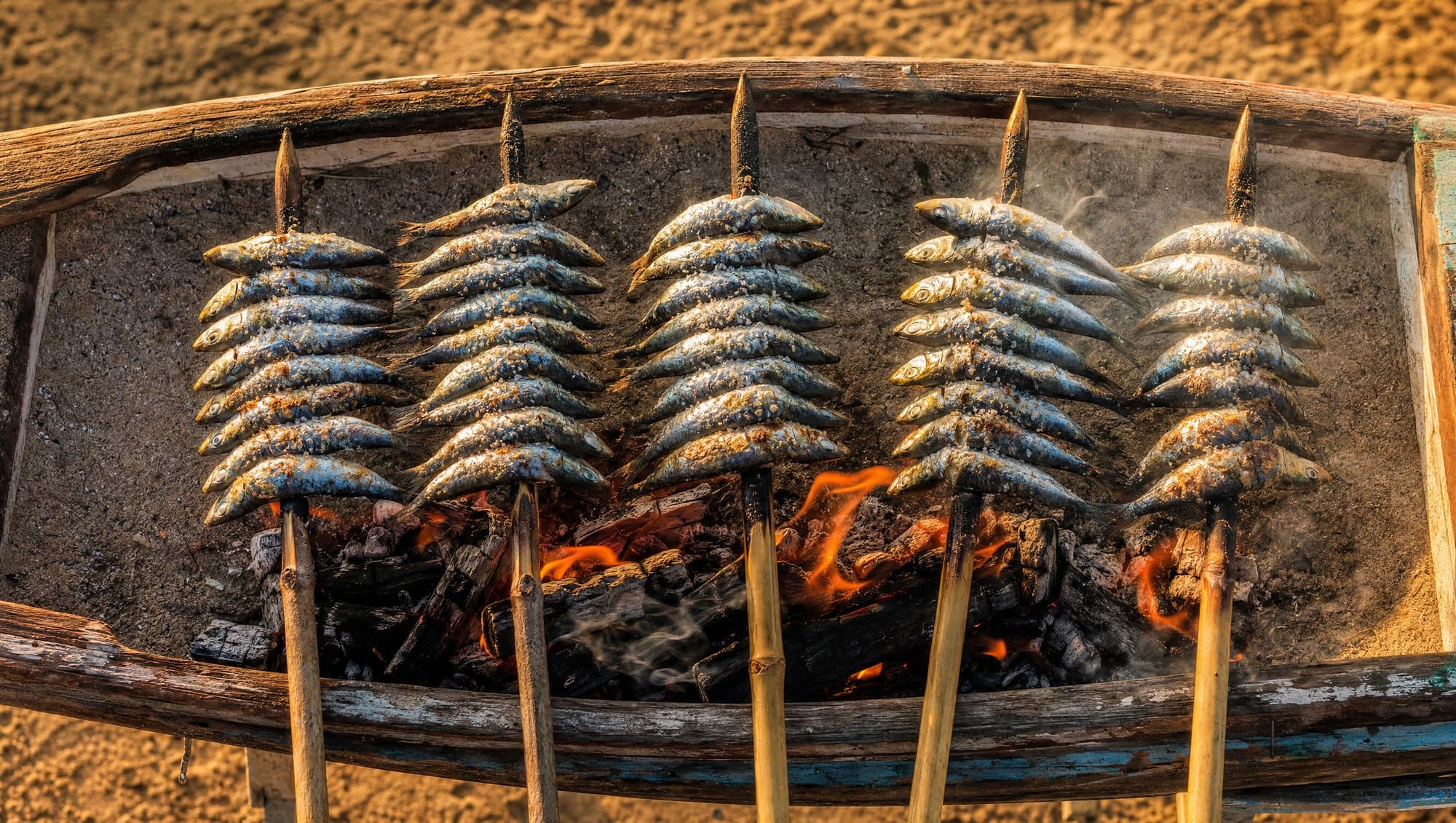
Fire matters here more than in most of Spain. Sardines are cooked on canes stuck into a sand-filled wooden boat over olive wood embers — not on a grill. Rice is cooked in a wide open pan over flames, not in a pot. The fish comes from Bajadilla, the little fishing port in Marbella, and it's often on your plate within four or five hours of being pulled out of the water — the same fish that lands, an hour later, on the counters of the town's food markets. The almonds, saffron, and honey came from the Moors and never went home.
You'll find versions of these dishes across Spain. You'll find authentic versions of them along a fifty-kilometre stretch of the Costa del Sol. That's the difference.
"My advice to anyone visiting Marbella for the first time: don't order what you already know. Skip the calamari, skip the paella at the wrong place, skip the sangría. Order what the coast actually produces — the sardines, the little fish, the cold soups in summer. That's the Costa del Sol on a plate."
— Chef Paco Siles
1. Espeto de Sardinas — The One Dish You Can't Skip
If Marbella had a single edible symbol, it would be the espeto. Six fresh sardines, threaded onto a long cane through the belly, salted generously, and grilled over olive wood embers burning inside a barca — a wooden boat filled with sand — right on the beach. The technique goes back to the nineteenth century and has barely changed. Ten minutes over the fire, a squeeze of lemon, and that's dinner.
The rule locals repeat every year: eat espetos in months without an R. That's May through August — when sardines are at their fattest, richest, and most flavourful. Outside that window, they're still good, but they're not the same fish. The other rule: eat them with your hands, straight off the cane. Cutlery is a category error.
Trocadero Arena
The Best Espetos on Playa de Río Real
Trocadero Arena is the polished end of the Marbella chiringuito spectrum — safari-style decor, linen loungers on the sand, and a crowd that spans everything from young families to Sunday-lunch groups that clearly aren't hurrying anywhere. What matters is that the espetos are done properly: a real wooden barca on the beach, olive wood, whole sardines skewered on canes, and a rotation that keeps the fire hot all afternoon.
Around €11 for six sardines. Order one skewer per two people as a starter, then let the pescaíto frito or a bit of grilled fish carry the meal.
Insider tip
Book a beach table for a 2pm lunch in June or July. That's when the espetos are at their absolute best — fat, glossy, straight off the fire. Anywhere with a view of the barca smoking on the sand is a good sign.
2. Pescaíto Frito — The Andalusian Fry-Up
Pescaíto frito literally means “little fried fish”, and the plate itself is exactly that: a golden pile of tiny whole fish and squid, coated in a thin flour dust, fried fast in very hot olive oil, salted while still steaming. You get anchovies (boquerones), baby squid (chopitos or puntillitas), sometimes red mullet (salmonetes), sometimes strips of dogfish (cazón en adobo) that have been marinated first in vinegar, paprika and cumin.
Done well, the coating is barely there — a whisper of crunch, not a shell. Done badly, it's a lumpy batter that hides tired fish. The tell is colour: proper pescaíto frito is pale gold, almost white in places. Anything deep brown is either overcooked or over-battered.
Kala Kalua
The Family Chiringuito for Fried Fish
Kala Kalua sits at the eastern end of San Pedro's beach promenade, where the walkway meets Cortijo Blanco beach. It's a traditional chiringuito — plastic chairs on sand, paper tablecloths, a bar shouting orders across the terrace. The pescaíto frito is the reason to come: a big shared platter, fresh from Bajadilla port that morning, fried in properly hot oil and served with lemon and nothing else.
The espetos are also excellent here, and rice dishes at weekends can be worth the wait. It's the opposite of Trocadero Arena in style — unpretentious, family-first, cash-friendly — and it's exactly why people keep coming back.
Insider tip
No reservations. Arrive at 1:15pm for lunch or 8:30pm for dinner and put your name down. Closed Mondays. The mixed platter is called fritura variada — that's the one to share.
3. Boquerones — The Anchovy, Two Ways
Málaga locals call themselves boquerones. That's how central this little silver fish is to the local identity — the city's people are named after it. And you'll meet it in Marbella in two very different forms.
Boquerones fritos are the fried version — whole small anchovies dusted in flour and fried until crisp, eaten head, tail, bones and all. They come as part of the pescaíto frito platter, or on their own.
Boquerones en vinagre are the marinated version — anchovy fillets cured for hours in white wine vinegar, then dressed with olive oil, chopped garlic, and parsley. Pale, translucent, sharp, cold. A very specific texture that people either love immediately or need three tries to appreciate. Order them with a beer and a slice of bread. That's the whole ritual.
Bar Altamirano
The Old Town Institution for Boquerones
Altamirano has been on this small plaza in the old town for over thirty years, and if you ask a local in Marbella where to eat proper boquerones, this is the answer nine times out of ten. The seafood comes from Bajadilla port a few hundred metres away, delivered daily. The kitchen keeps things simple — fry it, grill it, marinate it — and lets the freshness carry the plate.
Order both versions of the boquerones. The en vinagre as a first bite with a cold beer, the fritos right after. Then whatever fish is on the tank card that day, grilled a la plancha. The plaza itself is one of the prettiest corners of the old town — even the pigeons look content.
Insider tip
Get there for lunch at 1:30 or dinner at 9pm — earlier and the kitchen isn't up, later and the terrace fills. Ask for tapas-size portions (media ración) if there are two of you — the raciones are generous.
4. Gambas al Pil-Pil & Carabineros — The Prawn Question
Two very different prawn dishes, both worth understanding before you order.
Gambas al pil-pil is peeled prawns cooked in a small terracotta dish (cazuela) with olive oil, several cloves of garlic, and a dried chilli — the oil bubbles, the garlic browns, the prawns turn pink in maybe two minutes. It arrives at the table still sizzling. You dunk bread in the oil, which is the whole point. A classic tapa, on almost every traditional menu in Marbella. For the definitive old-town version, head to Bar El Estrecho on the tapas crawl — they've been doing it since 1954.
Carabineros are something else entirely. These are large scarlet-shelled deep-water prawns from the Atlantic-Mediterranean shelf, sometimes called “the red gold of the sea”. The heads are packed with a dark, intense liquid that's the whole point of the dish. You suck them like Spanish grandmothers do — no shame, no napkin, just commitment. They're grilled whole, or the flavour is extracted into a rice, which is where they truly shine.
For carabineros grilled straight, Bar Altamirano and most serious seafood places on the coast will do them well when they're in. For carabineros folded into rice, there's one address most chefs point to, and it's covered in the paella guide — La Milla's arroz de carabineros.
"If you see gambas al pil-pil on a menu and the price is €8, be careful — good ones use fresh Mediterranean prawns and start closer to €14. If it's €5, they're defrosted. Carabineros are always market price — always ask how much before you order."
— Chef Paco Siles
5. Arroces — Rice Is Not Just Paella
Paella is one dish in a family of maybe fifteen. In Andalucía you'll meet several of them, and knowing the difference matters when you order.
- Paella (arroz seco) — dry rice, cooked flat in the wide pan, with a caramelised crust on the bottom called socarrat. The classic.
- Arroz meloso — creamier, wetter, halfway between paella and risotto. Made in a deeper pan. Great with carabineros or lobster.
- Arroz caldoso — properly soupy, served with a spoon. The winter version. Perfect on a cold day.
- Fideuá — same idea as paella, but with short toasted noodles instead of rice. Usually seafood-heavy. Common in Valencia and Málaga.
Ordering a paella mixta at 8pm on a Marbella terrace is the tourist move. Ordering an arroz caldoso de bogavante at 2pm at a rice-focused kitchen is the local one. The full breakdown of where to actually eat each of these — and the one spot ten minutes inland that's worth the drive — is in the dedicated paella guide.
6. Cold Soups — Gazpacho, Salmorejo, Ajoblanco, Porra
In July and August, when Marbella hits 34 degrees by lunchtime, the entrée is a soup you can drink from a glass. Four versions, all cold, all essential.
Gazpacho is the one everyone knows — tomato, cucumber, pepper, garlic, olive oil, sherry vinegar, day-old bread, blended and chilled. Poured from a jug, sipped like juice, served everywhere in summer. The good ones are silky, tomato-forward, and taste of olive oil. The bad ones taste of ketchup.
Salmorejo is gazpacho's thicker Córdoba cousin — same base without the cucumber and pepper, more bread and more olive oil, so it's the consistency of soft yoghurt. Topped with chopped hard-boiled egg and diced jamón ibérico. Not a soup you drink — a soup you spoon. And richer than it looks.
Ajoblanco is Málaga's own — a cold white soup made with almonds, garlic, olive oil, and vinegar, thinned with a little bread and water, then served with a few muscat grapes floating on top. Sweet, savoury, and startlingly refreshing. Straight from the Moorish playbook. Order it once and you'll order it again the next day.
Porra antequerana is the deep-country version — like salmorejo, but even thicker and denser, made in Antequera an hour inland. If you see it on a menu, order it.
For all four, Taberna La Niña del Pisto in the old town is where the salmorejo and gazpacho are done at Córdoba-level. For ajoblanco with the grapes, any serious Málaga kitchen will get it right in summer — including Altamirano and most of the old town spots.
7. Jamón Ibérico & Tostada — The Andalusian Breakfast
The morning ritual across Málaga province is simple: half a toasted mollete (a soft, flat bread), rubbed with grated tomato and olive oil, topped with a couple of slices of jamón ibérico de bellota. A small café con leche on the side. Total damage: around €4.
This isn't a light snack — it's the Spanish breakfast, and the version you'll find in every proper Marbella café. The bread matters (soft, chewy, not baguette-crisp). The tomato matters (grated fresh, not out of a jar). And the ham matters — bellota means the pig was fed on acorns for the last months of its life, which is what gives the fat its floral, almost nutty depth.
A full breakdown of where to eat this properly in Marbella — including the churros crawl, the coastal breakfast bars, and the one churrería in Ojén worth the drive — lives in the breakfast guide.
8. The Sweet Ending — Torta Malagueña, Tarta Helada, Bienmesabe
Málaga has its own desserts, and they don't travel well — which means the versions you eat here are usually the only real ones you'll ever meet.
Torta malagueña is a light sponge cake made with almonds and orange zest, served plain with a coffee. Simple, moist, distinctly local. Every traditional café has one under a glass cloche at the counter.
Tarta helada malagueña is a semi-frozen slice — layers of ice cream, sponge, and cream, cut like a cake and served cold. A summer classic in most seafood restaurants. Not sophisticated. Very good.
Bienmesabe antequerano (which literally translates as “it-tastes-good-to-me”) is the most Moorish thing you can order — a dense almond and honey confection scented with cinnamon and lemon, sometimes served with sponge underneath. Rare in Marbella restaurants, common in the villages inland. If you see it on a menu, that kitchen is serious about tradition.
Pair any of them with a chilled glass of local vino dulce — sweet Muscat from the Málaga hills. That's how the meal ends, the province still on the plate.
The Best Way to Actually Understand These Dishes
You can eat your way through this list in a week and come home a much more educated diner. But there's one version of the trip that goes further — actually cooking them, over the same kind of fire, in the countryside just outside Marbella.
Ten minutes inland from the coast, past the whitewashed village of Ojén, the road climbs into the foothills of the Sierra de las Nieves. That's where Chef Paco Siles has his finca — a private country estate with an outdoor wood-fired kitchen, a garden he picks from every morning, and no sign on the road.
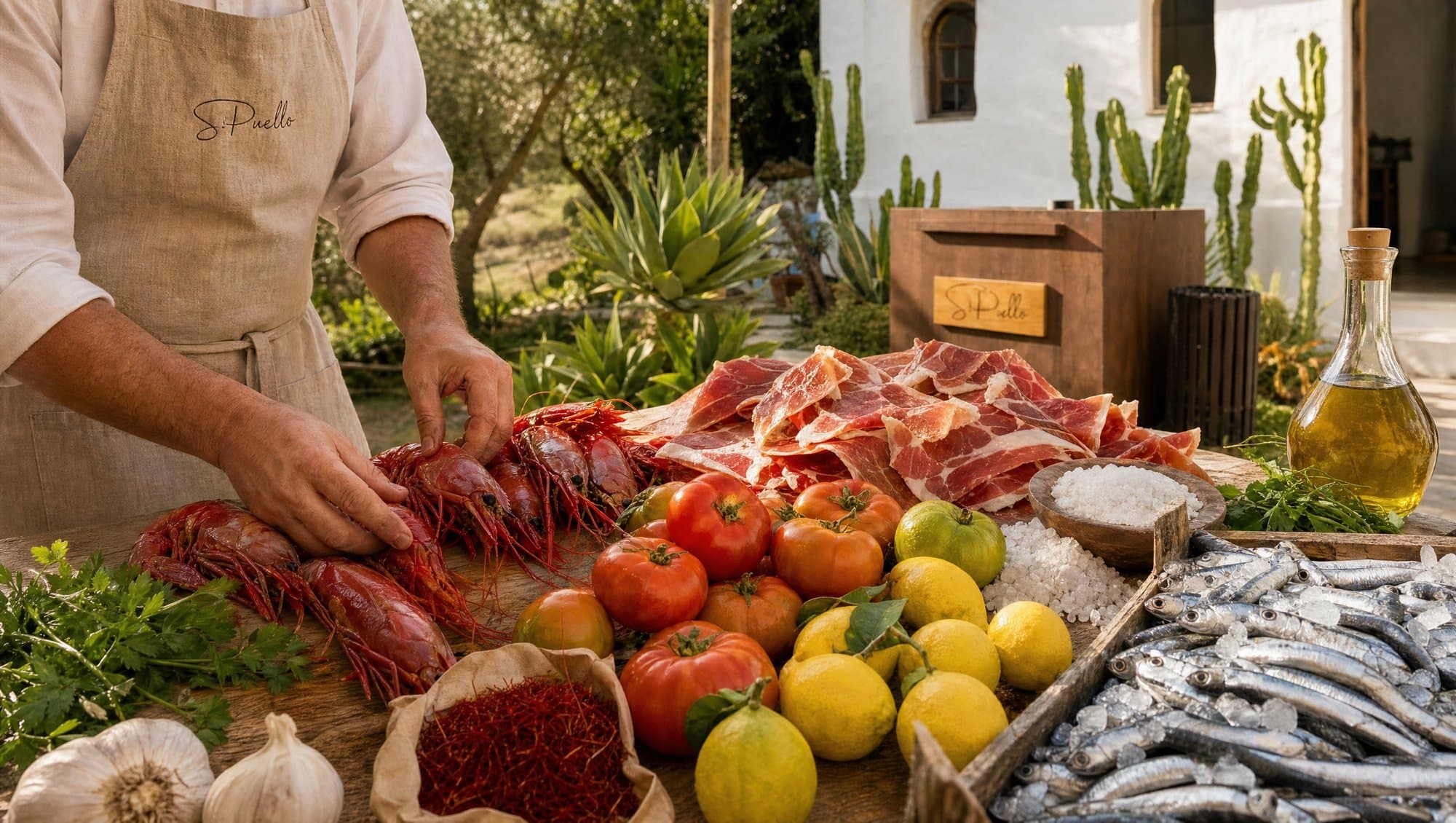
The Paella Cooking Class isn't a lecture. Paco lights the fire, walks you through picking the right rice, the right oil, the right stock. You watch him build the socarrat, taste the difference between a Bomba and a Calasparra grain, and eat what you helped cook under the olive trees, with a glass of local wine from the Sierras de Málaga. Three or four hours, from the market shopping to the last spoon of rice. Two to thirty people — the intimacy doesn't change.
It's the same paella his family has cooked since 1972 — arrocero since three generations. You leave knowing how a real one is built, and probably ruined for hotel paella forever.
"People come to Marbella and eat well. They leave and forget most of it in a month. The ones who spend an afternoon at the finca cooking — they remember exactly which grain of rice we used, which fire, which wine. Food you make yourself sticks."
— Chef Paco Siles
Quick Reference — What to Eat, Where, and When
| Dish | Where | ~Price |
|---|---|---|
| Espeto de sardinas | Trocadero Arena | €11 / skewer |
| Pescaíto frito | Kala Kalua | €18–24 platter |
| Boquerones (fritos + vinagre) | Bar Altamirano | €8–12 |
| Gambas al pil-pil | Bar El Estrecho (Old Town) | €12–16 |
| Arroz de carabineros | La Milla (Golden Mile) | €30–40/pp |
| Salmorejo & gazpacho | La Niña del Pisto | €6–9 |
| Jamón ibérico + tostada | Breakfast guide | €4–7 |
| Paella, cooked yourself | The Finca, Ojén | €70–90/pp |