

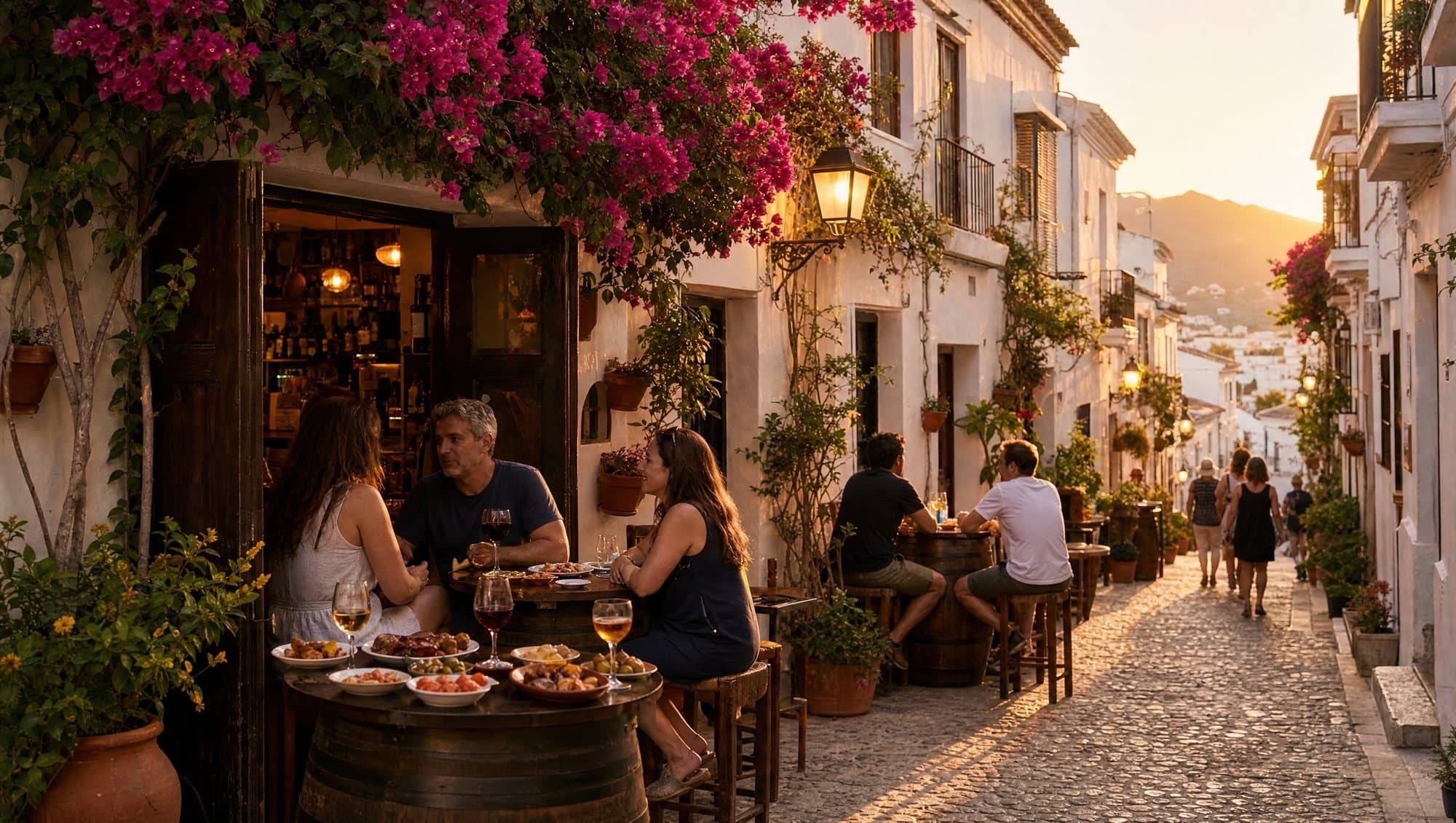
Tapas Crawl in Old Town Marbella: A Foodie Walking Tour
Every guide to Marbella tapas gives you a list. Ten restaurants, five stars each, no particular order. You pick the one closest to your hotel, sit down, order a mixed platter, and call it a cultural experience.
That's not how tapas works. In Spain, a tapas crawl — ir de tapas — is a ritual. You move. One drink and one or two bites at the first bar, then on to the next. Each spot has its thing: this one does the best ham, that one nails the croquetas, the one around the corner has a sherry list that would make a Jerezano weep. The point is the walk, the conversation between stops, the slow accumulation of flavours over an evening.
Marbella's Casco Antiguo — the old town — is built for exactly this. Narrow whitewashed streets, bars every thirty metres, and a geography small enough to walk the whole thing in fifteen minutes. This is a self-guided route through five stops that locals actually use, in an order that makes sense on foot.
How to Do a Tapas Crawl Like a Spaniard
Before the route, a few unwritten rules that will make the difference between “tourist having dinner” and “person enjoying tapas.”
Timing matters. Lunch tapas: 1:30 to 3pm. Evening tapas: 8:30 to 10:30pm. Showing up at 7pm is like arriving at a party two hours early — the kitchen is barely awake and the atmosphere is dead. The evening crawl is the classic; the lunch crawl is the insider move (fewer crowds, same kitchen).
Start with a drink. At each stop, order a drink first — a caña (small draft beer), a tinto de verano (red wine with lemon soda — the real summer drink, not sangría), or a glass of fino sherry. Then order food. One or two dishes per bar, shared. Never more. You're not here to get full at stop one.
Don't sit down unless invited. Many tapas bars are standing-room at the bar, with tables only if there's space. Standing at the bar is not second-class — it's often where the best service and atmosphere are. If there's a terrace, great. If not, lean into it.
Order the house speciality. Every bar has one thing they're known for. Ask: “¿Qué es lo mejor de aquí?” (What's the best thing here?) — you'll get an honest answer, and you'll eat better than anyone reading the menu.
"When I go out for tapas in the old town, I never sit at a table. I stand at the bar, order a caña, and watch what comes out of the kitchen. If it looks good, I point and say 'ponme eso' — give me that. That's how you eat in Spain."
— Chef Paco Siles
The Route: 5 Stops Through the Casco Antiguo
This route starts at Plaza de los Naranjos — the orange tree square that has been the heart of the old town since 1485 — and loops through the backstreets before ending near the seafront. Total walking time between all stops: about 12 minutes. Total eating and drinking time: that's up to you.
Bar El Estrecho
The One That's Been Here Since 1954
The name means “the narrow one” — and you'll understand why when you find it. Tucked down a slim alley just off Plaza de los Naranjos, El Estrecho has been pouring wine and slicing ham since 1954. The bar is tiny, the alley is the terrace, and the crowd is a mix of old-town regulars and visitors who've done their research.
This is where you start. Order a glass of fino and the jamón ibérico de bellota — hand-carved, as it should be. The gambas al pil-pil (garlic prawns sizzling in olive oil) are the other essential. Don't rush. The ham alone is worth the stop.
Insider tip
Go for the lunch crawl — El Estrecho at 1:30pm on a weekday is pure old Marbella. The evening crowd is bigger and louder, which is fun too, but different. No reservations for terrace — just show up and claim a barrel.
Taberna Casa Curro
The Ham & Cheese Institution
Two minutes from El Estrecho, Casa Curro is the kind of bar that makes you understand why Spaniards invented the charcutería board before the rest of the world caught on. The walls are covered in bullfight posters, the barrels double as tables, and the menu is built around what comes from the dehesa — acorn-fed ibérico ham, aged manchego, chorizo, lomo en orza (pork loin preserved in olive oil).
Order a tabla mixta (mixed board) and a glass of Andalusian red. The gambas blancas de Huelva — white prawns from the Atlantic coast — are a quiet masterpiece if they're on. No reservations accepted; just walk in.
Insider tip
Casa Curro opens for lunch at noon and dinner at 7:30pm. For the crawl, time your arrival for 2pm (lunch) or 9pm (dinner) — that's when the kitchen is in full flow and the atmosphere peaks.
Taberna de la Niña del Pisto
The Hidden Andalusian Kitchen
If El Estrecho is the bar everyone eventually finds, La Niña del Pisto is the one that takes a little more effort — and rewards it. Hidden in a narrow side street, this tiny taberna specialises in the kind of Andalusian cooking that grandmothers would recognise: rabo de toro (oxtail stew), berenjenas con miel de caña (fried aubergines drizzled with cane honey), and the namesake pisto — a slow-cooked vegetable stew that's Spain's answer to ratatouille.
This is the stop for cooked food. The previous two were about cured products and simple preparations; here, someone is actually cooking. Order the oxtail if it's available — it falls apart with a fork.
Insider tip
The pisto is the house signature, but the real move is the boquerones en vinagre (anchovies in vinegar) if they have them — simple, fresh, and impossible to get this good outside Andalusia.
La Tienda Casa Curro
The Modern Twist
Same family as Taberna Casa Curro, completely different energy. La Tienda is the younger sibling — a stylish wine bar where the tapas lean creative without losing their Spanish roots. Think artichoke hearts with ibérico crumbs, tuna tataki with soy reduction, and a lobster brioche that has no business being as good as it is in a bar this small.
This is where the crawl shifts gears. You've had the traditional; now taste what happens when a young kitchen plays with the same ingredients. The wine list is short but smart — ask for something from Ronda or the Sierras de Málaga.
Insider tip
La Tienda works best as a mid-crawl palate shift, not a first stop. After three bars of jamón and sherry, the tuna tataki and a glass of local white wine feel like opening a window.
Bodega La Venencia
The Grand Finale Near the Sea
The crawl ends where the old town meets the seafront. La Venencia started as a small pub in San Pedro in 1985 and has grown into one of Marbella's most reliable bodegas — the kind of place that's packed with locals at 2pm on a Tuesday and again at 10pm on a Saturday. The menu is meaty and generous: solomillo al whisky (pork tenderloin in whisky sauce), patatas bravas, and a cured meat selection that could anchor a meal on its own.
This is your closer. You've been eating delicate bites for four stops; now it's time for something substantial. Order the solomillo, a final glass of red, and sit outside on Avenida Miguel Cano watching Marbella go by. The Paseo Marítimo is a two-minute walk if you want to end the evening by the sea.
Insider tip
La Venencia does both tapas (smaller portions at the bar) and raciones (full plates at the table). For the crawl, stick to tapas — you've eaten at four places already. But if this were your only stop, order raciones and stay.
Honourable Mention: The Two-Star Secret
If you want to see what happens when tapas culture meets two Michelin stars, Skina is in the old town too — four tables, tasting menus only, Chef Mario Cachinero cooking hyper-local Andalusian produce in ways that would have been unthinkable a decade ago. It's not a tapas bar — it's a destination. Book months ahead and budget accordingly (tasting menus from €295). But if you're the kind of foodie who reads a blog post about tapas bars and still wants more, Skina is the endgame.
Skina on Google Maps · Website
"People ask me: 'Paco, what should I eat in Marbella?' I always say the same thing — go to the old town, stand at a bar, eat tapas. That's not just a meal. That's how we live here. If you skip the tapas crawl, you skip the best part of Spanish food culture."
— Chef Paco Siles
The Day After: When the Flavours Follow You Home
Here's what happens after a great tapas crawl: you wake up the next morning at your holiday villa, still thinking about last night's food, and someone in the group says: “Can we eat like that again tonight? But at the villa?”
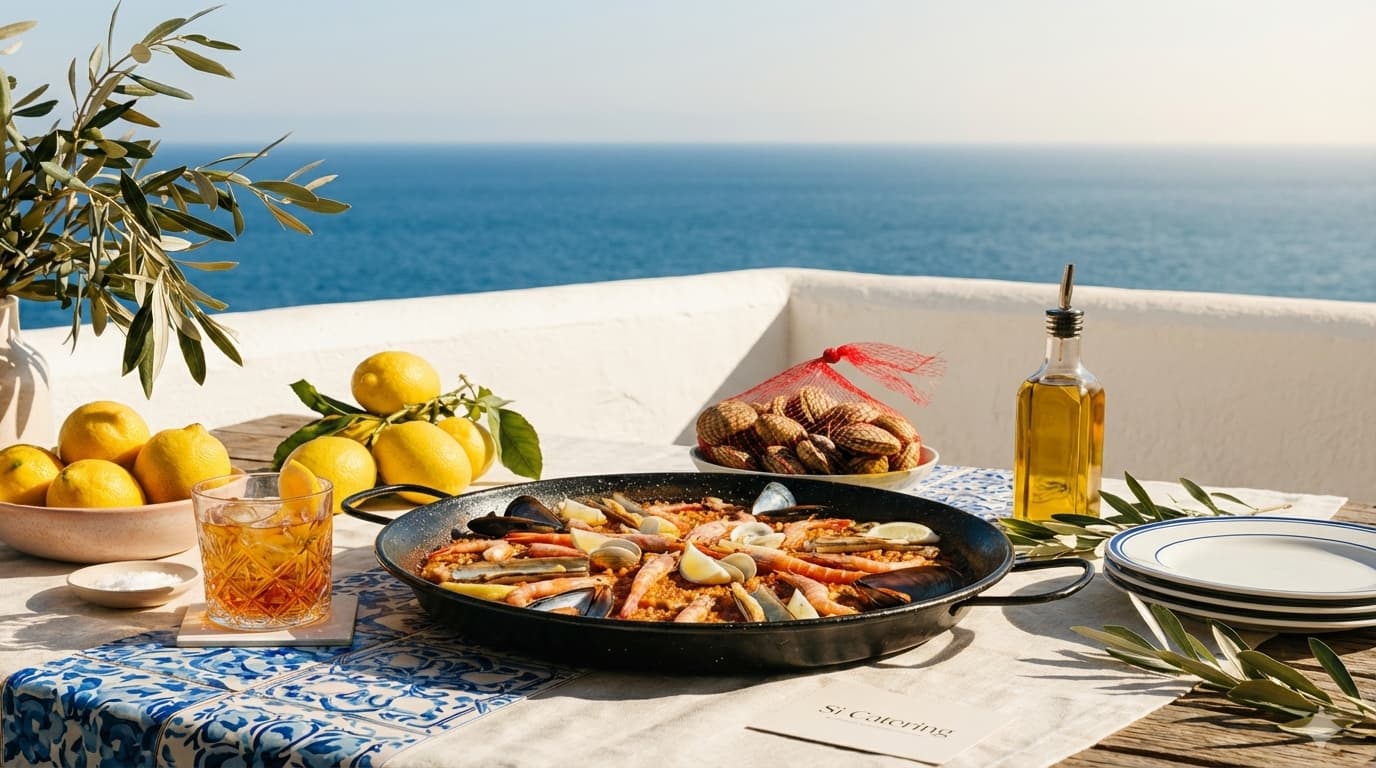
You can. Paella is one of the few dishes that travels perfectly — it's designed to be eaten from the pan, at room temperature or warm, no reheating required. Si Catering delivers fresh paella across the Marbella area: cooked that morning by Chef Paco Siles with market ingredients, delivered in the same paellera it was made in. Seafood, Valenciana, vegetable, or the Royale with lobster — minimum 6 people, ready for your terrace.
It's the easiest way to bring that Marbella flavour back to the villa. No cooking, no cleanup. Just the pan, the food, and the terrace.
Want to go deeper? Beyond the classic tapas circuit, Marbella has family-run restaurants, mountain ventas, and beachside chiringuitos that most visitors never find. Our guide to hidden gem restaurants picks up where this crawl leaves off. For a wider look at the dishes themselves — espetos, boquerones, cold soups, and the rest of Málaga's edible identity — see the Marbella food guide.
Quick Reference
| Stop | Style | ~Price |
|---|---|---|
| El Estrecho | Classic (since 1954) | €3–8 |
| Casa Curro | Charcutería & barrel bar | €4–12 |
| Niña del Pisto | Hidden Andalusian kitchen | €4–10 |
| La Tienda | Creative wine bar | €6–14 |
| La Venencia | Bodega institution | €4–12 |
| Paella Delivery | Delivered in the paellera | From €18/pp |
Prices are per-tapa estimates (2026). Most bars also serve raciones (full portions) and medias raciones (half portions) at higher prices. A full tapas crawl across five stops typically costs €25–40 per person including drinks. For more Marbella food recommendations, see the best paella guide or plan a romantic day starting with the old town.