

Málaga Wines 101: Why You Should Drink Local in Marbella
Order a bottle of wine in Marbella and nine restaurants out of ten will steer you toward Rioja, Ribera del Duero, or a Rueda Verdejo — wines from four hundred kilometres north. Meanwhile, the vineyards behind the coast, some of them thirty minutes up the road, are making bottles that half the Spanish sommelier world is quietly excited about.
This guide is a straight answer to the question every visitor eventually asks a waiter and never quite gets: what should I drink here? Two denominations, six grape varieties worth knowing, three wine bars in Marbella's old town where you can actually taste them, and one bodega worth the drive. All local, all under-poured, all better with a plate of paella than the Rioja the waiter is about to hand you.
Two Wine Denominations, One Province
Málaga is unusual in Spanish wine geography — the province has two official denominations that share almost the same land and grape varieties, but produce completely different bottles.
DO Málaga is the historic one, protected since 1933 and one of the oldest denominations in Spain. It covers the sweet wines the province has been making for centuries: fortified Moscatel and Pedro Ximénez, sun-dried on straw mats, dark as espresso, sipped after dessert or with a piece of blue cheese. In the nineteenth century these were the most exported wines in Europe — Russian tsars drank them, and the phylloxera plague of the 1870s is the reason your grandmother has never heard of them.
DO Sierras de Málaga is the modern twin, created in 2001 to legalise the still, dry wines that a new generation of winemakers had started producing in the mountains of the Serranía de Ronda and the Axarquía. Same land, mostly the same grapes, but unfortified reds and whites at normal alcohol levels — the kind of wines that go on a dinner table with a paella, not a slice of chocolate cake.
Together they cover roughly seventy small bodegas, and the vast majority produce fewer than a hundred thousand bottles a year. That's the reason you don't see them on the shelves of a Sainsbury's in London or a Kroger in Texas. You have to drink them here.
“When I'm cooking at the finca and a guest asks for wine, I never open a Rioja. Not because Rioja is bad — it's great — but because we're in Málaga. The tomato, the olive oil, the fish, the rice, they all come from within an hour of the fire. The wine should too. The pairing works better and the story is better.”
— Chef Paco Siles
The Six Wines to Try Before You Leave
Six grape varieties tell the whole story. Learn these and you'll navigate any Málaga wine list — the small local ones and the good hotel cellars — without needing the waiter to translate.
1. Moscatel de Alexandría — The Aperitif
The province's most famous grape, and the one you're most likely to drink accidentally. Moscatel comes in two very different registers: seco (dry) as a crisp, floral summer white with jasmine and citrus notes; and dulce (sweet) as a fortified aperitif or dessert wine, honeyed and intense with orange blossom on the nose. The dry version is criminally underused as an aperitif with olives before dinner — it costs €4 a glass and beats every prosecco on the menu.
Look for: Botani Moscatel Seco (Jorge Ordóñez), Victoria No.2 (Bodegas Bentomiz), or any dry Moscatel from the Axarquía valley east of Málaga.
2. Pedro Ximénez — The Meal-Ender
Also called PX. The grape is picked ripe, laid on straw mats in the sun until it turns to raisin, then pressed into a syrup and aged in oak. What comes out is nearly black, nearly molasses, and about the same density — a wine you pour over vanilla ice cream, sip with a cube of Roquefort, or drink very cold on its own after a long meal. The best examples have a decade or two of barrel age and taste of figs, dates, coffee, and burned sugar.
This is the wine to order at the end of a paella lunch instead of dessert. One small glass, ice cold, three olives on the side. That's the whole ceremony.
3. Romé — The Only Native Red
The Málaga native, and one of Spain's rarest grapes — there are barely a hundred hectares planted, all in this province. Historically used for the sweet fortified reds, Romé is now being made as a light, pale, food-friendly still red by a handful of Ronda bodegas. Think of a slightly rustic Beaujolais with more sun — low tannin, high acid, savoury red fruit. Drink it lightly chilled with grilled sardines, cold meats, or the first course of a paella meal.
4. Serranía Reds — Garnacha, Syrah, Petit Verdot
The mountains behind Marbella sit between six hundred and a thousand metres above sea level, and the day-night temperature swing there is what makes a serious red possible in a Mediterranean climate. The Serranía de Ronda has become the province's serious wine region — roughly twenty bodegas producing structured reds from Garnacha, Syrah, Tempranillo, Petit Verdot and Cabernet, often blended together and often organic or biodynamic.
These are the wines to order with a lobster paella, a Brasero mixed grill, or any red-meat dinner. Bodegas F. Schatz, Descalzos Viejos, Chinchilla, and Cortijo Los Aguilares are the names sommeliers will nod at.
5. Sierras Whites — The Overlooked Category
The still whites of Sierras de Málaga are the province's best-kept secret. Chardonnay grown at altitude in Ronda has a mineral, almost Burgundian tension; Doradilla (a native white grape with only twenty-two hectares planted anywhere in Spain) makes bright, salty whites that were once used to blend with sherry; Sauvignon Blanc from the same altitude tastes more like a Sancerre than a Rueda. All three work with fish, with rice, with anything from the fish counter at the Mercado Municipal.
6. Vino de Tinaja — The Ancient Method
A handful of Ronda winemakers — F. Schatz and Descalzos Viejos among them — are fermenting wine in clay tinajas, the way Iberians did before the Romans arrived. The result is textural, faintly funky, low in sulfites, and unlike anything mass-produced. If you see “tinaja” or “ánfora” on a bottle in a good wine bar, order a glass. It's the closest you'll get to drinking wine as it was drunk two thousand years ago.
Where to Taste Them in Marbella
Most Marbella restaurants list two or three local wines out of politeness and then quietly recommend a Rioja. The exceptions — the places whose whole reason for existing is to pour Andalusian bottles — are almost all inside the old town or in San Pedro Alcántara. Three worth walking to, in the order the streets take you.
Vinacoteca Castillejos
Old Town Wine Bar With a 400-Bottle List
A short walk from the orange-tree square at the heart of the casco antiguo, Vinacoteca Castillejos is the kind of wine bar Marbella needed for years and finally got. Four hundred bottles on the list, sensibly split between Spain and the wider world, but the interesting part is the Andalusian section — a rotating dozen of Sierras de Málaga and DO Málaga wines by the glass, plus small-run producers from Ronda you won't see anywhere else on the coast.
The kitchen sends out simple, honest small plates — boquerones en vinagre, a good manchego, a plate of jamón ibérico, sometimes a small tortilla. Come for the wine, stay for the crowd (mostly locals, mostly regulars), leave two hours later three bottles wiser.
Insider tip
Ask them what they've just opened by the glass — the good bottles rotate weekly and the barman will let you taste three before you commit. A tasting flight of three Sierras de Málaga wines runs around €15.
Taberna Casa Curro
Andalusian Wines the Way Locals Drink Them
Curro's tavern has been running out of this narrow street since 2008 and it looks like it's been there twice as long — bullfighting posters on the walls, wooden barrels stacked behind the bar, traditional Sevillano tiles. The wine list is short and pointedly Andalusian: two dozen bottles, mostly from Ronda and the Sierras, plus a few classic sherries from Jerez served by the copita.
The food is uncomplicated on purpose — charcuterie, aged cheese, salt-cured tuna, croquetas — because the wine is the point. No reservations, no tables to speak of, so it's standing at the bar or at a high stool, elbow to elbow with regulars. If it's full when you arrive, walk five doors down to La Tienda Casa Curro, the calmer sister room around the corner.
Insider tip
Order a copita of amontillado sherry before the meal (€3) and a glass of Ronda red after — you'll cover both ends of the Andalusian wine spectrum in twenty minutes. Kitchen open 12–4 and 7:30–12:30.
D'Oliva
Boutique Wine and Olive Oil Shop With Private Tastings
Not a bar, a shop — but the sort of shop where the French owner, David, will sit you at a small table in the back and pour six glasses if you tell him you're interested. D'Oliva made its name with premium Spanish olive oils (eighty varieties on the shelves, a serious operation in its own right), but the wine side is quietly excellent: a tight, curated Andalusian list with a focus on Sierras de Málaga and small Ronda producers.
This is the shop to walk into if you want to leave Marbella with three bottles worth taking home and understand what you bought. Book a private tasting ahead by email — David will pair oils and wines together, which is a specifically Andalusian pleasure you don't get everywhere.
Insider tip
The olive-oil-and-wine tasting (about €35 per person) is the one to book — Andalusian oil is as varied as the wines and most visitors leave without ever understanding either. Email ahead for private slots.
Where to Buy for the Villa
If you're staying in a villa and want a proper local wine on the table instead of the €7 supermarket Rioja, two addresses matter more than the others.
G-Wine in San Pedro Alcántara is the neighbourhood pick — a proper wine shop attached to a small bar and restaurant, twenty-five wines on rotation by the glass, and a shopkeeper who can pick out three bottles from Ronda for whatever you're cooking that night. It's an easy stop on the way back from Puerto Banús. The wines run €12–40 a bottle, most under €25.
The Mercado Municipal in the Old Town has one small wine and delicatessen counter that carries a rotating selection of Málaga wines alongside the cheeses and cured meats — not the biggest cellar in town, but the most convenient if you're already market-shopping for dinner. Ask the woman at the counter what pairs with what you just bought at the fish stall.
One Day Trip: Where the Wine Actually Comes From
Two options depending on how much of a day you want to make of it. Both work, both are worth doing at least once.
The Easy One: Antigua Casa de Guardia in Málaga City
Forty minutes east of Marbella, this is the province's oldest bar — founded in 1840 by José de Guardia and essentially unchanged since. A narrow room with barrels lining the walls, sawdust on the floor, no chairs, and a dozen sweet wines drawn straight from oak botas and served in tiny glasses for a euro or two apiece. The waiter chalks your tab directly on the wooden bar in front of you.
Order a Moscatel Añejo, a Pedro Ximénez, and a Málaga Trasañejo (the fifteen-year-old version). Ask for a plate of boquerones en vinagre and a slice of manchego on the side. That's ninety minutes and about fifteen euros for a complete lesson in Málaga sweet wine, and there's nowhere else on earth to do it quite like this.
Address: Alameda Principal 18, Málaga · Hours: Mon–Thu 10–22h, Fri–Sat 10–22:45h, Sun 10–15h · Google Maps
The Serious One: A Ronda Bodega
The drive to Ronda is one of the best in Andalucía, and once you're there the town has around twenty small bodegas, most of them by appointment only. Two are worth the effort of booking ahead. (Ronda is also home to Philippe Starck's olive mill — the olive oil tour guide has the details if you want to make a day of it.)
Bodega F. Schatz
Ronda's Organic and Biodynamic Pioneer
Federico Schatz took over three hectares of vineyard in 1982 and slowly rebuilt them into one of the first certified biodynamic wineries in the Serranía de Ronda. Nine grape varieties on the land — Petit Verdot, Chardonnay, Pinot Noir, Muscat, Romé, others — and six wines produced with no added sulfites, some fermented in clay tinajas in the traditional Iberian method.
Visits run around ninety minutes: a walk through the vineyard, a look at the cellar, a tasting of four wines with a cold aperitivo. Small groups only (two to fifteen people), always by prior booking. If you're serious about wine, this is the visit to make in Ronda.
Insider tip
Book at least a week ahead by email (bodega@f-schatz.com). Ask for the Rosado — a Petit Verdot rosé with two years of bottle age that ends up on very few restaurant lists. It's a good bottle to take home.
Bodega Descalzos Viejos
A 16th-Century Monastery Turned Winery
The setting is the story: a 1500s Trinitarian monastery, restored in the late nineties, with frescoes preserved above the vats and a cellar dug into the rock beneath what used to be a chapel. The wines are structured Serranía reds — Cabernet Sauvignon, Petit Verdot, Syrah, Tempranillo — plus a small production of white and rosé, all under the DO Sierras de Málaga label.
Tours run around ninety minutes and include the monastery, the cellar, and a three-wine tasting with local cheese and cured meats. Twenty-five minutes on foot from the old town along the river valley, or five minutes by taxi — the road in is a rough dirt track, follow the signposts rather than GPS.
Insider tip
Combine it with a day in Ronda old town. Book the bodega for 11am, walk back into town for a late lunch at Almocábar or Tragata, and drive home late afternoon. All-day trip, worth every hour.
What to Pair With Paella (The Chef's Take)
The one question every visitor to the finca eventually asks: what should I drink with the paella?
“For a Valenciana paella — chicken, green beans, rosemary — a light Ronda red, cool from the fridge for fifteen minutes. Garnacha or Romé, nothing heavy. For a Royale, the seafood-and-lobster one, a dry Moscatel or a Sierras de Málaga Chardonnay — the salt of the shellfish needs a wine with acid and mineral tension, not a Rioja. For a Negra with squid ink, a Ronda Syrah — the smoke of the socarrat and the umami of the ink want a red with a bit of grip. Never sangría with a good paella. Sangría is a beach drink, not a food wine.”
— Chef Paco Siles
Three rules the length of a paella lunch: local, unfussy, and cool. Andalusian summers are hot enough that every red drinks better fifteen minutes out of the fridge, whites and rosés straight from ice, sweet wines almost frozen. Your average temperature rule from a wine textbook was written for a French dining room in autumn — ignore it here.
Drink It Where It's Made — With the Rice It's Made For
There's a version of this trip where you spend a week ticking wine bars and bodegas, and you'll come home well-informed. There's another version where you spend one afternoon actually watching the wine and the food come together on the same table — which is what most people quietly want, whether they'd phrase it that way or not.
Ten minutes inland from the Marbella coast, past the whitewashed village of Ojén, the road climbs into the foothills of the Sierra de las Nieves — the same mountains where the Sierras de Málaga bodegas plant their vineyards. Chef Paco Siles has his finca up there, an open-air country kitchen with a wood fire, a long shared table under the olive trees, and a very short local wine list opened for whoever's cooking that afternoon.
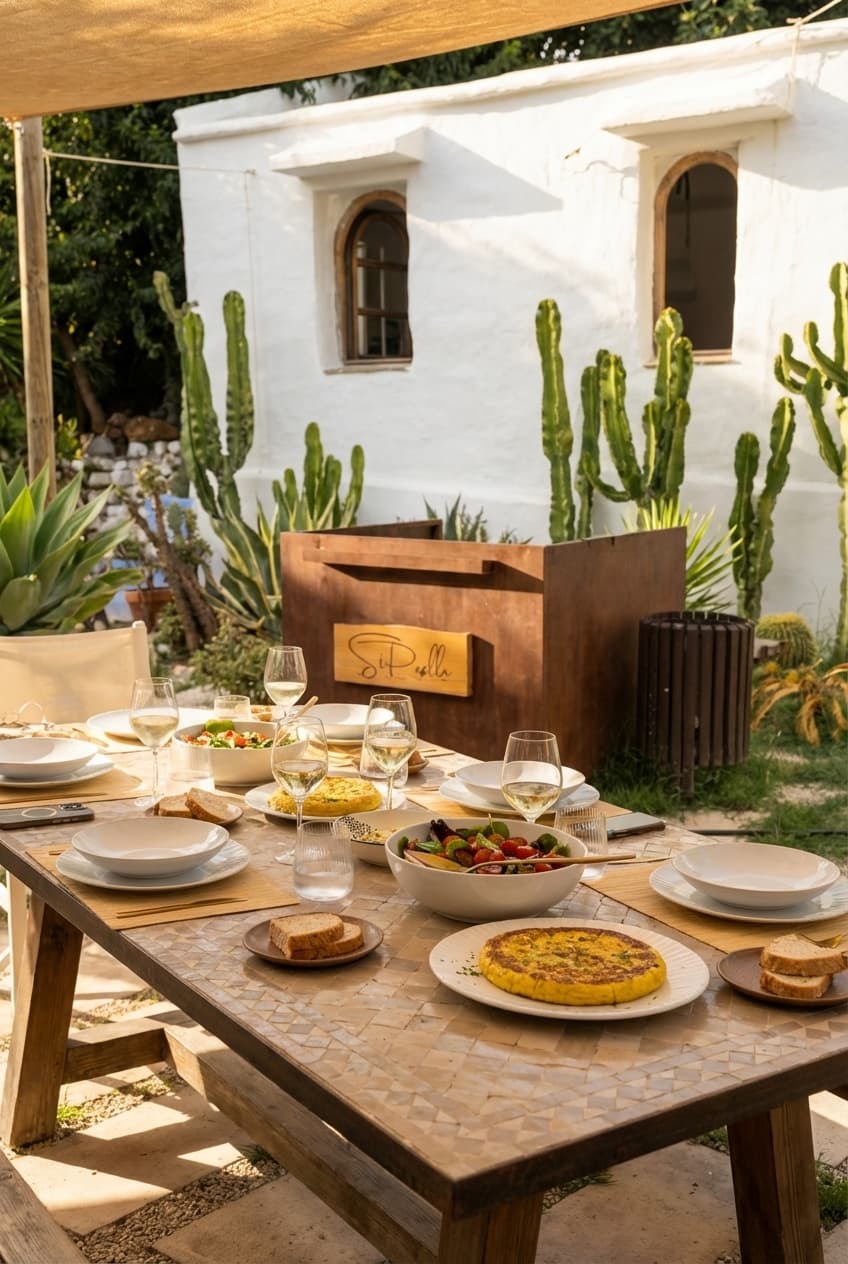
The Paella Cooking Class is three or four hours: Paco lights the fire, walks you through picking rice, oil, saffron, the local gambas rojas, and while you're building the paella he opens a bottle from the Sierras or the Serranía. A Chardonnay from Cortijo Los Aguilares with the Royale, a chilled Ronda Garnacha with the Valenciana, a Pedro Ximénez at the end for the ones who make it that far. Two to thirty people, always the same intimate setup, always local wine on the table.
You leave knowing what a real paella is made of — and, incidentally, which Málaga wine to pour with it for the rest of your life.
Quick Reference — Málaga Wines at a Glance
| Wine / Place | Type / When | Price |
|---|---|---|
| Moscatel Seco | Dry white · Aperitif | Glass €3–5 |
| Pedro Ximénez | Sweet fortified · Digestif | Glass €2–5 |
| Romé | Light red · Any time | Glass €4–7 |
| Serranía red (Garnacha / Syrah) | Structured red · Meal wine | Bottle €20–45 |
| Vinacoteca Castillejos | Wine bar · Daily | Marbella Old Town |
| Taberna Casa Curro | Traditional tavern · Daily | Marbella Old Town |
| Antigua Casa de Guardia | Historic bar · Since 1840 | Málaga city (40 min) |
| Bodega F. Schatz | Bodega visit · By appointment | Ronda (90 min) |
| Paella + local wine, at the source | Daily, 12:30 / 13:30 / 16:30 | €70–90/pp · The Finca, Ojén |