

Olive Oil Tour from Marbella: Visiting the Local Almazaras
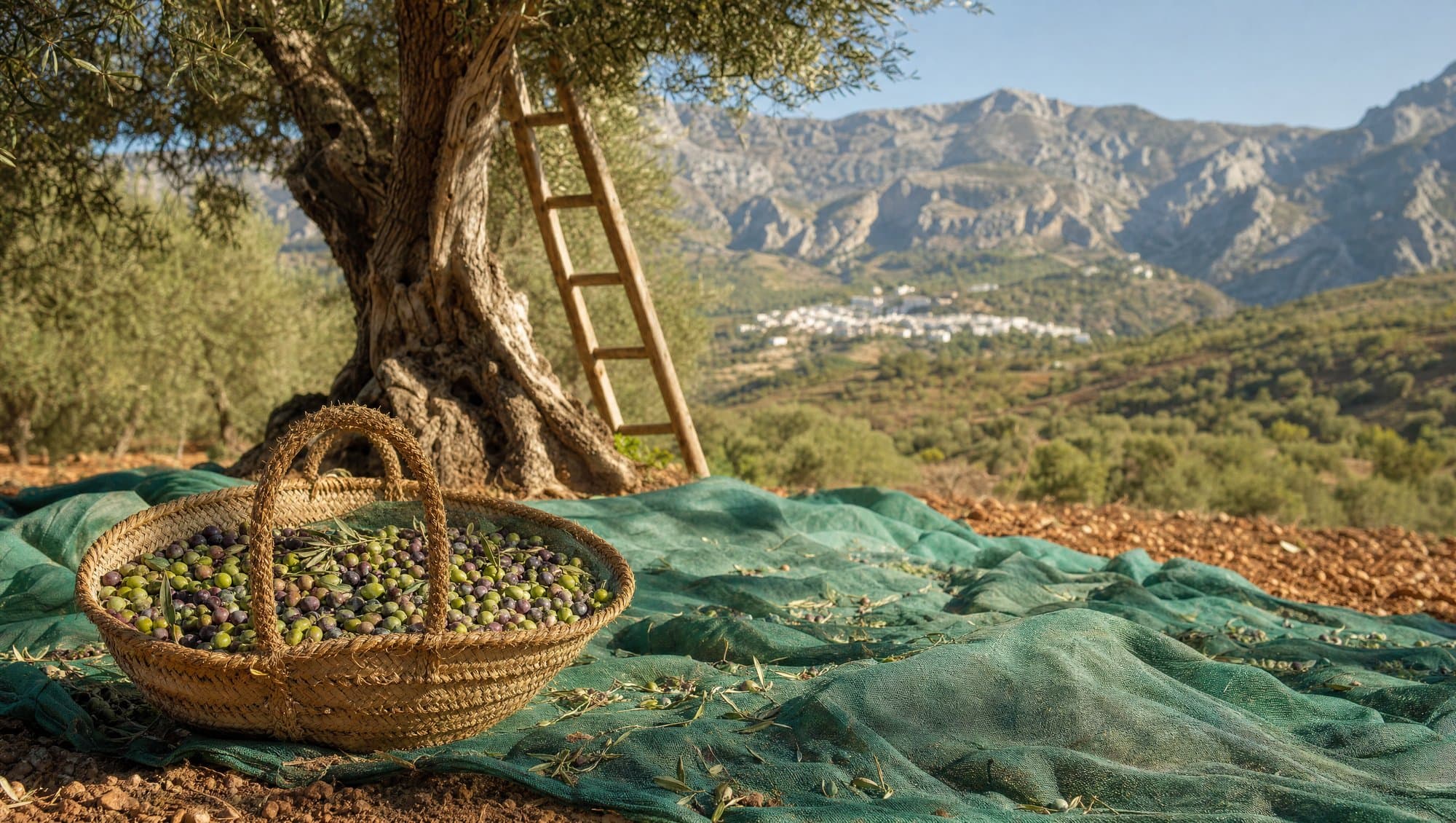
Drive twenty minutes inland from Marbella and the golf courses give way to something much older: terraces of olive trees climbing every hillside, some of them planted before anyone in your family tree was born. Andalusia makes more olive oil than any other region on earth, and the province of Málaga has been pressing it since the Romans. Yet most visitors fly home having only ever tasted it from a plastic bottle on a restaurant table.
An almazara is an olive mill — the place where olives become oil. Several around Marbella open their doors to visitors, from a restored village mill to a concrete cube designed by Philippe Starck. This guide covers five worth the drive, how to taste like a professional once you get there, what to bring home, and why the timing of your trip matters more than you'd think.
First, the Basics: What Makes Málaga Oil Different
Spanish olive oil isn't one thing. Like wine, it changes with the grape — here, the olive variety — and with the land. Four names cover almost everything you'll taste around Marbella:
- Hojiblanca — the variety of Málaga province, especially around Antequera. Fruity, a little sweet at first, with a peppery finish and notes of fresh-cut grass and green almond. If a local oil has no variety on the label, it's probably this.
- Picual — the most planted olive in Spain, mostly from Jaén. Intense, bitter, very peppery, tomato-leaf aromas. The one that makes you cough — which is a good sign.
- Verdial — an old Málaga variety from the Axarquía and the Vélez-Málaga hills. Mild, sweet, almost buttery. Hard to find outside the province.
- Arbequina — originally Catalan, now planted all over Andalusia. Soft, fruity, apple and banana notes. The easy one to love on the first try.
Two words on the label matter more than any brand. Aceite de oliva virgen extra (AOVE, extra virgin) is the only category worth buying — cold-extracted, no defects, nothing else added. And cosecha temprana (early harvest) means olives picked green in October, which gives a smaller yield but a greener, more aromatic, more peppery oil. It's the one producers keep for themselves.
When to Go: Harvest Season Changes Everything
Most mills on this list open year-round, but the machines only run during the harvest: roughly from late October to January, with the peak in November and December. Visit in season and the mill is loud, busy and smells of crushed green fruit, with tractors queuing in the yard. Visit in July and you'll see clean, silent equipment and a very nice tasting room. Both are worth doing — but if you're on the coast between November and January, this is the moment to go, and the moment to taste aceite nuevo, the first oil of the year, cloudy and almost fizzing with pepper.
How to Taste Olive Oil Like a Pro
At any guided tasting you'll be handed small glasses — often dark blue, so that the colour of the oil doesn't influence you (colour says nothing about quality). The method takes thirty seconds:
- Warm it. Cup the glass in one hand, cover it with the other and swirl for a few seconds. Warmth releases the aromas.
- Smell it. Uncover and breathe in. Look for green things: grass, tomato leaf, artichoke, green apple, almond.
- Sip and slurp. Take a small sip, then suck in air through your teeth with the oil on your tongue. It sounds rude. Everyone does it.
- Wait for the finish. Bitterness on the tongue and a peppery scratch at the back of the throat aren't defects — they're the polyphenols, the antioxidants that make extra virgin oil good for you. A cough means a fresh, healthy oil.
What you don't want: anything that smells of wine, vinegar, wet cardboard, mould or old nuts. That's oxidised or badly stored oil — and you'll start noticing it on restaurant tables everywhere once you've tasted the good stuff.
“People think olive oil is just fat for cooking. In Andalusia it's an ingredient — it carries the flavour of the whole dish. A good one, raw on bread with tomato, is already a meal. Taste three different oils side by side once, and you will never buy the cheap bottle again.”
— Chef Paco Siles
Five Olive Mills Worth the Drive from Marbella
Ordered by distance from Marbella, from a half-day outing to a full day trip.
El Molino Museum, Ojén — The Closest (20 min)
The easiest olive mill to reach from Marbella is in the white village of Ojén, twenty minutes up the A-355. The Museo del Molino occupies an eighteenth-century water mill that first ground wheat, then olives. Restored by the village, it still has its full set of original machinery — the stone mill, the mixer, the hydraulic press — and the courtyard bins where olives waited their turn to be pressed.
Upstairs, a second small museum tells the story of aguardiente de Ojén, the anise spirit that made the village famous across Spain in the nineteenth century. It's a short visit — an hour at most — which is exactly why it works: pair it with a coffee in the plaza and a walk through the village. Opening hours are limited and change with the season, so check with the Ojén tourist office before you drive up.
Address: Calle Charcas 60, Ojén · Google Maps
Aceites Molisur
A Working Family Mill With a 1910 Press
The best all-round mill visit near Marbella. Molisur is a family business in the Guadalhorce Valley that moved into new, much larger facilities in 2018 — and built the visit into the design. You walk above the production floor on a raised walkway, which means that in harvest season you look straight down onto the olives being washed, crushed and spun into oil.
The other half of the visit goes back a century: a mill from 1910, restored to working order, with its belts, pulleys and pumps. Then a tasting of three extra virgin oils, with a guide who teaches you to tell them apart. Tours run with English-speaking guides, and there is a shop on site.
Insider tip
Go in November or December, ideally on a weekday morning, when the mill is pressing — the walkway view only makes sense with the machines running. Combine it with the Sunday farmers' market at La Trocha in nearby Coín if your dates allow.
The Guadalhorce Valley is also where much of the province's fruit and vegetables grow — the guide to Marbella's food markets covers the Sunday market in Coín, ten minutes from the mill.
LA Almazara
Philippe Starck's Olive Mill in the Hills of Ronda
You see it before you understand it: a huge cube of concrete and weathered steel in the middle of the olive groves, with a single bull's horn sticking out of one side. This is the mill of LA Organic, an organic olive oil producer from Ronda, and its building was designed by Philippe Starck with the studio Touza Arquitectos. It's billed as the world's first “author-designed” olive mill, and it took fourteen years from idea to opening.
The visit covers the mill, an olive oil museum, the architecture and a walk through the estate's olive groves, with a mirador over the Serranía. The premium tier adds a guided tasting of the estate's oils with bread. There's a restaurant and a shop on site — and the bottles, also Starck-designed, make a handsome thing to carry home.
Insider tip
Make a full day of it: the mill in the morning, then a Ronda bodega in the afternoon — the Málaga wines guide lists the two worth booking. Pick the ticket with the tasting; the cheaper tier is a visit without the oils.
If you're heading that way, the guide to Málaga wines covers the Ronda bodegas worth pairing with the mill, and the day trips from Marbella guide has the rest of the town.
Museo del Aceite Dcoop, Antequera — For the History (1h15)
Antequera is the capital of Hojiblanca country, and the home of Dcoop, the cooperative that grew out of Hojiblanca and one of the largest olive oil cooperatives in the world. Its olive oil museum is less a tourist experience than a serious collection: remains of mills from three different eras, and as its centrepiece a seventeenth-century beam press twelve and a half metres long — the kind of wooden giant that pressed Andalusian oil for centuries before hydraulics.
It's open weekday mornings only (Monday to Friday, 8:30 to 15:00 according to the Andalusian tourist board), so plan it as part of a day in Antequera, with its UNESCO-listed dolmens and the limestone formations of El Torcal twenty minutes away.
Molino El Vínculo
A Mill Founded in 1755, Still Pressing Every Winter
The furthest on the list and the most atmospheric. Molino El Vínculo was founded in 1755 by a Ronda nobleman, at the foot of the white village of Zahara de la Sierra on the edge of the Grazalema natural park. It still produces its own virgin olive oil each winter using traditional cold extraction, and the family shows visitors around the mill year-round.
The tasting goes beyond oil: homemade liqueurs and cured ham marinated in the house oil. There are three rural houses on the estate if you want to turn the trip into a night in the Sierra.
Insider tip
This one is all about timing — go between November and January, when the oil is being made. Call ahead (+34 956 123 002) to agree a time, and combine it with lunch in Zahara and the drive through the Grazalema mountains.
No Car? Taste It in Marbella
If a drive inland isn't on the cards, you can still taste properly without leaving the old town. D'Oliva, a small shop a few minutes from Plaza de los Naranjos, stocks dozens of Spanish extra virgin oils and runs guided tastings by appointment — covered in more detail in the guide to experience gifts in Marbella. Book ahead, and go late morning, before lunch. Google Maps
And the simplest tasting of all happens every morning in every bar on the coast: a tostada con tomate y aceite, toasted bread with grated tomato and a generous pour of oil. The guide to breakfast in Marbella lists where to order it.
What to Bring Home (and How)
- Buy from the mill. Prices are fair, the oil is from this season, and you know exactly where it was pressed.
- Check the harvest date, not just the best-before. Olive oil is at its best within a year of pressing. Buy the current season's oil, never last year's.
- Dark glass or tins. Light and heat are what kill olive oil. Avoid clear bottles that have been sitting in a sunny shop window.
- Flying home? Bottles over 100 ml go in checked luggage. Mills sell 2–5 litre tins, which travel far better than glass — wrap them in clothes anyway.
- Use it. Good oil isn't for the back of the cupboard. Open it, use it raw on everything, finish it within a couple of months.
Where the Oil Meets the Rice
A mill shows you how olive oil is made. What it doesn't show you is what an Andalusian cook actually does with it — and that's the part most visitors are really curious about.
In the hills above Ojén, the same olive country as the village museum, Chef Paco Siles runs a Paella Cooking Class at his finca. It starts the Andalusian way: a welcome drink and a spread of tapas under the shade sails — tortilla, a seasonal salad, aioli. Then Paco cooks the paella in front of you, explaining every step as he goes: the moment the oil goes into the pan, how the sofrito is built, why the rice goes in when it does, how the socarrat forms at the bottom. You eat it together at a long table with a view of the Sierra de las Nieves, and leave with the recipes.
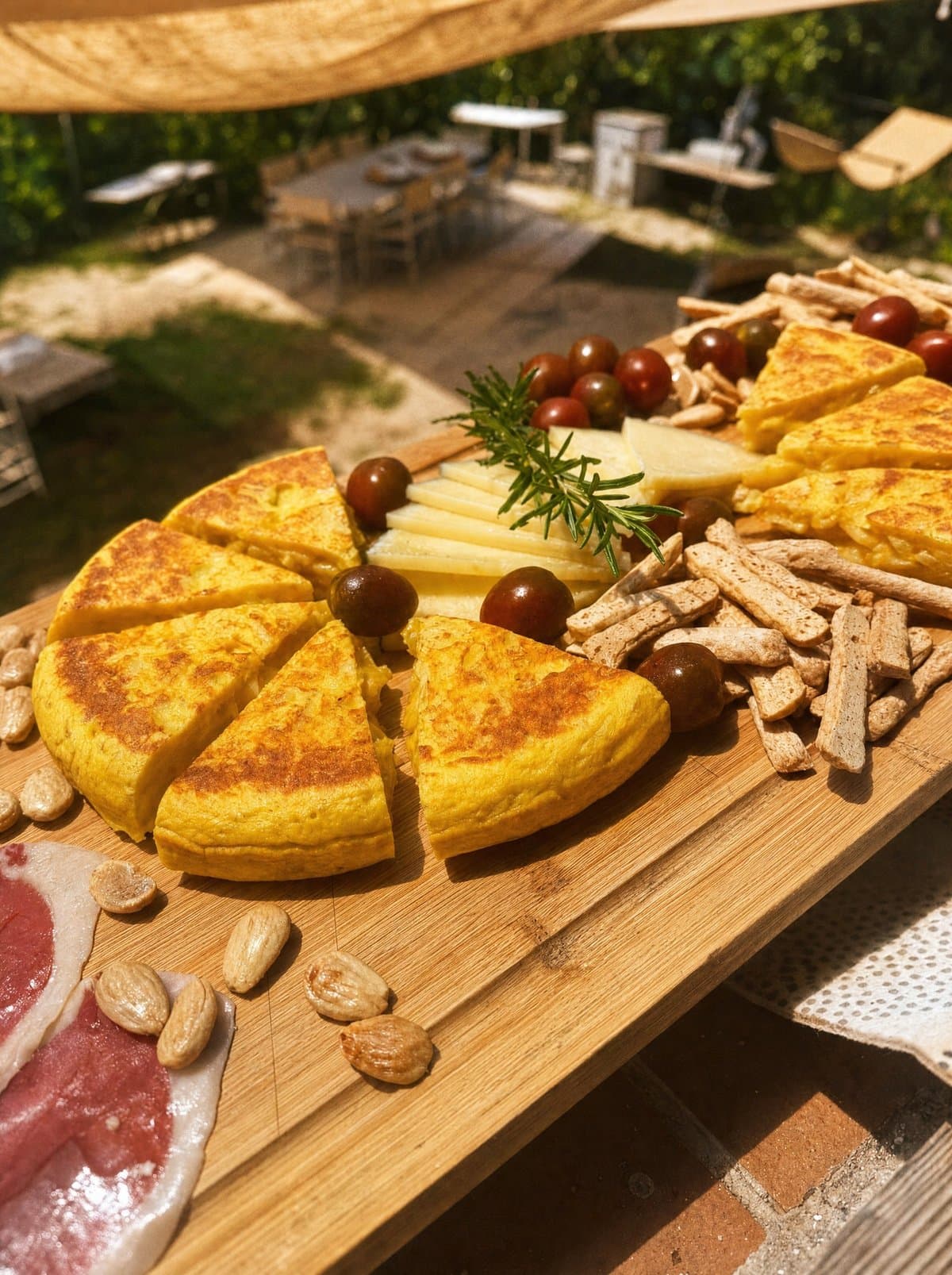
It works for two people or for thirty, and it fits neatly into an olive oil weekend: the Ojén mill museum in the morning, the finca at lunchtime, twenty minutes from Marbella.
Quick Reference — Olive Oil Tours Near Marbella
| Place | From Marbella | Price |
|---|---|---|
| El Molino Museum, Ojén | 20 min | Check locally |
| Aceites Molisur | 45 min | From €29 |
| LA Almazara, Ronda | 1h15 | From €19 |
| Museo del Aceite, Antequera | 1h15 | Check locally |
| Molino El Vínculo | 1h45 | On request |
| D'Oliva | Old Town | On request |
| Paella Cooking Class | 20 min · Ojén | €70–90/pp |