

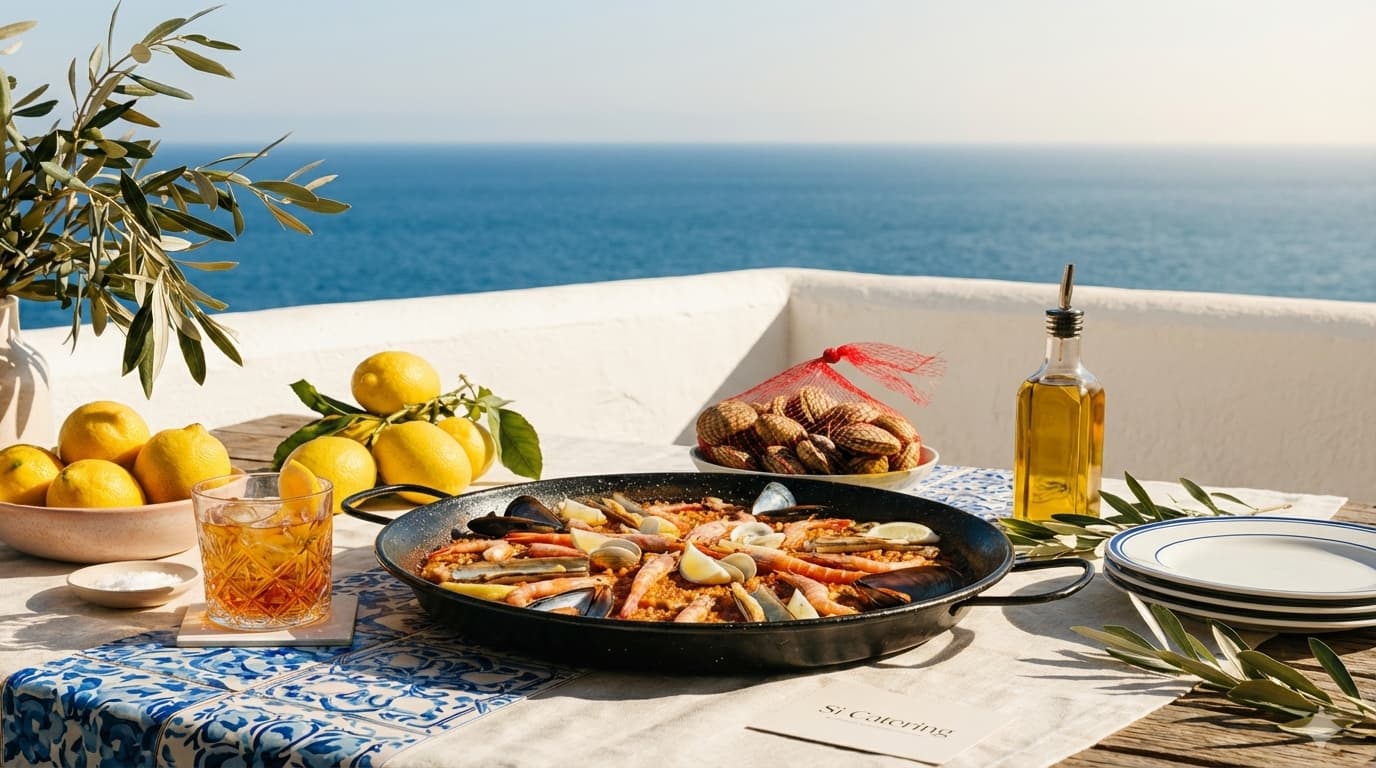
Top 5 Food Markets in Marbella: A Chef's Guide to KM0 Ingredients
Every serious kitchen on this coast starts its day the same way: at a market, before the tourists are awake, picking through fish that were still swimming at 5am. Supermarkets have their place — for olive oil, for tinned things, for a bottle of wine at 10pm — but they are not where the food you eat in a good Andalusian home actually comes from.
This guide is written from the chef's side of the counter. Five markets worth knowing about if you're staying in Marbella and want to cook one memorable meal in your villa — or just eat a piece of manchego that wasn't shrink-wrapped in a factory.
How to Shop a Marbella Market Like a Local
Spanish markets have their own rhythm. Get it wrong and you'll leave with wilted lettuce and the wrong fish. Get it right and you'll come home with the same ingredients the neighbourhood restaurants are cooking with tonight. Five rules that matter more than any address.
Go early — really early. The best of everything is gone by 11am. Fishmongers finish auctioning off the morning catch to restaurants first, then open to the public around 8. By mid-morning, the good gambas rojas, the whole sea bass, the carabineros — sold. Aim for 8:30 to 10:00. On Saturdays the covered market is quieter after 12, but only because the good stuff is already in someone else's bag.
Bring cash and a bag. Card readers exist at maybe half the stalls in the covered market, and almost none at the weekly street markets. Small notes are appreciated — nobody wants to break a €50 for six oranges. A canvas or wicker bag is the local move; you'll see grandmothers with wheeled trolleys, and they're not wrong.
Ask for it filleted, gutted, cleaned. This is the single most underused feature of Spanish fish counters. Point at a whole sea bass and say "abierta en libro, sin espinas, por favor" — open like a book, deboned, please — and it comes back ready for the pan. Prawns can be beheaded and shelled. Squid can be cleaned. It's included in the price.
Eat what's in season. A Spanish market changes every month. In spring: broad beans, artichokes, wild asparagus. In summer: tomatoes that actually smell like tomatoes, peaches from Ronda, the year's first watermelons. Autumn brings mushrooms from the sierra and quinces. Anything imported and out of season sits in the freezer end of the aisle — leave it there.
Say hello. Say it again next week. The carnicero who cuts you a nice piece of Iberian pork on Tuesday will remember your face on Friday and slice you the better end of the lomo. Regulars get the good stuff, the price breaks, and the honest answer to "is it fresh?". Buenos días, gracias, hasta luego — that's the whole vocabulary needed.
"When I shop for a private catering, I do the fish counter last — because the fishmonger knows me and puts the best pieces aside while I do vegetables. Regulars are treated like family. Tourists are treated politely. It's not personal, it's cultural. Come back a second time and everything changes."
— Chef Paco Siles
The 5 Markets Worth the Drive
Marbella has one indoor market open six days a week and a rotation of weekly and monthly outdoor markets around it. Between them they cover every angle — daily fish, huge weekly produce, organic, and KM0 farm-direct from the Guadalhorce Valley inland. If you're here for a week and want to shop like the neighbourhood, these are the five to know.
Mercado Municipal de Marbella
The Everyday Market in the Old Town
The one to know if you're staying anywhere between Marbella centre and Bajadilla. Housed in a permanent 19th-century building three minutes from Plaza de los Naranjos, this is where a lot of the good restaurants pick up their fish before opening. Around forty stalls: half seafood, a quarter butchers and cured meats, the rest fruit, vegetables, cheese, olives, and one small bakery.
The eastern-wall fish counters are the reason to come. The catch comes in from Bajadilla, the little working fishing port five minutes away. On any given morning: whole sea bass, red mullet (salmonete), gilt-head bream (dorada), squid, octopus, red prawns from the Alborán, and the local pride — a small variety of anchovies called boquerón malagueño, best in early summer.
Also worth hunting for: the goat's cheese from Málaga (queso de cabra malagueño) at the cheese stalls, and any of the chacinas (cured meats) from the Serranía de Ronda mountains behind the coast.
Insider tip
Get there between 8:30 and 9:30 on a Saturday morning. That's when the fish is freshest, the crowd is neighbourhood locals (not tourists), and the fishmongers will fillet whatever you buy in front of you. Then walk two minutes to Bar Altamirano and have a coffee — that's the correct order of operations.
Mercadillo de San Pedro Alcántara
The Big Thursday Market — 200+ Stalls, All Morning
Every Thursday from 8am to 3pm, a whole fairground on the west side of San Pedro fills with over two hundred stalls. It's the biggest weekly market in this part of the coast — half fresh produce (fruit, vegetables, olives, cheeses, cured meats, honey), half everything else (ceramics, sandals, kitchenware, plants, sunglasses, flamenco outfits).
The food half is the part to focus on. Farmers bring produce from the Guadalhorce Valley, oranges from the inland groves, olives cured six different ways in giant plastic tubs, jamón sliced on the spot. Prices are noticeably lower than Marbella centre — this is where locals actually shop. Tasting before buying is normal; hand over a euro and the cheesemonger will slice something off for you to try.
Bring cash and comfortable shoes. It's spread across wide streets rather than a cramped alley, so pushchairs and small children work well here.
Insider tip
Arrive around 9am, park at the bottom of Calle Jorge Guillén (free, plenty of space), do a full loop before you buy anything. Then double back and negotiate — most stallholders will drop 20% on plants, olives, and volume purchases, especially if you smile and speak a few words of Spanish.
Mercadillo de Nueva Andalucía
The Saturday Market by the Bullring
Every Saturday from 8am to 3pm, the area around Centro Plaza and the old bullring transforms into a rambling market — the most famous one in the Marbella area, and the one closest to Puerto Banús if that's where you're staying. Fair warning: it's more mixed than the Thursday market. Expect leather goods, jewellery, handbags, sunglasses, plants, and a proper food half.
The food stalls are what makes it worth the trip: artisanal breads, big vats of green and black olives, cured meats from Extremadura and Andalucía, spice mixes, teas, seasonal fruit, and a small cluster of fresh vegetable vendors. Cheeses from La Mancha and the Málaga sierras are usually well represented. Prices sit slightly higher than San Pedro Thursday, but the location and Saturday-morning atmosphere are the trade-off.
Great for putting together a villa lunch board — bread, cheese, olives, tomatoes, jamón — without stepping into a supermarket.
Insider tip
Come at 9am, not 11. By late morning the coach parties arrive from the eastern resorts and the aisles jam up. Parking is easiest in the El Corte Inglés garage (Puerto Banús) — €2 for two hours — and it's a five-minute walk back.
Ecological Market — Parque de la Alameda
Organic Produce, First Saturday of the Month
The smallest of the five, and the one that's easiest to miss. On the first Saturday of each month, the tropical gardens of Alameda Park — the leafy square by the seafront, five minutes from the covered market — host a modest ecological market. Twenty or thirty stalls, all local, all organic or biodynamic.
What you'll find: unpasteurised goat and sheep's cheese from small mountain producers, cold-pressed olive oil from the Guadalhorce and Ronda hills, raw honey, sourdough breads, herbs, sprouted grains, natural wines, and seasonal fruit and vegetables grown without pesticides. The prices are higher than the weekly markets — this is not a bargain shop — but the quality is exceptional and every vendor can tell you exactly which valley their product came from.
Good place for a slow browse and a coffee under the trees. If you're self-catering and care about clean ingredients, this is your morning.
Insider tip
Ask the olive oil producers for the arbequina or picual varietal — those are the two Andalusian oils worth cooking with. A small bottle (250ml) at €8–12 will change how any salad, gazpacho, or grilled fish tastes in your villa kitchen for the rest of the trip.
Mercado Agroalimentario del Guadalhorce
KM0 Farm-Direct — Every Sunday in Coín
The Guadalhorce Valley — the flat, fertile plain that runs inland from Málaga toward Ronda — is where most of the province's fruit and vegetables actually grow. Every Sunday morning, producers from the valley set up in a covered market next to the La Trocha shopping centre in Coín, half an hour's drive from Marbella through the mountains. This is as close as it gets to buying directly from the person who grew the food.
Everything on the tables was picked or made within a fifty-kilometre radius. Fresh fruit and vegetables in season, local goat and sheep cheeses, honey, nuts, dried figs and dates, homemade preserves, Guadalhorce Valley olive oil, artisan sausages. Prices are the fairest you'll find on the coast, because there's no middleman.
The market is indoors — a big permanent covered space — so it works in any weather, and there's free parking on site. Combine it with a Sunday morning drive through the almond and citrus groves toward Ojén or Casarabonela on the way back.
Insider tip
Ask any producer 'esto lo has cultivado tú?' — 'did you grow this yourself?'. Most of them did, and they'll tell you exactly which farm, which variety, and when it was picked. That level of traceability doesn't exist at any supermarket on the coast.
What to Actually Cook With Any of This
A villa kitchen full of Marbella market ingredients — a whole sea bass filleted at the counter, a bag of ripe tomatoes from Coín, a wedge of goat cheese, a bottle of picual oil — is halfway to a memorable dinner. But translating that into an actual meal, cooked over the right heat, in the right pan, using the right rice for the right amount of stock, is where most self-catering holidays quietly stall. A sea bass baked in salt in a tiny villa oven is not the same dish as a sea bass filleted and grilled properly.
The other version of this trip — the one worth considering if you want the shopping and the cooking to actually click — happens ten minutes inland from Marbella, past the whitewashed village of Ojén, at the top of a dirt road that isn't on Google Maps.
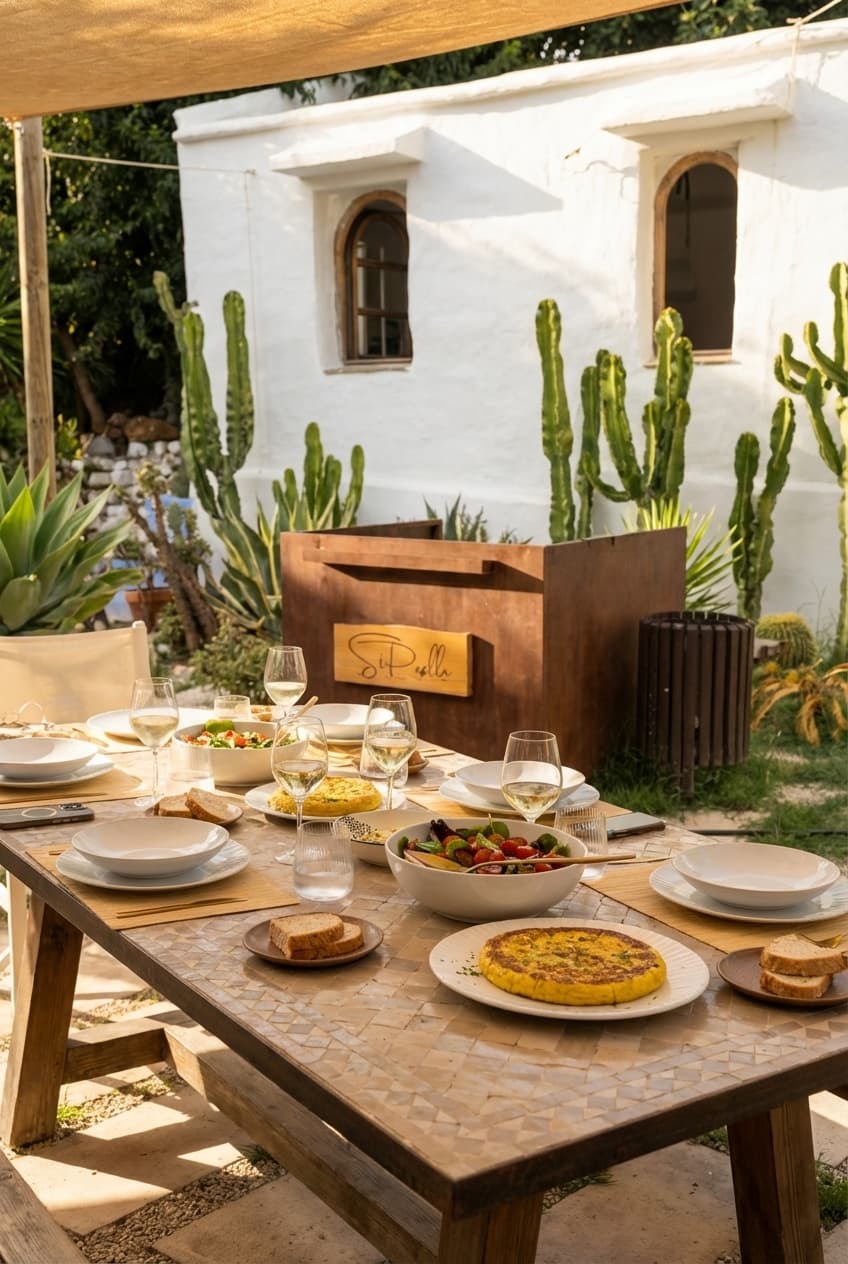
That's the finca — a private country estate belonging to Chef Paco Siles, a third-generation arrocero whose family has cooked on this coast since 1972. He runs a small Paella Cooking Class there most days of the week, for two to thirty guests. The market shopping is already done — the fish came in from Bajadilla that morning, the vegetables came from the Guadalhorce, the rice is Bomba from Calasparra, the oil is from a small producer in the Sierra de las Nieves. You show up, you cook, you eat under the olive trees with a glass of Sierras de Málaga wine.
It's the version of the market trip where you don't have to guess whether the sea bream you picked is the right size for four people. Someone who has been cooking rice over fire for thirty years has already sorted that out.
"I do the market run at 7am — Mercado Municipal for fish, La Trocha for vegetables when it's Sunday, Alameda for olive oil once a month. When guests come to the finca at midday, everything is already there, waiting, at the right temperature, in the right quantity. That's the part most home cooks find hardest — not the technique, the shopping."
— Chef Paco Siles
Quick Reference — Marbella Food Markets at a Glance
| Market | When | Area |
|---|---|---|
| Mercado Municipal | Mon–Sat, 8am–3pm | Marbella Old Town |
| San Pedro Thursday | Thu, 8am–3pm | San Pedro Alcántara |
| Nueva Andalucía | Sat, 8am–3pm | Near Puerto Banús |
| Alameda Ecológico | 1st Sat/month, 10am–2pm | Marbella centre |
| Guadalhorce (Coín) | Sun, 9am–2:30pm | 30 min inland |
| Paella Cooking Class | Daily, 12:30 / 13:30 / 16:30 | The Finca, Ojén |