

Christmas in Marbella: What Expats Actually Eat (and Where to Find It)
Your first Christmas on the Costa del Sol usually starts with a small shock. On the evening of the 24th, the restaurants close early and the streets go quiet, while every Spanish family in town sits down to the biggest meal of the year. On the morning of the 25th, the sun is out, it's 18 degrees, and you're standing in a villa kitchen with a turkey that doesn't fit in the oven.
Christmas in Marbella runs on two calendars at once: the Spanish one, which peaks on Christmas Eve and doesn't finish until the Three Kings on 6 January, and the one every expat brought from home. Most people who have lived here a few winters end up with a mix of both. This guide covers what the Spanish actually eat and when, what expats keep from home, where to shop for each, and how to get through the holidays without spending all of them in the kitchen.
The Spanish Christmas Calendar, Dish by Dish
Spain doesn't do one big Christmas meal. It does a fortnight of them, each with its own food. If you only remember one thing, remember that the main event is the night of the 24th, not lunch on the 25th.
22 December: El Gordo
The season unofficially opens with the Christmas lottery draw, broadcast all morning on every television in every bar. Tickets are shared between families, colleagues and the regulars of the local bar, so even if you didn't buy one, someone near you will be checking numbers over a coffee. It's the day the Christmas mood switches on.
24 December: Nochebuena, the Big Dinner
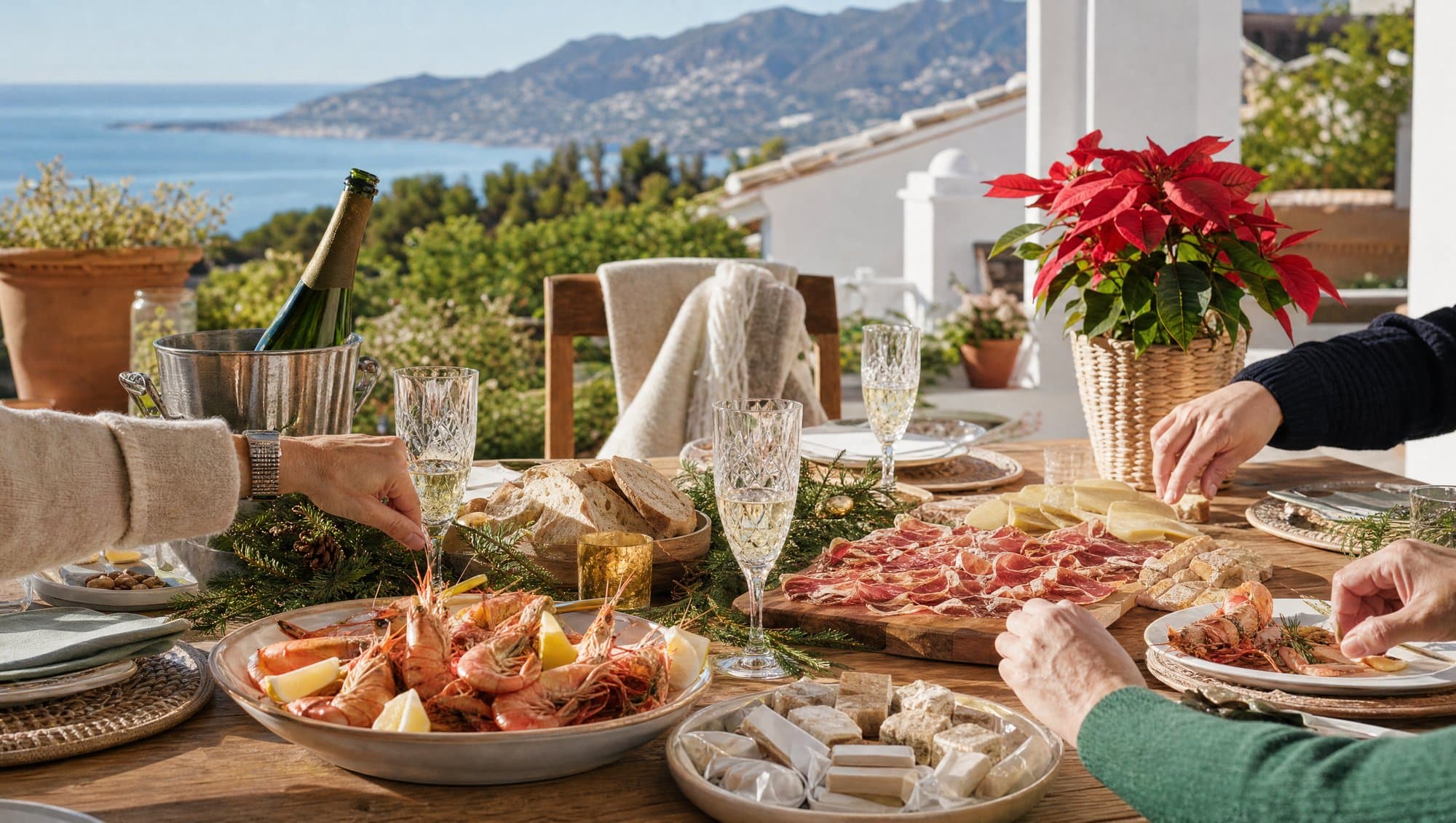
Christmas Eve dinner is the family meal of the year, and in Andalucía it starts late and runs long. It's built like a long tapas evening rather than a roast:
- Langostinos. Big prawns, either grilled on the plancha with coarse salt or boiled and served cold with mayonnaise. No Andalusian Nochebuena happens without them.
- Jamón and chacinas. A good ibérico ham sliced paper-thin, cured sausages, manchego. In many homes the ham sits on its stand in the kitchen for the whole fortnight.
- Sopa de picadillo. A clear broth with small noodles, diced ham, chopped hard-boiled egg and sometimes fried bread. It's the Andalusian answer to a cold night, and the dish most expats have never heard of.
- Huevos rellenos. Stuffed eggs with tuna and mayonnaise, the kind of dish every grandmother makes slightly differently.
- A main course, if anyone still has room: roast lamb, a whole baked fish, or pork. No fixed rule here, and nobody expects turkey.
Dessert is the tray of Christmas sweets, which then stays on the table until January. More on those below.
25 December: Navidad, the Slow Lunch
For Spanish families the 25th is the quieter day: a late lunch, often with the other side of the family, plenty of leftovers and a long sobremesa afterwards. It's a public holiday, so almost every shop is shut.
31 December: Nochevieja and the Twelve Grapes
New Year's Eve dinner looks a lot like Christmas Eve (more seafood, more ham, more cava), but the moment that matters is midnight. With the clock chiming on television, you eat one grape on each of the twelve strokes. Supposedly that brings twelve months of luck; in practice it brings a lot of choking and laughter. Supermarkets sell small tins of peeled, seedless grapes for exactly this reason. Buy them, especially if there are children at the table.
5–6 January: Los Reyes and the Roscón
For Spanish children, the presents don't come on Christmas Day. They come on the morning of 6 January, brought by the Three Kings. The evening before, towns along the coast hold a Cabalgata de Reyes, a parade of floats where the Kings throw sweets into the crowd. Bring a bag, as Spanish kids do.
On the 6th, everyone eats roscón de reyes: a ring of soft, orange-blossom brioche topped with candied fruit and sugar, often split and filled with cream. Hidden inside are a small figurine and a dried bean. Find the figurine and you wear the paper crown; find the bean and, by tradition, you pay for next year's roscón. Bakeries take orders for it from late December. The good ones sell out, so order yours a few days ahead.
The Sweets Tray: Turrón, Polvorones and Mantecados
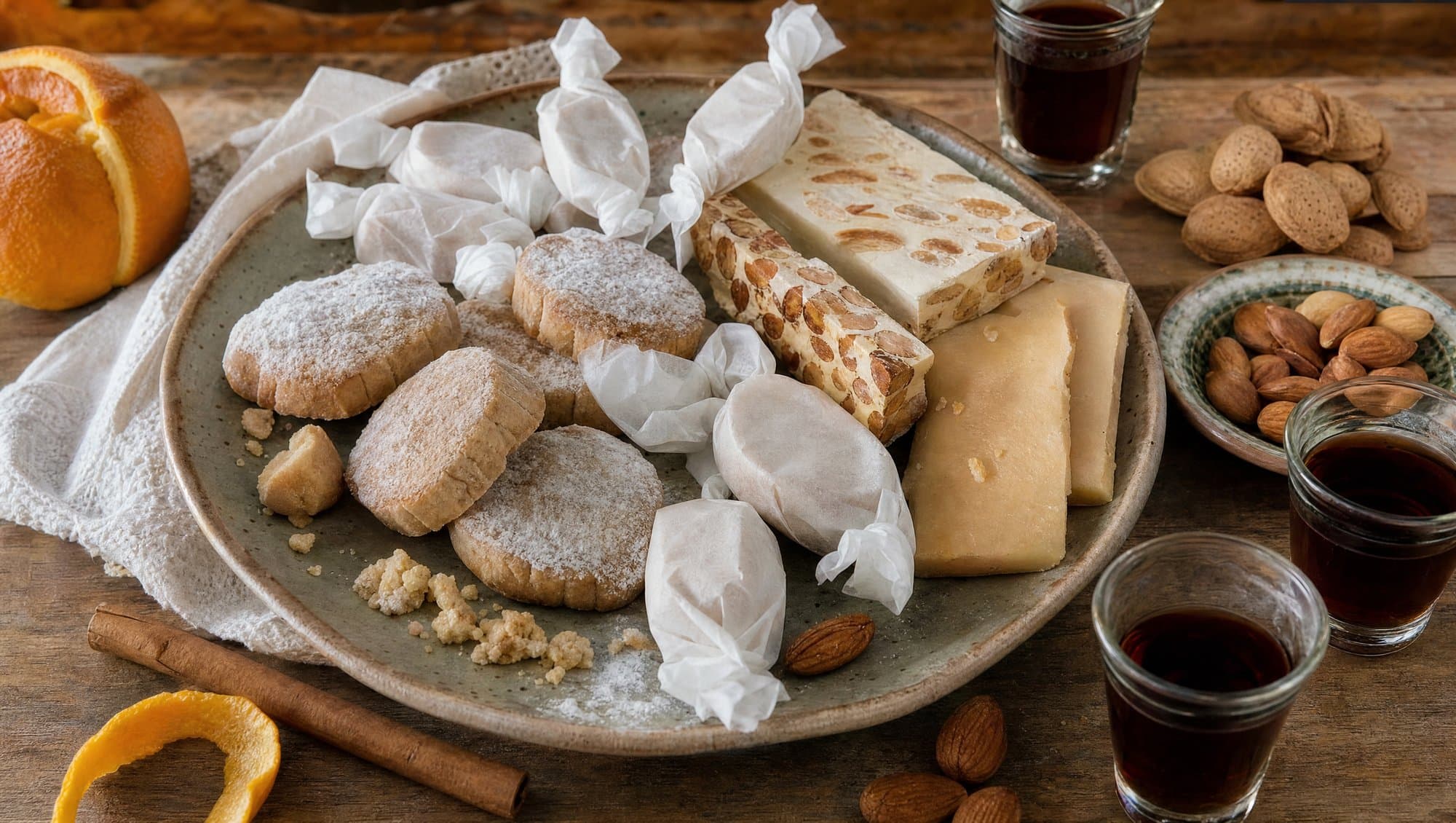
From early December, every supermarket in Spain builds a wall of Christmas sweets. You need to know three of them.
Turrón is almond nougat, and it comes in two classic styles: hard (Alicante, whole toasted almonds set in honey and egg white) and soft (Jijona, almonds ground into a sweet, oily paste). Both are protected names. Beyond those two you'll find dozens of modern versions, from chocolate to egg yolk to marzipan. Start with the classics.
Mantecados and polvorones are crumbly shortbreads made with flour, sugar, lard and (for polvorones) almonds, and most of the good ones come from Estepa, a small town in Seville province that has been making them for centuries. Each one is wrapped in a twist of tissue paper. Squeeze it gently in your closed hand before unwrapping it, or it will fall apart into powder (polvo, hence the name) the moment you open it.
To drink with them, the local choice is a small glass of sweet Málaga wine, Moscatel or Pedro Ximénez. The Málaga wines guide covers which bottles to look for, and the Christmas weeks are the best time of year to try them.
What Expats Actually Eat
Here's the thing nobody tells you before your first winter: half of northern Europe already celebrates on the 24th. Germans, Danes, Swedes and Norwegians hold their main celebration on Christmas Eve, so they slot into the Spanish rhythm without much effort. They swap their herring or roast pork for prawns and ham, or put both on the same table. The British, Irish and Americans are the odd ones out, with their big meal on the 25th.
So the classic expat Christmas in Marbella ends up as two meals. The Spanish dinner on the 24th, often at a neighbour's or eaten as a long tapas evening at home, and a home-country lunch on the 25th, ideally outside, because a sunny terrace at Christmas is half the reason people move here.
The Turkey Problem
Turkey isn't a Spanish Christmas tradition, so whole birds aren't sitting in every supermarket fridge in December. Three practical rules:
- Order it, don't hunt for it. Ask a butcher (carnicería) for a pavo entero by early December and agree the pick-up day. The butchers at the Mercado Municipal take orders, and so do the British-style butchers along the coast.
- Measure the oven first. Holiday-villa ovens are often small, and a big bird simply won't go in. Check before you order and size down, or roast a crown or a couple of large chickens instead.
- Pick up on the 23rd. The 24th is the busiest shopping day of the year, and the 25th everything is closed.
For the British extras (mince pies, Christmas pudding, crackers, cranberry sauce), the reliable stops are the food section of Marks & Spencer at La Cañada shopping centre, and the Overseas chain of British supermarkets, which stocks Iceland and Waitrose products and has branches along the coast. Shelves empty fast in the final week, so shop for those in early December.
Shopping for Christmas Like a Local
Spanish families do their Christmas seafood shopping well before the 24th, because shellfish prices climb steeply in the last days before Nochebuena and the best pieces are reserved for regulars. The Mercado Municipal in the Old Town is the place for prawns, clams and whole fish. Go early in the week before Christmas, tell the fishmonger what you're cooking and for how many, and ask them to put it aside.
Plan around the closures, too. The 24th and 31st are half-days for most shops, which close in the afternoon. The 25th, 1 January and 6 January are public holidays, and so is 8 December. If you're hosting, the safe rule is to have everything in the house by the 23rd and the 30th. The same logic applies to Sundays all year round, as the villa survival guide explains.
“Christmas prawns don't need a recipe. Get the plancha or a heavy frying pan smoking hot, put the langostinos on in one layer, coarse salt on top, about a minute and a half on each side depending on size, and that's it. The mistake everybody makes is leaving them on too long: the flesh turns tight and dry. Take them off when they've just gone pink all over. They'll finish cooking on the plate.”
— Chef Paco Siles
A Christmas Day Trip: Estepa, Where the Polvorones Come From
In November and December, Estepa smells of toasted flour and cinnamon. The town is about an hour and three-quarters inland from Marbella, past Antequera, and its family factories turn out a large share of Spain's mantecados and polvorones in a few months each year. It makes a good winter Saturday with family in town: an old hilltop town, a sweets factory and a boot full of Christmas presents.
La Estepeña
Mantecado Museum and a City Made of Chocolate
One of Estepa's best-known producers opens its doors for the season with a small mantecado museum, where you can see how mantecados and polvorones were traditionally made, and a shop selling the whole range. The headline act is the ciudad de chocolate: every Christmas the company sculpts an entire Andalusian landmark in chocolate. In past seasons it has rebuilt the Generalife gardens of the Alhambra, and this year's subject is the Plaza de España in Seville.
Kids love it, adults leave with too many boxes, and the sweets are a far better present to take home than anything from the airport.
Insider tip
Open from 10 October to 5 January, 10:00–14:00 and 16:00–20:00. Go on a weekday if you can; December weekends bring coach parties. Book group visits through the website's contact page before driving out.
Christmas in Town: Lights, Markets and Chestnuts
Marbella switches on its Christmas lights at the end of November, and the prettiest place to see them is the Old Town, around Plaza de los Naranjos, after six in the evening. The town's Christmas market usually sets up between Avenida del Mar and the Alameda park from late November to early January, with a smaller one at Puerto Banús. The town hall publishes the exact dates each autumn.
The smell that defines the season is roasting chestnuts. Street sellers set up their smoking carts on the main streets, and a paper cone of hot castañas asadas is the right snack for a walk through the lights. Then do what the locals do and stop for a glass of wine and a tapa in the Old Town before heading home.
Eating Out on Christmas Day
If nobody wants to cook on the 25th, book a restaurant early. The big hotels publish their Christmas menus in November. The Marbella Club, for instance, runs a Christmas Day lunch at the Clubhouse and a buffet at its Beach Club, and the best tables go weeks ahead. Many smaller family restaurants close on the evening of the 24th and on the 25th itself, because their staff are at home eating with their own families. If a local place you love is open, book it and expect a set menu.
The Day After: When the Family Is Still Here
Here's the part of the holidays nobody plans. Christmas Eve was a feast, Christmas Day was a feast, and on the morning of the 26th the house is still full: the in-laws, the cousins who flew in, the friends who came for “just a few days”. In Britain, Boxing Day is a holiday made for leftovers. In Spain it's an ordinary day, so the shops are open and life carries on, but whoever has been cooking since the 23rd has had enough.
That's when a lot of residents with a full house stop cooking and order in, and the most Spanish thing to put in the middle of a sunny terrace table is a paella.
Si Catering's Paella Delivery is run by Chef Paco Siles, a third-generation paella cook from a family of restaurateurs going back to 1972. Each paella is cooked from scratch for the order and arrives hot in the traditional paellera, ready to put straight on the table. There's no reheating and nothing to plate. There are five recipes: Valenciana with chicken, Vegetarian, Seafood, black rice with cuttlefish ink, and the Royale with lobster. Prices start from €18 per person, for groups of six or more, with up to two recipes per order, so the children's Valenciana and the grown-ups' Seafood can share the table. Add the Tapas Starter Kit (jamón ibérico, manchego, gildas, fried almonds, tortilla) or a jug of homemade sangria and lunch is done. The pan is collected later that evening or the next day, so nobody washes up either.
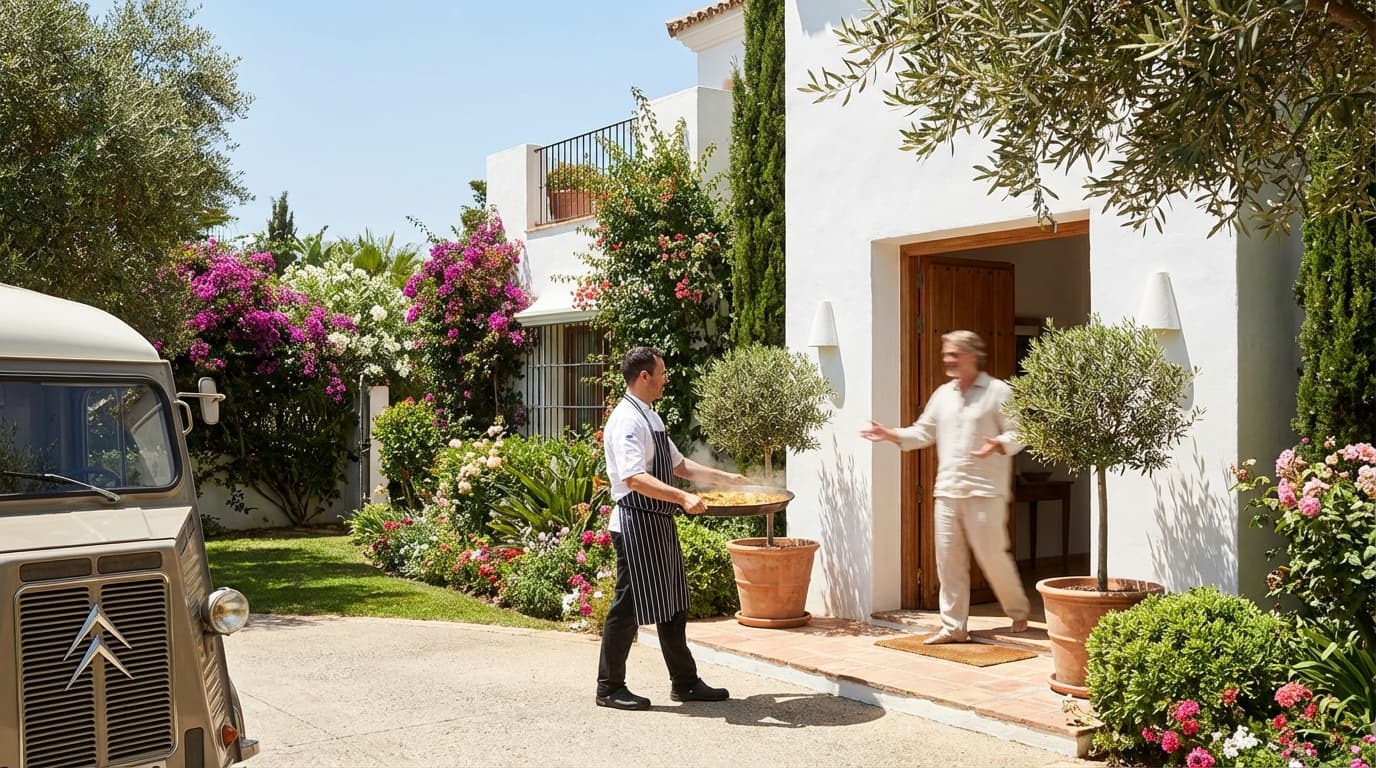
Delivery covers Marbella and around 30 km of coast, from Estepona to Mijas, including Puerto Banús, Nueva Andalucía, San Pedro and Benahavís. Over Christmas and New Year, dates are limited and the first ones go early. If you already know the family will be there on the 26th or on New Year's Day, send a message to check the date before you plan the week around it.
Quick Reference — Christmas in Marbella, Date by Date
| Date | What happens | What to eat |
|---|---|---|
| Early Dec | Sweets hit the shelves, lights go on | Turrón, polvorones, chestnuts |
| 22 Dec | El Gordo lottery draw | Coffee at the bar |
| 23 Dec | Last full shopping day | — |
| 24 Dec | Nochebuena, the big family dinner | Langostinos, jamón, sopa de picadillo |
| 25 Dec | Navidad, public holiday | Leftovers, or the expat turkey |
| 26 Dec | Normal working day in Spain | Something nobody has to cook |
| 31 Dec | Nochevieja | Seafood, cava, 12 grapes at midnight |
| 1 Jan | Public holiday, slow start | Long lunch, long sobremesa |
| 5 Jan | Cabalgata de Reyes parade | Sweets thrown from the floats |
| 6 Jan | Reyes, presents for Spanish children | Roscón de reyes |
| Oct–5 Jan | La Estepeña, Estepa | Mantecados, polvorones |