

Authentic Spanish Breakfast in Marbella: Best Churros & Tostada Spots
Every holiday town on the Costa del Sol has the same breakfast menu: avocado toast, açaí bowls, eggs Benedict with hollandaise that came from a packet. You could be in Bali, Barcelona, or Bondi — the plate wouldn't change. There's nothing wrong with brunch culture, but if you flew to Andalucía and eat the same thing you'd get in Shoreditch, you're missing the point.
Spanish breakfast is a different animal entirely. It's fast, standing-up, no-nonsense — and built around two things that Andalucía does better than anywhere on earth: bread with olive oil and fried dough dipped in chocolate. The whole thing takes twenty minutes, costs under €5, and leaves you fuelled for a morning of exploring. This is where locals actually eat before the tourists wake up.
What Spaniards Actually Eat for Breakfast
Before the recommendations, a quick primer — because if you walk into a proper bar de desayunos without knowing the vocabulary, you'll end up pointing at a croissant.
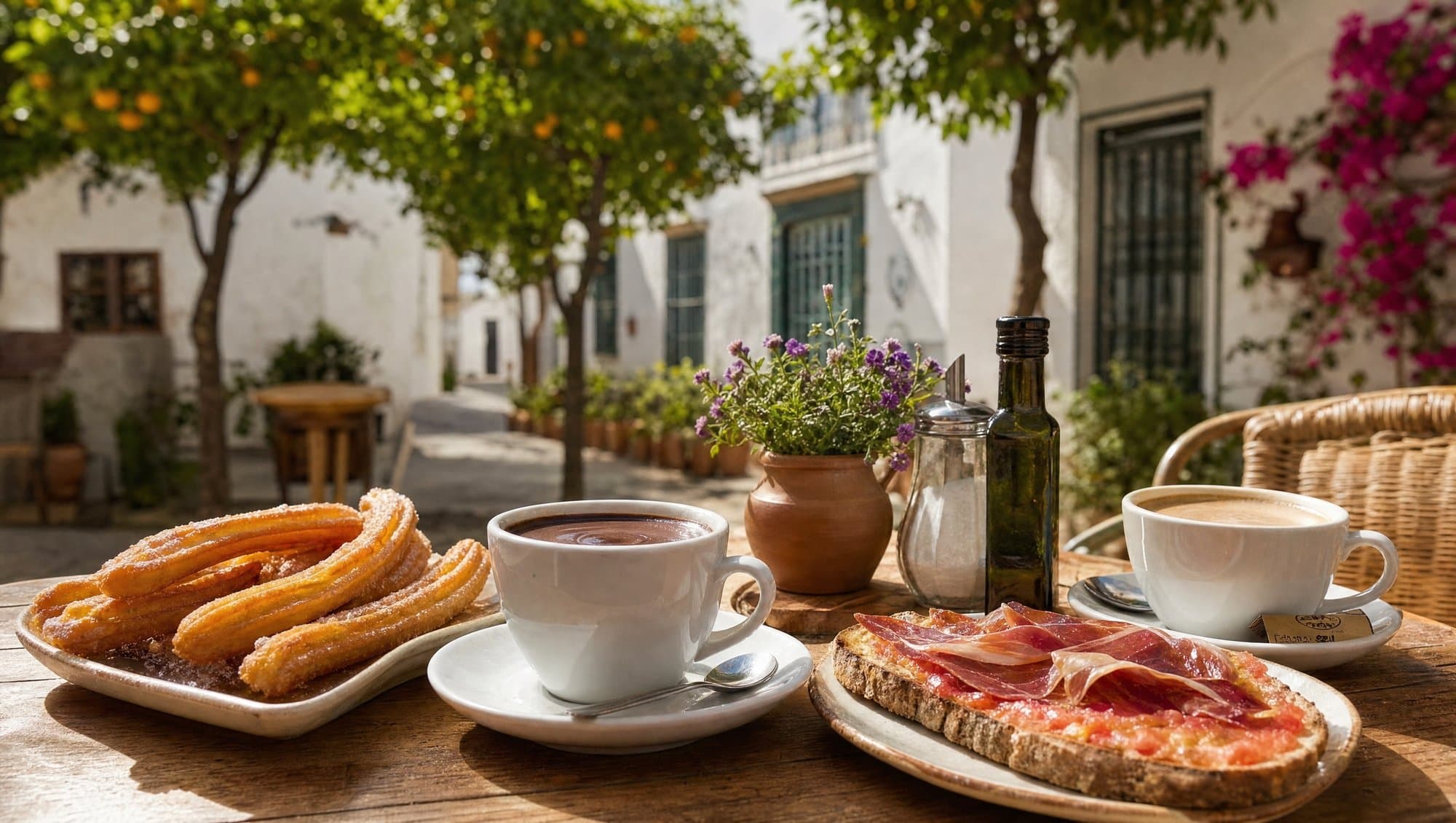
Tostada con tomate y aceite. The cornerstone. A thick slice of toasted bread (ask for pan cateto — the rustic round loaf — or a mollete, the soft Antequera roll) rubbed or topped with grated ripe tomato, a generous pour of extra virgin olive oil, and a pinch of flaky salt. Add jamón serrano on top and you've got the full Andalusian experience. It sounds simple because it is — and the simplicity is the whole point. When the olive oil is local and the tomato was picked yesterday, you don't need anything else.
Churros con chocolate. Sticks of fried dough — crispy outside, soft inside — served with a cup of thick, dark hot chocolate for dipping. Not the thin, cinnamon-dusted things you get at state fairs. Spanish churros are plain, slightly salty, and designed entirely as a vehicle for the chocolate, which should be dense enough to coat a spoon. Eaten standing up at the bar, ideally before 10am.
Café con leche. Espresso with hot milk — stronger than a latte, smaller than you'd expect, and always served in a glass cup. Ask for it con leche templada if you want it drinkable immediately. This is what fuels Spain before noon.
Pitufo. A Costa del Sol speciality you won't find in Madrid or Barcelona. A small, soft white bread roll — like a mini baguette — served warm and filled with whatever you want: tomato and oil, ham, cheese, manteca colorá (spiced pork lard, better than it sounds). The name means “Smurf” — nobody knows why. Every cafetería between Málaga and Estepona serves them.
"Tourists always ask me where to get brunch in Marbella. I tell them: go to the market or a churrería. A tostada con buen aceite de oliva and a café con leche — that's the best breakfast in Andalucía. You don't need a menu with 40 options. You need good bread, good oil, and good tomato."
— Chef Paco Siles
The Best Breakfast Spots in Marbella
Four places that cover both traditions — churros and tostadas — plus one detour that turns breakfast into a full morning adventure.
Churrería Ramón
The Original — Since 1941
Founded by Ramón Navas in 1941, this is the oldest churrería in Marbella — and arguably the only breakfast spot in town where you're eating history along with your churros. The location alone is worth the visit: Plaza de los Naranjos, the fifteenth-century heart of the old town, with orange trees overhead and the Renaissance town hall across the cobblestones.
The churros are the classic thin-stick style, fried to order, served with a cup of hot chocolate thick enough to stand a spoon in. Ramón's has seen everyone from King Fahd of Saudi Arabia to Yves Saint Laurent — but most mornings it's just locals reading the paper and tourists who did their homework. Get there before 10am to avoid the queue.
Insider tip
Skip the smoothies — you're not here for those. Order churros con chocolate and a café con leche. Sit outside in the square. That's it. If you want a savoury option, the tostada con tomate is solid too, but Ramón's is fundamentally a churros place.
Churrería Marbella
The Local's Favourite — No Tourists in Sight
If Ramón's is the famous one, Churrería Marbella is the one locals actually go to. Tucked in Plaza de la Victoria — a residential square most visitors never find — this spot serves churros that Dani García himself has called the best in the city. When a three-Michelin-star chef from Marbella endorses your churros, the conversation is over.
The churros here are lighter and airier than Ramón's — a matter of preference, not quality. The chocolate is excellent. There's no terrace overlooking a Renaissance square, but there's also no queue, no tourists, and no inflated prices. This is breakfast the way Marbella eats it when nobody's watching.
Insider tip
Go on a weekday morning around 9am. You'll be surrounded by construction workers, retirees, and school-run parents. That's how you know it's real. Cash is faster here.
Mercado Municipal de Marbella
Where Marbella Actually Eats
Every Andalusian town has its market, and the market always has a breakfast bar. Marbella's Mercado Municipal is the real thing — a working food market where fishmongers, fruit vendors, and butchers set up at dawn, and a handful of counter bars serve breakfast to the people who work there and the regulars who've been coming for decades.
Order a mollete con tomate y jamón or a pitufo at one of the bars inside the market. The bread is fresh, the oil is local, and the ham was probably sliced five minutes ago from a leg hanging behind the counter. No English menu, no Instagram aesthetic, no table service. Just point, order, stand, eat. If you want to understand how Spaniards actually start their day, this is it.
Insider tip
The market closes early afternoon — breakfast is best between 8am and 11am. While you're there, walk through the fish section. The quality of seafood in Marbella's market explains why the paella here is on another level.
If you're staying near the old town and want to combine breakfast with exploration, Churrería Ramón is steps away from the start of the tapas crawl route — not a bad way to bookend your day, churros in the morning and tapas at night.
The Scenic Detour: Churros in the Mountains
There's a breakfast spot that most Marbella guides will never mention, because it's technically not in Marbella. Ten minutes inland, up a winding road through olive groves, the village of Ojén sits at the foot of the Sierra de las Nieves — white houses, mountain air, and a pace of life that feels nothing like the coast.
In the village square, Er Mojaíto is a tiny bar that serves some of the best churros on the Costa del Sol. Not the tourist kind — the mountain kind. Thicker, slightly irregular, fried in olive oil, served with a cup of chocolate so dense it barely pours. Locals from Marbella drive up on weekend mornings just for this. The terrace looks out over the valley, the air is ten degrees cooler than the coast, and the whole experience feels like a secret that Marbella keeps for itself.
"Ojén is my village. When friends visit from out of town, the first thing I do is drive them up for churros at Er Mojaíto. It's a fifteen-minute drive from the beach but it feels like another world. That's the real Andalucía — mountains, olive oil, and churros with a view."
— Chef Paco Siles
After Breakfast: The Morning Nobody Plans
Here's what usually happens: you drive up to Ojén for churros at Er Mojaíto. You finish, you're caffeinated, the mountains look incredible, and suddenly going back to the beach feels like a waste of a perfectly good morning. The Sierra de las Nieves is right there — hiking trails, viewpoints, the kind of quiet that doesn't exist on the coast.
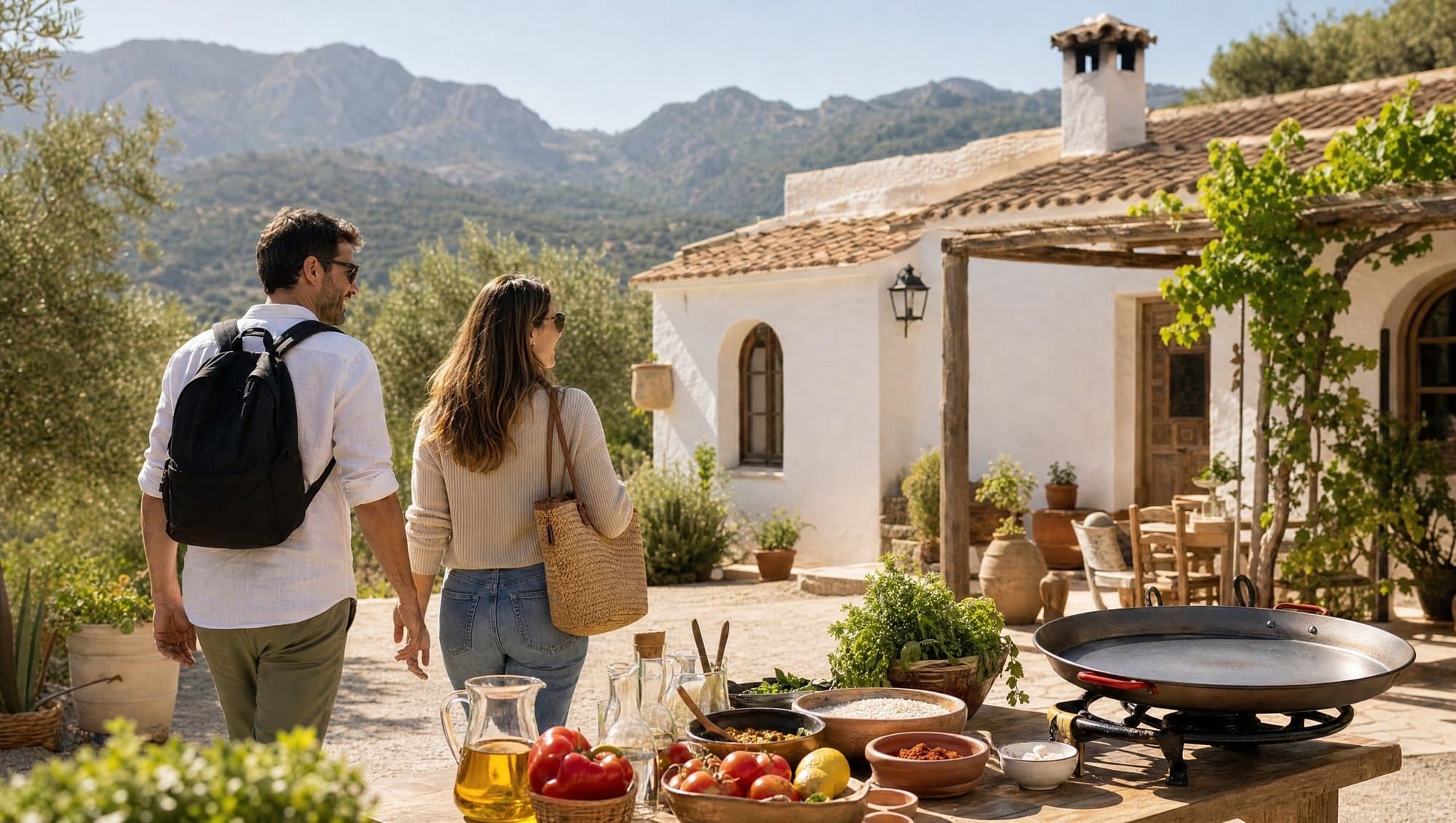
And then someone in the group spots the sign. Up a dirt road, past the olive grove, there's a private finca with a terrace overlooking the valley — and a professional kitchen where Chef Paco Siles teaches small groups to cook authentic paella over open fire. The same ingredients you'd find at the market that morning — bomba rice, saffron, fresh seafood — but now you're cooking them yourself, in a setting that would make a food photographer weep.
The Paella Cooking Class runs from the Finca in Ojén — the same village where you just had churros. The morning goes: breakfast at Er Mojaíto, a short walk through the village, then an hour and a half of cooking, eating, and drinking on a mountain terrace. It's the kind of morning that turns a holiday meal into the story you tell at dinner parties for years.
Quick Reference
| Spot | Style | ~Price |
|---|---|---|
| Churrería Ramón | Historic (since 1941) | From €4 |
| Churrería Marbella | Local favourite | From €3.50 |
| Mercado Municipal | Working market bar | From €3 |
| Er Mojaíto (Ojén) | Village bar, mountain views | From €3 |
| Paella Cooking Class | Private Finca experience | From €70/pp |
Prices are estimates (2026). Traditional breakfast in Marbella typically costs €3–6 per person including coffee. Churrerías open early (from 7–8am); the market opens around 8am and closes by 2pm. For more Marbella food recommendations, see the best paella guide or explore the old town tapas crawl.