

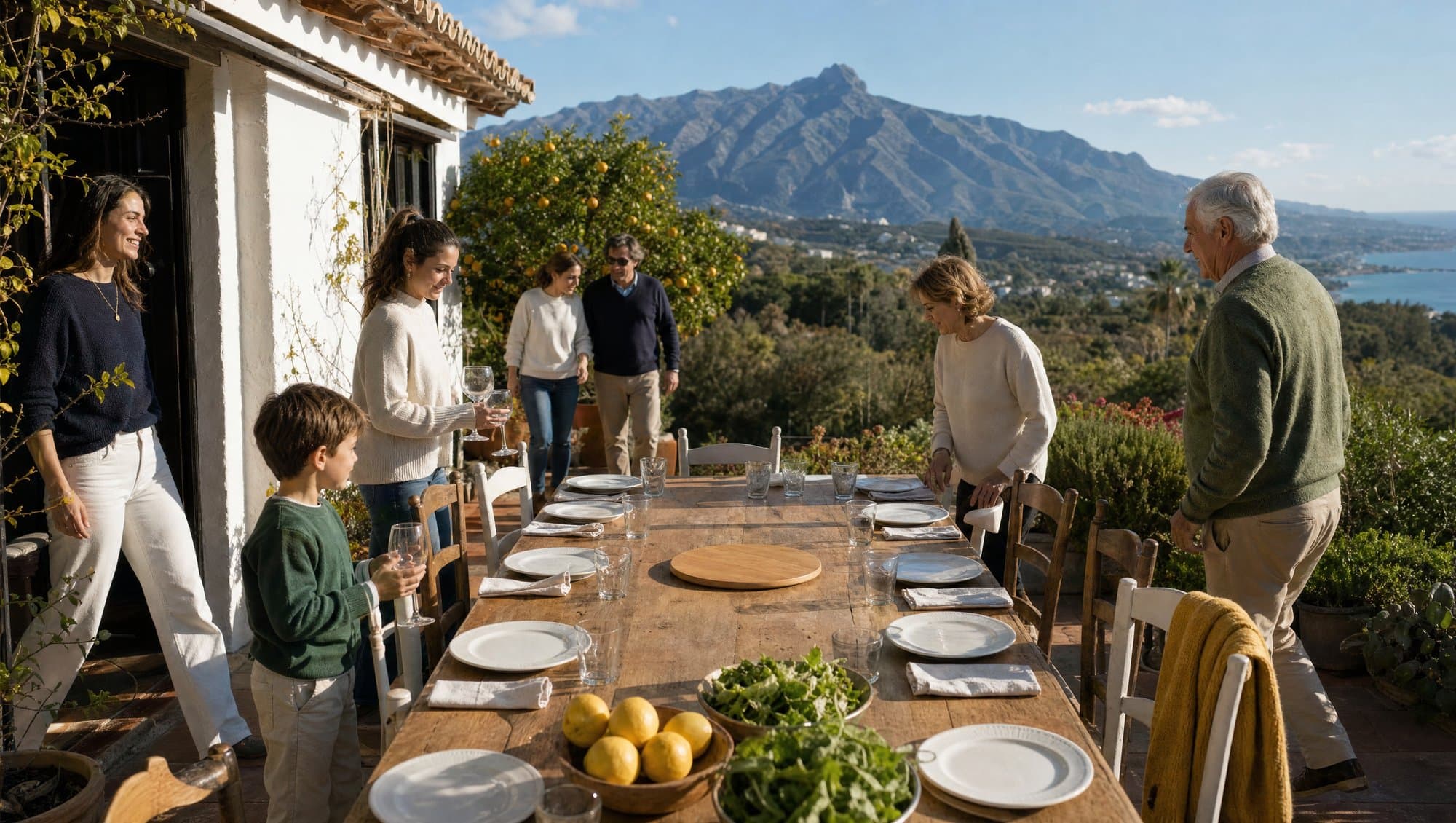
Sunday Lunch at Home in Marbella: Paella Delivery for Groups
Twelve people are coming on Sunday. Finding a table for twelve in Marbella means phone calls, a set menu and two cars home after the wine. Cooking for twelve means one person misses the whole thing, usually the one who invited everybody.
There's a third way, and it's how plenty of people on this coast do it: stay at home, order the main event and put your effort into the table. This guide is the full plan for residents and anyone with a house full of guests this winter, from what to buy on Saturday to when the pan should land on the table.
Why Sunday Lunch in Spain Means Paella
Spaniards will tell you that rice is a lunchtime food, and they'll say it with some force. As The Local explains, the Thursday paella on restaurant set menus is one custom, and the older one is paella at home with the family on a long Sunday afternoon. It feeds a crowd from one pan, everybody eats from the middle of the table, and nobody has anywhere to be afterwards.
That last part matters most. A Sunday lunch here isn't a meal with a start and an end, it's an afternoon with food at the beginning. The Spanish even have a word for what comes next, and the guide to sobremesa explains why you shouldn't plan anything for after four o'clock.
Sunday Lunch in Marbella: Stay In or Go Out?
Be honest about the size of the group, because it decides this for you.
- Up to five or six people: go out. It's easy to book, and the whole table can still share one conversation.
- Eight or more, or children and grandparents in the mix: stay in. Nobody has to drive, the kids can leave the table, and no waiter needs your table back for the second sitting.
- A group that's scattered across the coast: stay in, at whichever house has the best terrace. One address is simpler than six cars looking for parking in the centre.
If going out wins, there are good options. Los Mellizos on the Paseo Marítimo fills with three-generation Spanish families at weekends. La Casa Nueva, a venta on the Ojén road, is the old-school choice. Chiringuito Las Dunas at Cabopino does espetos with your feet in the sand, though it's worth checking its hours out of season. The hidden gem restaurants guide has more.
And if it's a roast your British guests are after, La Sala in Puerto Banús is the long-running expat address. Its voucher page lists the Sunday roast from 1pm to 5pm at €26 for a main or €37 with a starter, with a glass of champagne. The page isn't dated, so confirm with the restaurant before you promise anyone the crackling.
Saturday: The Part Everyone Forgets
A Sunday lunch at home is won or lost the day before, because Sunday is the one day you can't count on the shops. Mercadona, where most of the coast does its big shop, closes on Sundays and public holidays outside its summer campaign. Other supermarkets in Marbella do open on some Sundays, but the hours change branch by branch, and the villa survival guide explains the trap in more detail. So, on Saturday:
- Count the table. Plates, forks, glasses and chairs for everyone, including the two extra people somebody will bring. Borrow from a neighbour today, not tomorrow at one o'clock.
- Find something for the pan to sit on. A big wooden board or a large heatproof mat. A paellera for twelve is much wider than most people picture, so measure the table too.
- Buy the small things that make it feel finished: lemons, water, ice, coffee, and something sweet for later.
- Go to the market if you can. The Saturday market in Nueva Andalucía, by the bullring from 8am to 3pm, is good for olives, cheese, bread and fruit. The guide to the local food markets covers the rest.
- Sort the wine. If you want something more interesting than the usual Rioja, the guide to Málaga wines will give your guests something to talk about, including a sweet one for after lunch.
- Lock in the main course. Same-day paella is possible with notice, but the good Sunday slots go first, so the day before is the safe moment to order.
Sunday: A Timeline That Actually Works
Spanish Sunday lunch runs late, and that works in your favour. Here's the rhythm for a 14:30 sit-down.
- 11:00. Set the table. Move it to wherever the sun will be at two o'clock, not where it is now. Put drinks in the fridge.
- 13:30. Guests arrive. Olives, something to nibble and a first drink, standing up. This hour is why nobody minds if someone turns up late.
- 14:10. The pan arrives. Ask for delivery 15 to 20 minutes before you want to sit down, not at the exact time. On this coast, a delivery window of 15 to 30 minutes is normal, because the traffic decides.
- 14:30. Everyone sits, the pan goes in the middle. Serve straight from it, one person serving and another passing plates. Don't decant it into a dish.
- 16:00. Coffee, sweet wine, whatever you bought on Saturday. Then do nothing whatsoever.
One small thing saves a lot of phone calls: send the driver a WhatsApp location pin (the normal one, not live location), and mention any barrier or gate code. Sat-navs get lost in the urbanizaciones above Marbella all the time.
Which Paella for a Mixed Table?
Paella delivery is usually ordered per head, with a minimum per recipe, and that minimum shapes the decision. With a six-person minimum per recipe, eight people means choosing one paella. From twelve up, you can split the table in two, which is almost always worth it.
- Valenciana (chicken, artichokes, broad beans, rosemary, saffron): the safe bet with children or anyone who doesn't eat shellfish.
- Mariscos (squid, king prawns, clams, mussels, with aïoli): the one most groups on the coast want.
- Negra (the same seafood, with cuttlefish ink): looks dramatic on the table. Warn first-timers about the colour.
- Vegetariana (artichokes, broad beans, garrofón beans, piquillo peppers): essential if there are vegetarians, and it tends to get eaten by everyone else too.
- Royale (seafood with lobster): for a birthday or a big anniversary, when lunch is the occasion.
The classic split for a mixed family table is Mariscos and Valenciana. If anyone has an allergy, say so when you order, not when the pan arrives.
The Winter Terrace Rule
In summer, the advice is to find the shade. From November to March, it's the opposite. January highs here sit around the mid-teens with five or six hours of sun a day, which is exactly why people move here. A sheltered, south-facing terrace at 14:30 can be lovely, and the same terrace in the shade can be miserable.
So check where the sun falls the Sunday before, keep a pile of jumpers and blankets by the door, and bring the pan out only once everyone is seated. If the forecast turns, the whole plan moves inside without any changes: the pan works just as well on a dining table, and the rainy day guide has ideas for what to do with the guests afterwards.
“A well-made paella doesn't need reheating. If it arrives on time, 15 or 20 minutes before you eat, put it on the table and serve it straight from the pan. If it has cooled a little, foil over the top and a very low heat for a few minutes, nothing more.”
— Chef Paco Siles
After the Pan: Leave the Afternoon Open
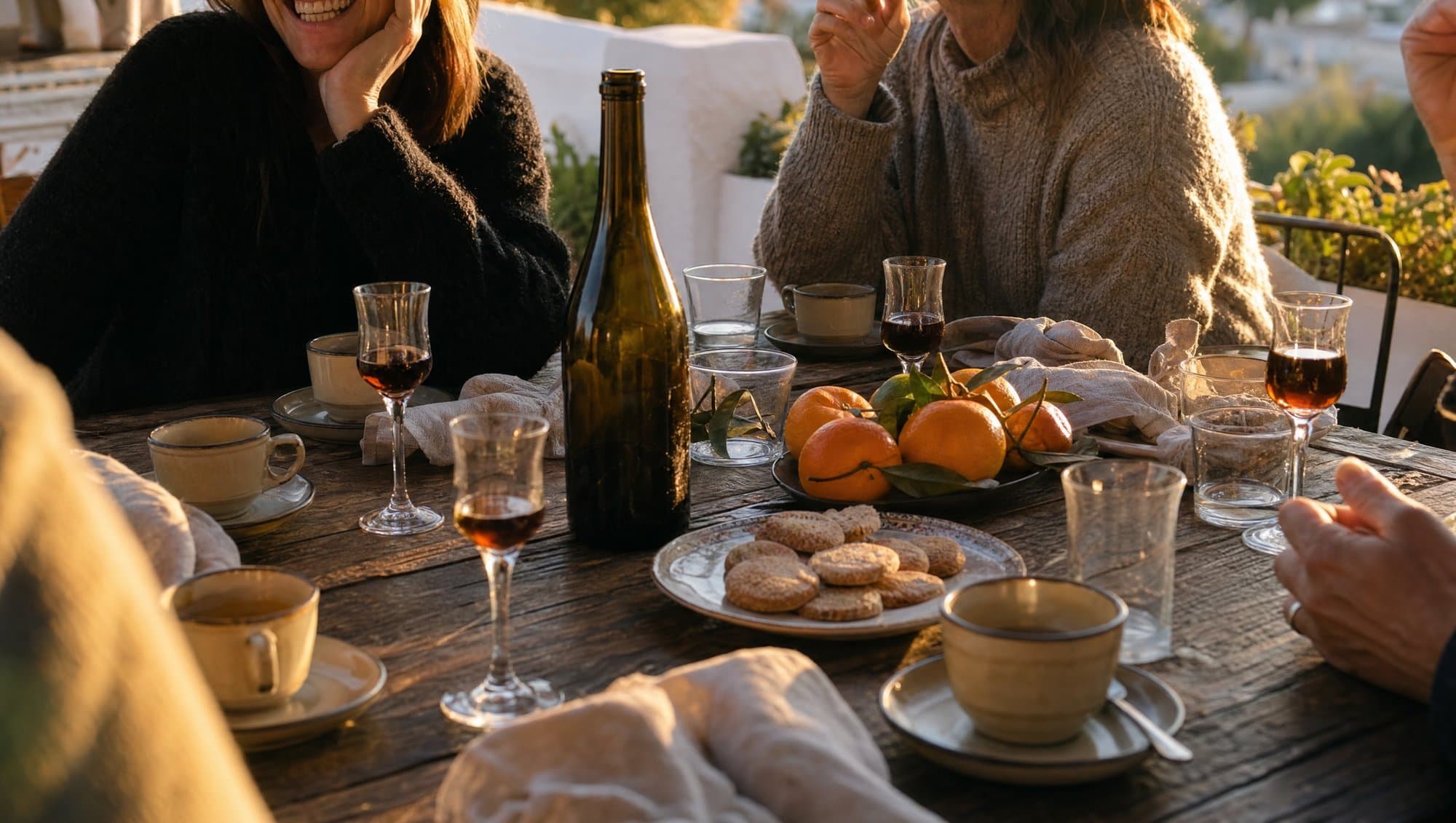
The best part of a Sunday lunch at home is what you get to skip: no bill to split, no taxi to book, no table to give back. Have the coffee and the sweet wine ready on a tray so nobody has to get up and break the spell. If it's somebody's birthday, sort the cake in advance. Alina's Cakes makes detailed custom cakes and takes orders by Instagram message.
The One Pan That Does the Whole Job
All of this assumes that the paella turns up hot, whole and on time, which is the hard part. App deliveries won't do it: individual boxes steam the rice soft, and coverage thins out quickly once you head up into the hills. What you want is the entire pan.
That's what Si Catering's Paella Delivery does, all winter. Chef Paco Siles is a third-generation paella cook from a family of restaurateurs going back to 1972. The paella is cooked from scratch on the day for the exact number of people, then delivered hot in the traditional paellera, ready to go on the table. The pan gets collected afterwards, either that evening or the next day, whichever suits you. All you provide is plates and forks.
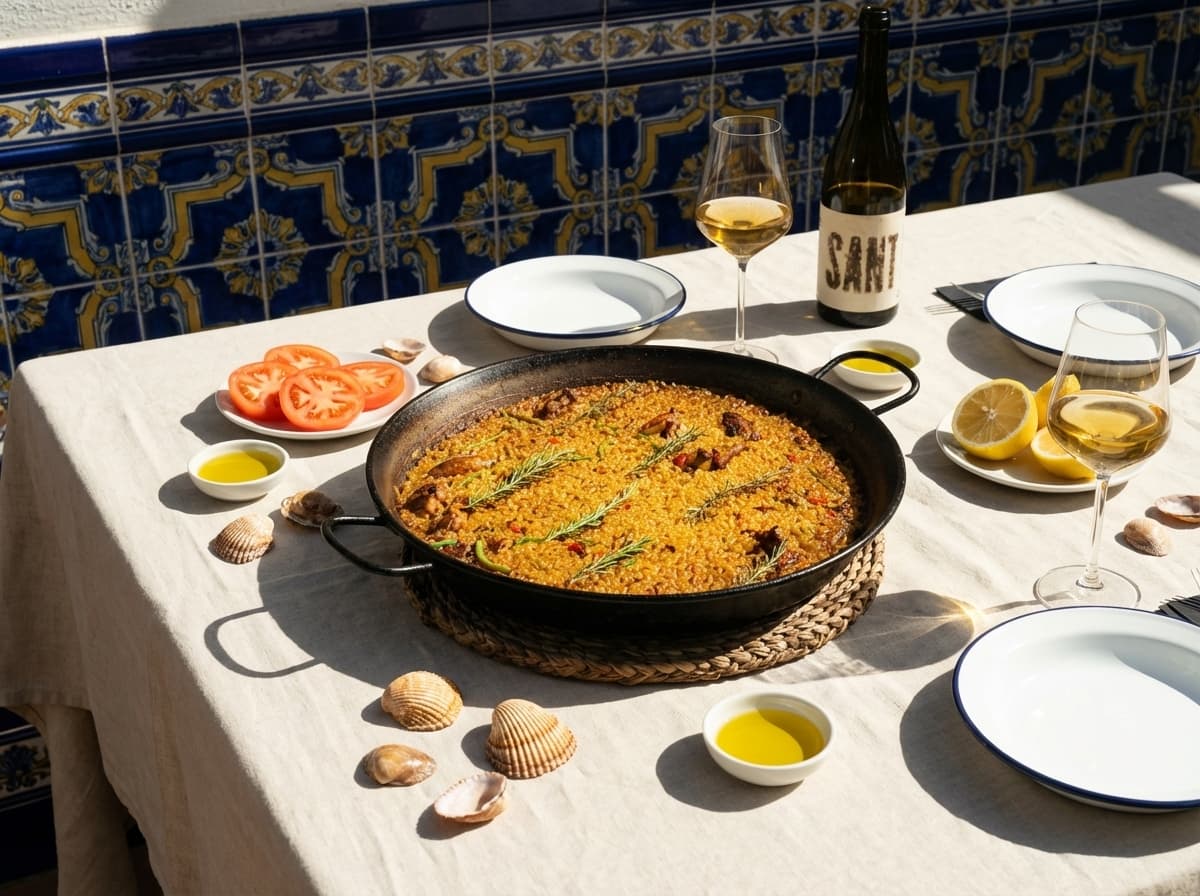
Prices per person: Vegetariana €18, Valenciana €20, Mariscos or Negra €24, Royale €38. The minimum is six people per recipe, with up to two recipes per order and no upper limit. Two optional starter kits each serve four to six people: tortilla, aïoli, salad and bread for €40, or jamón ibérico, manchego, gildas, picos, fried almonds and tortilla for €55. There's also a 2-litre jug of house sangria for €45 and a wine and beer pack for €50. Drinks arrive without ice, which is why it's on your Saturday list.
To give you a sense of the total, here are two example tables:
- Eight people: Mariscos for eight (€192) plus two traditional starter kits (€80) comes to €272, or €34 a head.
- Twelve people: six Mariscos and six Valenciana (€264), two traditional starter kits (€80) and a sangria jug (€45) comes to €389, or about €32 a head.
Delivery covers Marbella and around 30 km: Puerto Banús, Nueva Andalucía, San Pedro, Benahavís, Mijas, Fuengirola and Estepona. It's free within 15 km. Further out, €30 covers both the delivery and the pan collection, and that's waived on orders over €250, so both tables above would qualify. The minimum notice is four hours, but for a Sunday, order on Saturday at the latest.
Quick Reference
| What | The short version |
|---|---|
| Stay in or go out | Up to 5-6 people, go out. 8 or more, or children and grandparents, stay in |
| Going out | Los Mellizos · La Casa Nueva · Las Dunas · La Sala (roast) |
| Shop on Saturday | Mercadona is closed on Sundays outside its summer campaign. Buy ice, lemons, coffee and dessert the day before |
| Timing | Guests 13:30, delivery around 14:10, sit down 14:30, coffee 16:00 |
| Mixed group | Mariscos + Valenciana, possible from 12 people (6 minimum per recipe) |
| Winter terrace | Follow the sun, keep blankets by the door, bring the pan out last |
| Paella delivery | From €18/person, 6+ people, free within 15 km, €30 beyond (free over €250) |