

Day Trip to Ronda from Marbella: What to Eat There (and When)
Most people do Ronda the same way: drive up the mountain road, photograph the bridge, queue at the bullring, eat an overpriced sandwich on the main square and drive home wondering what the fuss was about. The fuss, for anyone who grew up in this part of Andalucía, is the food.
Ronda sits around 750 metres above the sea, and it eats accordingly. Up here, the cooking is mountain cooking — slow stews, game, cured pork, soups built on bread and tomato, sweets invented by nuns. None of it tastes like the coast. This guide is the food-first version of the trip: which dishes to order, where locals actually eat them, how to time the day around Spanish meal hours, and what to put in the boot before you drive back down.
If you're still deciding which village to visit, start with the five best day trips from Marbella — Ronda is the big one on that list. If Ronda it is, read on.
Before You Go: Timing a Food Day in Ronda
Ronda is about 65 km from Marbella, a little over an hour on the A-397 from San Pedro. It's a good road, but it is a mountain road: a long run of hairpin bends with very few places to overtake. Whoever drives should not be the one tasting the wine, and anyone prone to car sickness should sit in the front.
The thing that ruins most Ronda food days is the clock. Spanish meal hours are not negotiable here the way they sometimes are on the coast. Four rules:
- Leave Marbella by 9:30. You'll be parked and drinking coffee by 10:45, before the tour coaches from the coast fill the old town.
- Lunch is the main event, and it starts at 13:30–14:00. Kitchens in traditional restaurants generally stop taking orders around 15:30–16:00. Turn up at 16:15 hungry and you'll be eating crisps.
- Book lunch if it's a weekend or a holiday. Ronda is a day-trip town for Spaniards too, and Sunday lunch is a family institution.
- Check closing days. Many family restaurants close one weekday (often Monday, Tuesday or Wednesday). A quick look at Google Maps the night before saves a lot of disappointment.
For parking, the underground car park under Plaza del Socorro puts you in the centre of everything on this list, a few minutes' walk from both the bullring and the bridge.
What to Eat in Ronda: The Dishes That Matter
Ronda's menus look long, but the cooking comes down to a handful of mountain classics. Order these and you've eaten Ronda properly.
Rabo de Toro (Oxtail Stew)
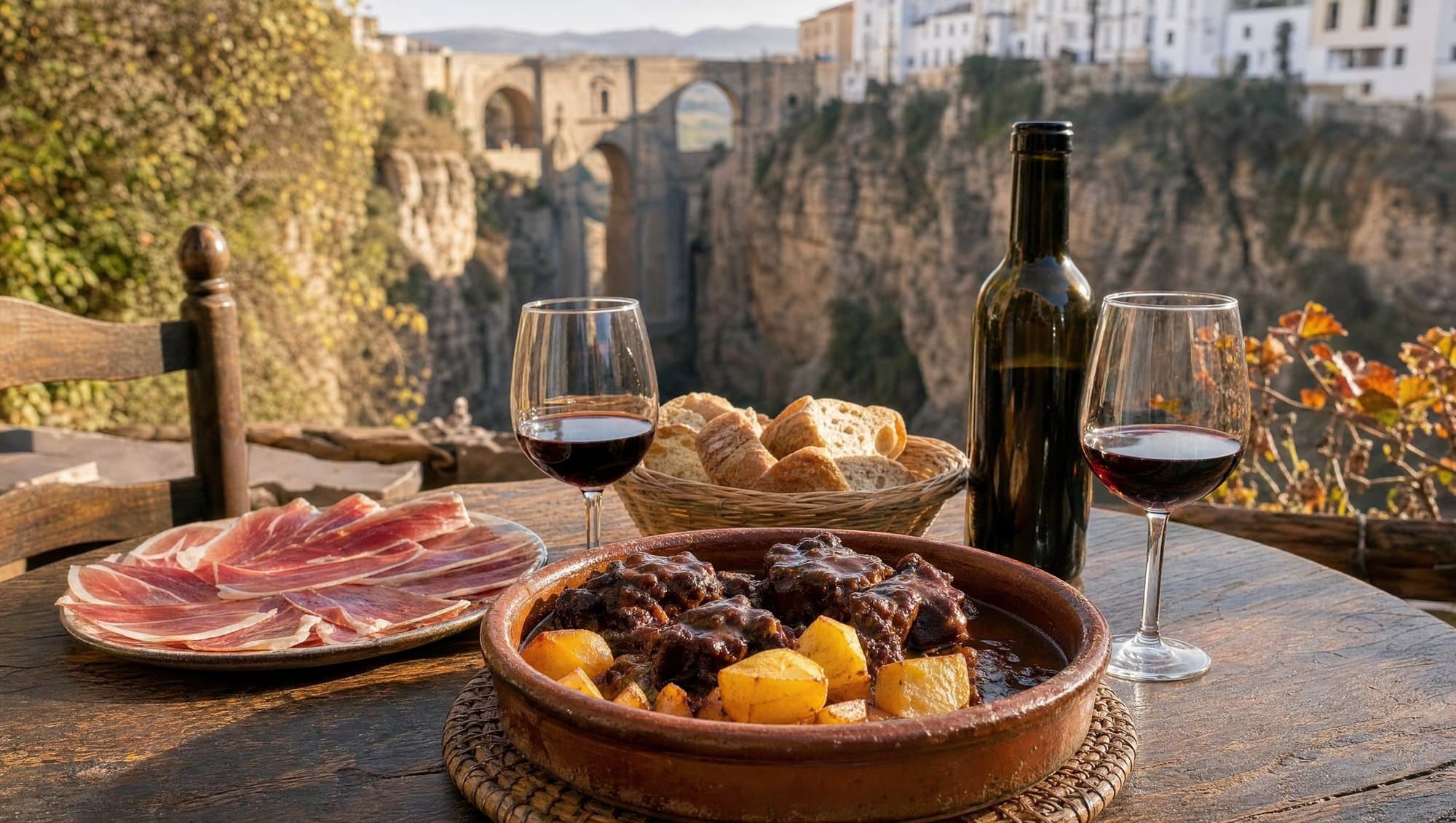
The signature dish, and not by accident: modern bullfighting was more or less codified in Ronda, and the oxtail stew grew up around the bullring. The tail is braised for hours with onion, garlic, carrot and red wine until the meat comes away from the bone with a spoon, and the sauce turns thick and glossy. It usually comes with fried potatoes. Every serious bar in town has a version; the ones near the bullring take it personally.
Game and Mountain Stews
The Serranía de Ronda is hunting country, so autumn and winter menus fill up with perdiz (partridge, often stewed or en escabeche), venison, wild boar and conejo a la rondeña, rabbit cooked the local way. Lamb shows up as caldereta or cochifrito, small pieces fried with garlic. These are dishes to share in the middle of the table, not to order one each.
Sopa de Tomate and Migas
Two poor-kitchen classics that have outlived the poverty that created them. Sopa de tomate in Ronda is closer to a stew than a soup — ripe tomato, garlic, peppers and olive oil poured over thin slices of day-old bread, sometimes with an egg or figs on the side. Migas are breadcrumbs fried slowly in olive oil and garlic with chorizo and pork belly; shepherds' food, perfect on a cold day.
Chacinas: The Cured Pork
Ronda sits close to the pig farms of the Serranía and the Sierra de Grazalema, and every bar has a board of chacinas — chorizo, salchichón, morcilla (blood sausage), lomo and ham — plus a goat or sheep cheese from the surrounding villages. It's the default thing to order with your first glass of wine.
Yemas del Tajo
Small, bright yellow sweets of egg yolk and sugar, named after the gorge. They come from the convent tradition (the story goes that nuns were left with the yolks after the egg whites went to clarify wine), and they are what Ronda families bring when they visit relatives on the coast. More on where to buy them below.
"The test of a rabo de toro is the sauce, not the meat. Any tail cooked long enough will be tender. A good one has a sauce that sticks to your lips — that's the collagen from the bone, and it only comes from hours on a low fire and not cutting corners with flour. Ask for bread, and use it. Nobody in Ronda will think less of you."
— Chef Paco Siles
Morning: Churros Before the Coaches Arrive
Start where locals start. On the pedestrian main street, the Carrera Espinel (known to everyone as Calle La Bola), Churrería Alba has been frying churros for breakfast for decades: thick hot chocolate, a café con leche, and a ring of churros cut at the counter. It's a working-town breakfast place, not a tourist café, which is exactly the point. It's a morning-only operation most days and closes on Mondays, so don't plan it for the afternoon. Find it on Carrera Espinel, a short walk from Plaza del Socorro.
Then walk it off: across the Puente Nuevo, through the old town, and down the path below the bridge for the classic view. Two hours of sightseeing is exactly enough to earn lunch. The day trips guide covers what to see in more detail.
Lunch: Where to Eat Rabo de Toro in Ronda
Two very different lunches, both honest. One is a classic dining room with tablecloths and fifty years of history; the other is a neighbourhood bodega where Ronda families eat on a Sunday.
Restaurante Pedro Romero
The Bullring Classic for Oxtail
Named after the eighteenth-century matador who shaped modern bullfighting, Pedro Romero sits right across the street from the Plaza de Toros and has been run by the same family since 1974. The walls are covered in bullfighting photographs and posters, the cooking is cocina tradicional rondeña, and the dish to order is the house oxtail, served the old way.
Around it, the menu covers the mountain repertoire — migas, stewed partridge, game in season — and the wine list leans on bodegas from the Serranía de Ronda. It sits on the main tourist axis, so it's busy; the cooking has held up regardless.
Insider tip
Book a table and ask for the dining room rather than the bar if you want a proper sit-down lunch. Opening days can change around holidays — check the website before you drive up.
Bodega San Francisco
Where Ronda Families Eat
Ten minutes' walk south of the bridge, past the old Moorish gate of Almocábar, the town stops performing for visitors. Bodega San Francisco sits in the old San Francisco quarter, next to the medieval walls, with a large terrace and a menu of Andalusian classics: rabo de toro braised in red wine, gambas al pil-pil, croquettes, serranitos, cured ham and a long list of tapas at local prices.
It's loud, family-friendly and unpretentious, and it serves all afternoon, which makes it the safety net if your morning ran late.
Insider tip
Order tapas rather than full raciones and you can taste the oxtail, the migas and a plate of chacinas in one sitting. It closes one day a week, so check Google Maps before you go.
Want something more ambitious? Ronda has two-Michelin-star cooking at Bardal and a relaxed tapas version of the same kitchen at Tragatá on Calle Nueva — both covered in the day trips guide. Tragatá takes bookings online and fills up at weekends, so reserve a slot before you leave Marbella.
Afternoon: Yemas del Tajo and Something for the Road
Confitería Las Campanas
The Home of the Yemas del Tajo
Yemas have been made in Ronda for more than a century, but only one shop can sell them under the name Yemas del Tajo: Las Campanas registered the brand in 1934 and still makes them every day on Plaza del Socorro. Other confiterías in town sell their own versions under different names; this is the original.
Buy a box to take home, and eat one with an espresso at the counter while you're there. They're intensely sweet, so one is plenty.
Insider tip
Buy the yemas last, on the way back to the car park — the shop is right on Plaza del Socorro, above the underground parking, and the boxes travel better than you do on the A-397.
If you're staying into the early evening, finish with a glass at Entre Vinos, a small wine bar near the centre with more than a hundred references, most of them from Ronda and the Serranía, and glasses at local prices. The bartenders are happy to pour two or three tastes before you choose. Find it near the Hotel Colón, in the centre. For the wineries themselves, and which Ronda grapes to look for on a label, the Málaga wines guide covers the bodegas worth visiting.
What to Bring Back to Marbella
Ronda is one of the few day trips where the shopping is edible. Before you leave town, fill the boot with:
- A box of yemas del Tajo from Las Campanas, for the people who stayed by the pool.
- Chacinas — chorizo, salchichón and lomo from a delicatessen in the centre. They keep for days in a villa fridge and make the easiest lunch of the week.
- A few bottles of Ronda wine, ideally bought directly at a bodega. Prices at the cellar door are far kinder than on Marbella wine lists.
- Extra virgin olive oil from a local mill — the olive oil tour guide lists the almazaras around Ronda that sell direct.
"Don't buy the chorizo vacuum-packed in the souvenir shops by the bridge. Go to a proper charcutería, ask what's from the Serranía, and ask them to slice it. And taste before you buy — any good shop will give you a piece."
— Chef Paco Siles
The Drive Home Problem
Here's the part nobody plans. You leave Ronda around six, the light goes gold over the Serranía, and an hour of hairpins later you're back at the villa at half past seven: tired, slightly car-sick, and with a group asking about dinner. Nobody wants to cook. Nobody wants to get back in the car to find a restaurant that opens at 20:30. And the lunch that felt enormous at three o'clock has somehow worn off.
Villa regulars solve this before they leave in the morning: they order dinner to be waiting for them when they get back.
Si Catering's Paella Delivery is run by Chef Paco Siles, a third-generation paella cook from a family of restaurateurs going back to 1972. The paella is cooked from scratch on the day and arrives hot in the traditional paellera, ready to put straight on the terrace table — no reheating, no boxes. Five recipes: Valenciana with chicken, Vegetarian, Seafood, black rice with cuttlefish ink, and the Royale with lobster, from €18 per person, for groups of six or more and up to two recipes per order. Add a starter kit or a jug of homemade sangria and dinner is done. The pan gets collected later that evening or the next day, so nobody washes up either.
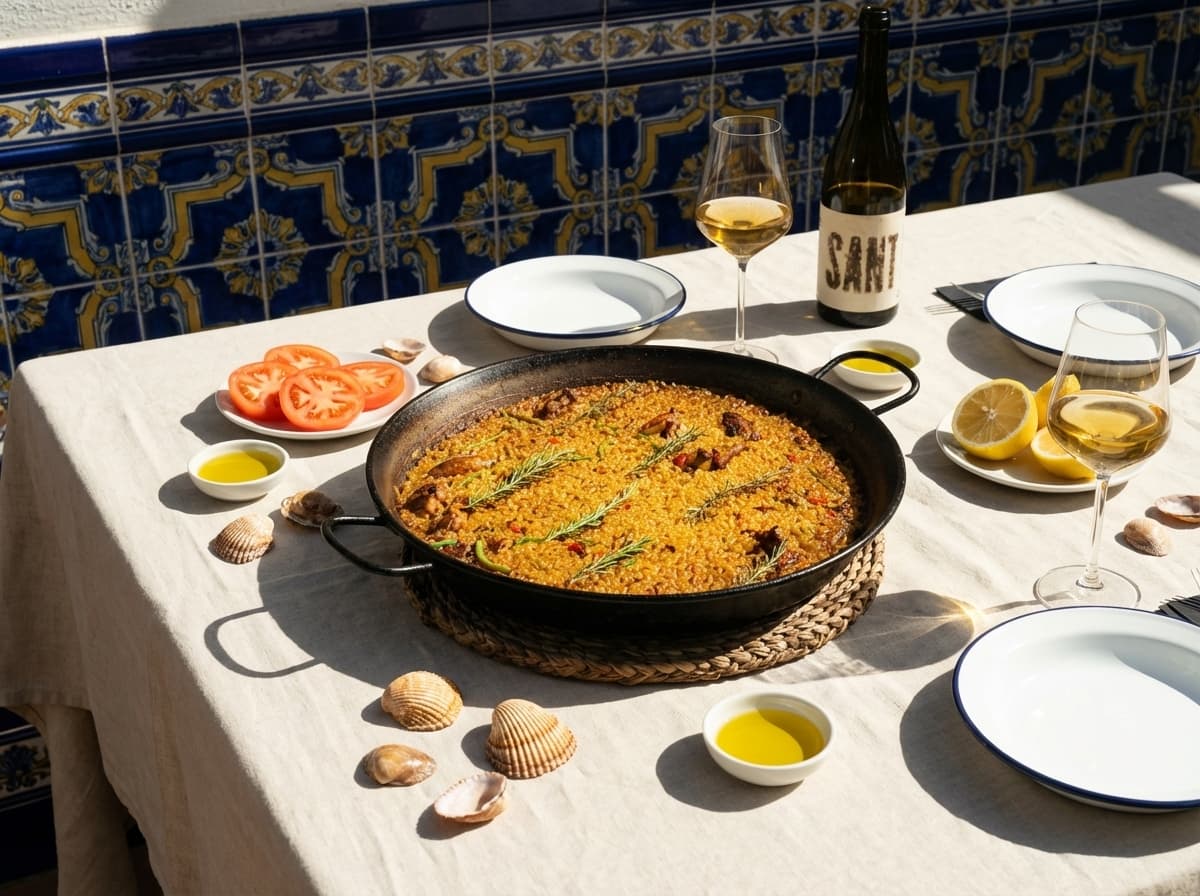
Delivery covers Marbella and around 30 km — Puerto Banús, Nueva Andalucía, San Pedro, Benahavís, Estepona, Mijas. Orders need four hours' notice, so book over breakfast before you set off and choose a delivery time an hour after you expect to be home. A mountain day, a mountain lunch, and a paella on the terrace to close it: that's a very Andalusian Saturday.
Quick Reference — A Food Day in Ronda
| When | Where | What to order | Good to know |
|---|---|---|---|
| 9:30 | Leave Marbella | — | A-397 via San Pedro, ~1h, hairpins; order dinner delivery before you go |
| 10:45 | Churrería Alba | Churros + hot chocolate | Mornings only most days, closed Mondays |
| 13:45 | Pedro Romero | Rabo de toro, partridge, migas | Opposite the bullring, book ahead |
| 13:45 (alt.) | Bodega San Francisco | Oxtail tapa, chacinas, pil-pil prawns | Local prices, big terrace, serves all afternoon |
| 17:00 | Las Campanas | Yemas del Tajo | The only shop selling them under the original name |
| 17:30 | Entre Vinos | A glass of Ronda red | 100+ local references; the driver sticks to water |
| 19:30 | Back at the villa | Paella delivered | Groups of 6+, four hours' notice |