

Flamenco in Marbella: Where to See a Real Show (and How to Tell the Difference)
Every hotel concierge on the Costa del Sol can book you a flamenco night. Some of those nights will give you goosebumps. Others are a dinner buffet with a dancer stamping between the tables while a backing track does the heavy lifting. From the brochure, they look exactly the same.
This guide is the difference between the two. What makes flamenco real, the three kinds of venues where you'll find it, the shows in Marbella worth booking, the two addresses in Málaga that aficionados actually go to — and the one-night-a-year festival in the mountains above Marbella that most visitors never hear about.
Real Flamenco in Two Minutes: What You're Actually Watching
Flamenco isn't a dance with music behind it. It's three things happening at once, and the dance is often the least important of them.
El cante — the singing — is the heart of it. A raw, cracked, almost shouted voice that sounds nothing like a pop singer, and isn't meant to. El toque is the guitar, playing in a rhythmic cycle called compás that the whole room locks into. El baile is the dance, which responds to the singer and the guitarist, not the other way round. Add palmas (rhythmic hand-clapping) and sometimes a cajón, the wooden box drum, and you have the full picture.
Each style — a palo — has its own mood. Soleá is slow and heavy. Bulerías is fast, playful, and where the artists show off. Alegrías is bright and comes from Cádiz. And Málaga has its own: the malagueña, a free-rhythm song without dance that grew out of the old fandangos of this province, and the verdiales, a much older mountain folk tradition with violins and cymbals that still lives in the hills behind the city.
How to Spot the Real Thing
Four signs that you're in the right room:
- Live musicians, no backing track. If you can't see who's playing the guitar, leave.
- A singer who matters. A show with dancers but no cantaor is a dance performance, not flamenco.
- Small room, no amplification (or very little). Flamenco was made for kitchens, courtyards and taverns. Sixty seats is better than six hundred.
- Improvisation. The best artists watch each other and change things in real time. When the dancer suddenly stops and the singer pushes harder, that's not choreography — that's the moment you came for.
Etiquette: Don't Clap Along
The most common tourist mistake: clapping along on the beat like it's a pop concert. Flamenco palmas follow a twelve-count cycle with accents in unexpected places, and offbeat clapping throws the artists off. Keep your hands in your lap. If something moves you, a short, sincere ¡Olé! at the end of a phrase is welcome — it's how the audience talks to the stage. No flash, no talking during the cante, and phones down during the singing at the very least.
Tablao, Peña or Festival: Three Ways to See It
Where you watch flamenco shapes what you see. There are three kinds of venues, and they serve completely different purposes.
A tablao is a professional flamenco venue — a small stage, a programme, tickets, a drink or a dinner. The format was invented for audiences who don't speak the language of flamenco, so it's the easiest entry point. A good tablao uses real artists and a small room. A bad one is a dinner theatre.
A peña is a flamenco club run by and for aficionados. Members, regulars, a bar with cheap drinks, and performances that are for the locals first. Fewer frills, more truth. Visitors are generally welcome, but you're a guest in someone's living room — behave like it.
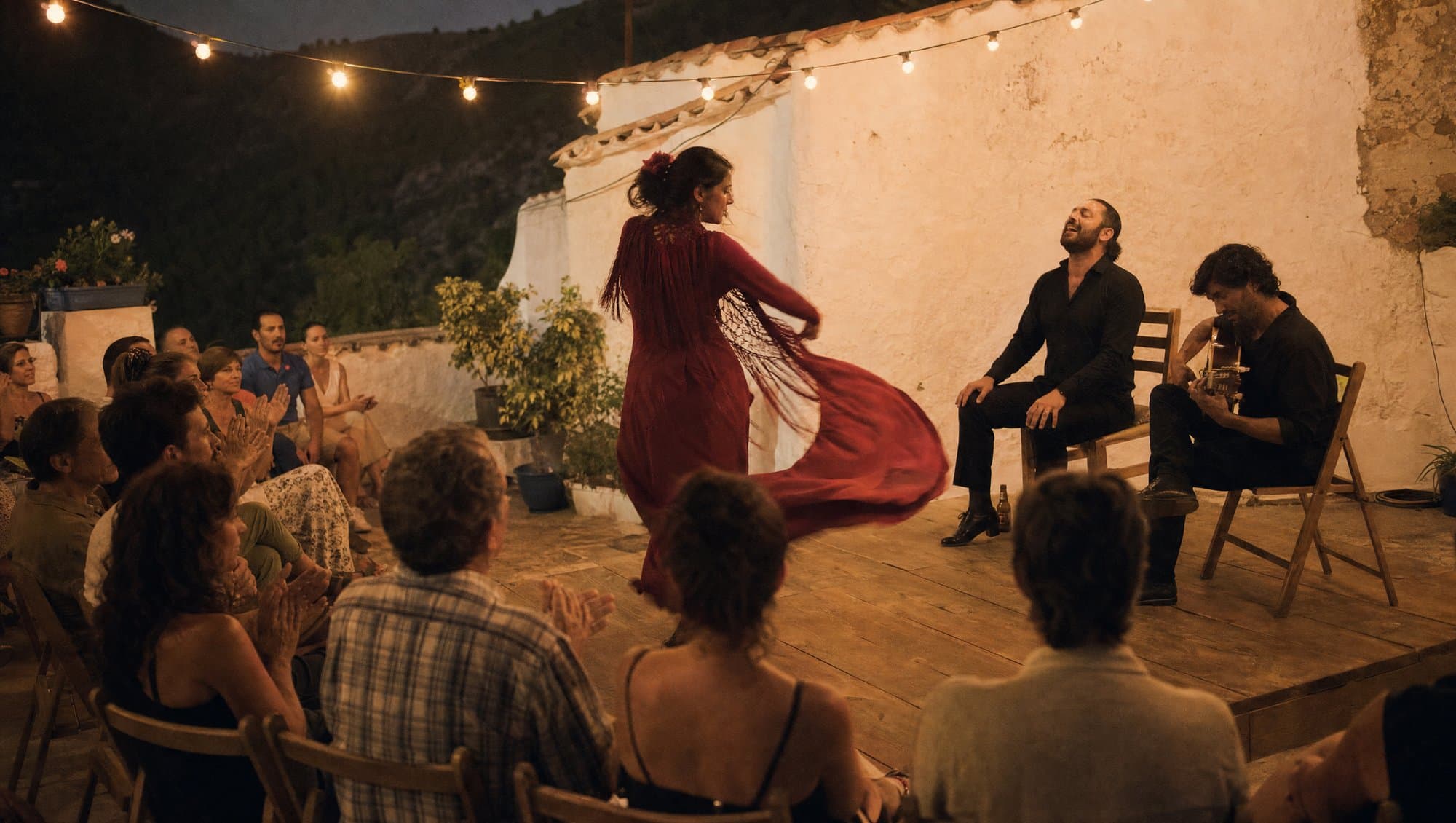
A festival is the summer version: an open-air night in a village square or school courtyard, with a line-up of serious names, plastic chairs, a bar run by volunteers, and a show that starts late and ends very late. This is where the best flamenco artists in Spain actually perform in Andalucía in July and August.
“My family has been feeding people in Andalucía since 1972, and flamenco was always in the kitchen — someone singing at the end of a long lunch, someone clapping on the table. That's the real thing. Not a show, a moment. When you go to a tablao, choose the small room with the singer who looks like he's in pain. That's the good one.”
— Chef Paco Siles
The Best Flamenco Shows in Marbella
Marbella's flamenco lives in the old town. The narrow streets around Plaza de los Naranjos have hosted tablaos since the 1960s, and the walk there is half the evening — whitewashed lanes, flower pots, the smell of jasmine after dark.
Tablao Flamenco Marbella
The Historic Old-Town Tablao on Plaza del Santo Cristo
On one of the prettiest little squares in the casco antiguo, next to the whitewashed Ermita del Santo Cristo, this is the address that has meant “flamenco in Marbella” for decades — it's the room where the dancer Ana María Moya ran her famous tablao, today under new ownership. The format is classic: a small stage, a guitarist, a singer, one or two dancers, and an audience close enough to hear the dancer breathe.
Shows run daily at 18:00, 19:30, 21:00 and 22:15, which makes it unusually easy to fit around dinner — the early shows suit families and anyone who isn't used to Spanish hours, the late one has the best atmosphere. The show itself lasts a little over an hour, sung and played largely without microphones.
Insider tip
Book the 22:15 show and have dinner before at one of the old-town taverns two minutes away — the dinner packages are convenient, but the streets around the square are full of better tapas. Ask for a seat in the first two rows; the room is small, but the footwork is the point.
Two other options in town, depending on the evening you want. If dinner is the priority and flamenco the backdrop, Asador Puerta del Príncipe in the old town is a grill restaurant with live flamenco every night — fish, meat, a full menu, and the performance happening around you rather than in front of you. Call or WhatsApp ahead (website), because the good tables go first.
And on Saturday evenings, Passion: The Story of Flamenco runs a one-hour show in a small venue on Calle Camilo José Cela, a few streets from Avenida del Mar. It's built around the dancer Asami Ikeda, who trained in Seville, with singers and guitarists from Málaga — a more theatrical format, and a good option if the old-town tablao is full.
Worth the Drive: Where Aficionados Go in Málaga
Here's the honest truth: the deepest flamenco on this coast isn't in Marbella. It's forty-five minutes east, in Málaga city, where flamenco is a living local culture rather than a visitor attraction. If you're serious about it, plan an evening there. Combine it with the sweet-wine bar at Antigua Casa de Guardia before the show and you have one of the best nights out in Andalucía.
Peña Juan Breva
Spain's Oldest Flamenco Club, With a Museum Upstairs
Founded in 1958 and named after Juan Breva, the Málaga singer who made the malagueña famous in the late nineteenth century, this is the oldest flamenco peña in Spain. Upstairs is a museum with thousands of records going back to the 1800s, Juan Breva's guitars, old posters and flamenco dresses. Downstairs is a small, tiled performance room that feels like a family celebration that happens to have world-class singers in it.
Shows generally run on Thursday and Saturday evenings from 20:30. The crowd is mostly local, the drinks are cheap, and the artists perform for people who know exactly what they're listening to. It's the most authentic flamenco experience within an hour of Marbella — and an easy one to put on your list of unusual things to do on the coast.
Insider tip
Booking is essential and the programme changes week to week — phone the peña (+34 952 22 13 80) before you drive. Visit the museum in the morning (Tue–Sun, 10:00–14:00) if you can't make a show; it costs next to nothing.
Kelipé Centro de Arte Flamenco
A Family of Artists, an 80-Seat Room, No Two Shows Alike
Kelipé has been running in Málaga's old town since 2002 — a flamenco school founded by a family of artists that opens its studio as a tablao from Thursday to Sunday. The room holds around eighty people, which is exactly the right size: close enough to see sweat, far enough not to be in the way.
What sets it apart is the improvisation. The artists don't run a fixed choreography — they build each night around each other, which means the show you see won't be the show anyone else saw. Each night has a different programme, with a Sunday slot dedicated to bigger-name guest artists.
Insider tip
Doors open 30 minutes before the show and seating is first come, first served — arrive early for the front row. It's one of the few good shows that works well with children; there are reduced prices for under-18s.
The Secret Summer Night: Castillo del Cante in Ojén
Ten minutes up the mountain road from Marbella, the white village of Ojén hosts one of the oldest flamenco festivals in the province of Málaga. The Festival Flamenco Castillo del Cante has been running every summer for over fifty years, and in 2026 it celebrated its 51st edition on 1 August with a tribute to the late master Fosforito — and a line-up that included Aurora Vargas, El Pele, Israel Fernández and the guitarist Diego del Morao.
That's the level. These are artists who fill theatres in Madrid and Seville, performing on a summer night in the courtyard of the village school, CEIP Los Llanos, with the Sierra de las Nieves black against the sky behind them. It starts late, it ends after midnight, and it's one of the best flamenco nights you'll find anywhere in Andalucía — at a fraction of what a big-city stage would cost.
The festival takes place once a year, usually on the first weekend of August, and tickets sell out. Watch the Andalusian culture agenda or the festival's Instagram from June. If you're planning an August trip, build your week around it. (And if you arrive early, the village itself is worth an afternoon.)
Outside of August, Málaga province celebrates its own folk tradition on 28 December, when the verdiales bands — the pandas, with their violins, guitars, cymbals and flowered hats — gather for the Fiesta Mayor de Verdiales on the edge of Málaga city. Not flamenco strictly speaking, but its rural ancestor, and a joyful, completely untouristy day out if you're spending Christmas on the coast.
Make a Day of It: Lunch in the Hills, Flamenco After Dark
Flamenco in Andalucía was never a show you went to on an empty stomach. It was what happened at the end of a long meal — the family lunch that turned into an afternoon, the wine that turned into singing. The best way to see a flamenco night, frankly, is the way locals do: after a proper lunch that runs late.
Which is where Ojén comes back into the story. Up the same mountain road as the festival, Chef Paco Siles has his finca — an open-air country kitchen among olive and pine trees, with a long shared table and the Sierra de las Nieves on the horizon. A third-generation chef from a family of Andalusian restaurateurs, Paco cooks paella over open fire in front of you and explains every step: the sofrito, the rice, the saffron, why the socarrat crackles at the end.
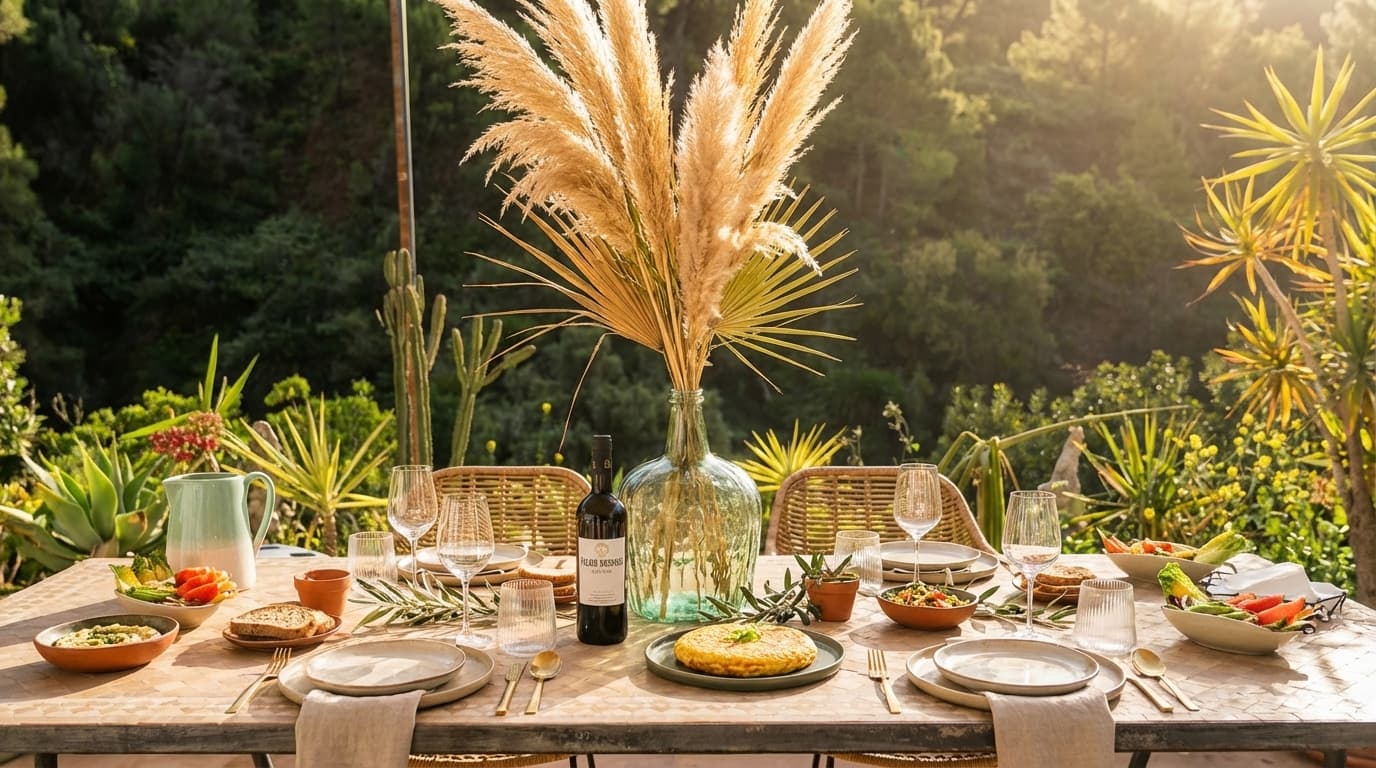
The Paella Cooking Class runs for about three hours, for two to thirty people, from €70 per person. Take a midday slot, sit long over the paella with a glass of local wine, and you're back down in Marbella by late afternoon — with time for a siesta, a walk through the old town, and the 21:00 or 22:15 show at the tablao on Plaza del Santo Cristo. One day, the Andalusian way: rice, wine, sobremesa, and then the cante.
It's also a combination that works particularly well for groups — a hen weekend, a birthday, a family reunion — when you want one day that everybody will still be talking about at the airport.
Quick Reference — Flamenco Near Marbella
| Venue | Type / When | Price |
|---|---|---|
| Tablao Flamenco Marbella | Tablao · Daily 18:00–22:15 | From €39 |
| Asador Puerta del Príncipe | Restaurant · Nightly | À la carte |
| Passion: The Story of Flamenco | Show · Saturdays 20:00 | Marbella centre |
| Peña Juan Breva | Peña · Thu & Sat 20:30 | Málaga (45 min) |
| Kelipé | Tablao · Thu–Sun evenings | €30–35 |
| Castillo del Cante | Festival · Early August | Ojén (15 min) |
| Paella Cooking Class | Finca lunch · Daily | From €70/pp |